

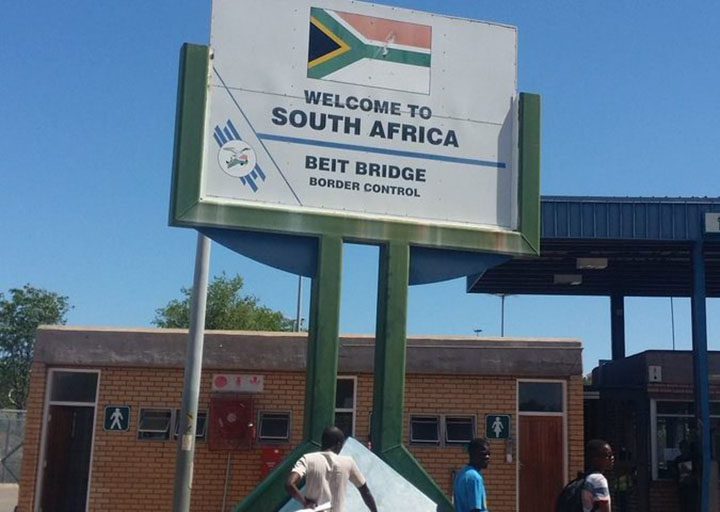
Thousands of Zimbabweans repatriated from South Africa under a government-assisted repatriation programme following anti-foreigner sentiments may face a five-year ban from re-entry, having reportedly been declared “undesirable” by South African immigration authorities.
The development has raised concerns among migrant rights advocates, who warn such restrictions could have severe economic consequences for returnees who depend on cross-border trade or hope to legally return to South Africa in the future.
The concerns come as Zimbabwe continues receiving nationals who fled growing hostility towards foreign nationals in parts of South Africa following operations targeting undocumented migrants.
According to state media, since the repatriation exercise began on May 28, 2026, the Zimbabwean government has assisted more than 21 000 citizens to return home, while an estimated 56 832 others have made their own way back through self-repatriation.
On this topic
Many of the returnees are accommodated temporarily at the United Congregational Church of Southern Africa (UCCSA) reception centre in Bulawayo’s Njube suburb before reintegration into their communities.
Officials have said some arrived with little or no personal belongings after abandoning property in South Africa.
The Zimbabwean government has also instructed the Civil Registry Department to prioritise the processing of national identity documents to facilitate the reintegration of returnees.
Chairperson of the Zimbabwe Community in South Africa, Ngqabutho Nicholas Mabhena told CITE his organisation was particularly concerned that those processed under the repatriation programme were reportedly declared undesirable by South African authorities.
“We also call on the South African government not to declare these individuals undesirable. Zimbabwe’s economy is largely informal and many of these people survive through cross-border trade. If they are banned, it becomes very difficult for them to rebuild their livelihoods,” he said.
Mabhena said the declaration applies specifically to migrants processed through the official repatriation system.
“Those who are simply visiting South Africa and later decide to return home are not being repatriated. But those using the government-assisted transport are taken to the processing centre where they are fingerprinted and their details recorded before proceeding to the border. Even if they have passports, they are declared undesirable,” he said.
Despite these obstacles, Mabhena encouraged “desperate Zimbabweans to take advantage of the free transport back to Zimbabwe” and also called on “bus operators and those funding the repatriation to assist people in transporting their household goods because many have been forced to leave everything behind as buses refuse to carry bulky belongings.”
Mabhena said returnees transported under the government-assisted repatriation programme are first taken to a processing facility established near Musina by South Africa’s Department of Home Affairs and the Border Management Authority (BMA).
BMA is a public entity responsible for creating an integrated border management system under a single command structure.
“The bus drives directly into the camp where officials take fingerprints and record personal details before allowing them to proceed to the border gate,” Mabhena said.
He said authorities appear to assume that people using the repatriation buses had been living and working in South Africa rather than merely visiting.
“The assumption is if you were only visiting for two weeks, you would have a return ticket. If you are using the repatriation bus, officials assume you have been residing in South Africa,”he stated.
Mabhena explained the ‘undesirable’ declaration had its challenges because even after five years, it is not automatic that one could simply return to South Africa.
“You must still apply for clearance and explain why you wish to enter South Africa again,” he said, adding uncertainty also surrounds South Africa’s proposed White Paper on Citizenship, Immigration and Refugee Protection.
The White Paper has suggested reforms allowing some immigration offenders who overstayed for short periods to pay administrative penalties instead of facing lengthy prohibitions.
“We don’t yet know whether those processed under this repatriation programme will qualify under any future reforms,” he said.
Mabhena noted this issue is not limited to Zimbabweans as other African nationals repatriated from South Africa after immigration enforcement operations may also be declared undesirable if investigations determine they overstayed their visas or breached immigration conditions.
On its X page, South Africa’s BMA explained immigration officials maintain a monitoring system known as the “V-list,” which records people declared prohibited or undesirable under the country’s Immigration Act.
BMA said travellers who overstay their legally permitted stay by fewer than 30 days are declared undesirable for 12 months.
A repeat offence within 24 months attracts a 24-month ban, while overstaying by more than 30 days results in a declaration of undesirability for five years.
The authority said affected travellers may apply to have the ban lifted by providing compelling reasons and supporting evidence to the Department of Home Affairs.
Applications are individually assessed and subjected to verification before any decision is made.
Chairperson of the African Diaspora Global Network and lawyer Dr Vusumuzi Sibanda said the legality of declaring returnees undesirable depends on whether they violated South Africa’s immigration laws.
“Yes, it is legal, if persons have overstayed or are found to have a fraudulent visa or permit,” he said.
“Being a returnee does not absolve someone from offences committed in contravention of the Immigration Act. Such a person should not be allowed back into South Africa unless the matter has been regularised.”
However, Dr Sibanda stressed lawful migrants should not be subjected to such restrictions.
“If their stay in South Africa was still valid, then declaring them undesirable would be unlawful,” he said.
“There should be engagement between Zimbabwe and South Africa to make sure vulnerable returnees are not permanently excluded from legal migration opportunities.”





Leave a Reply