

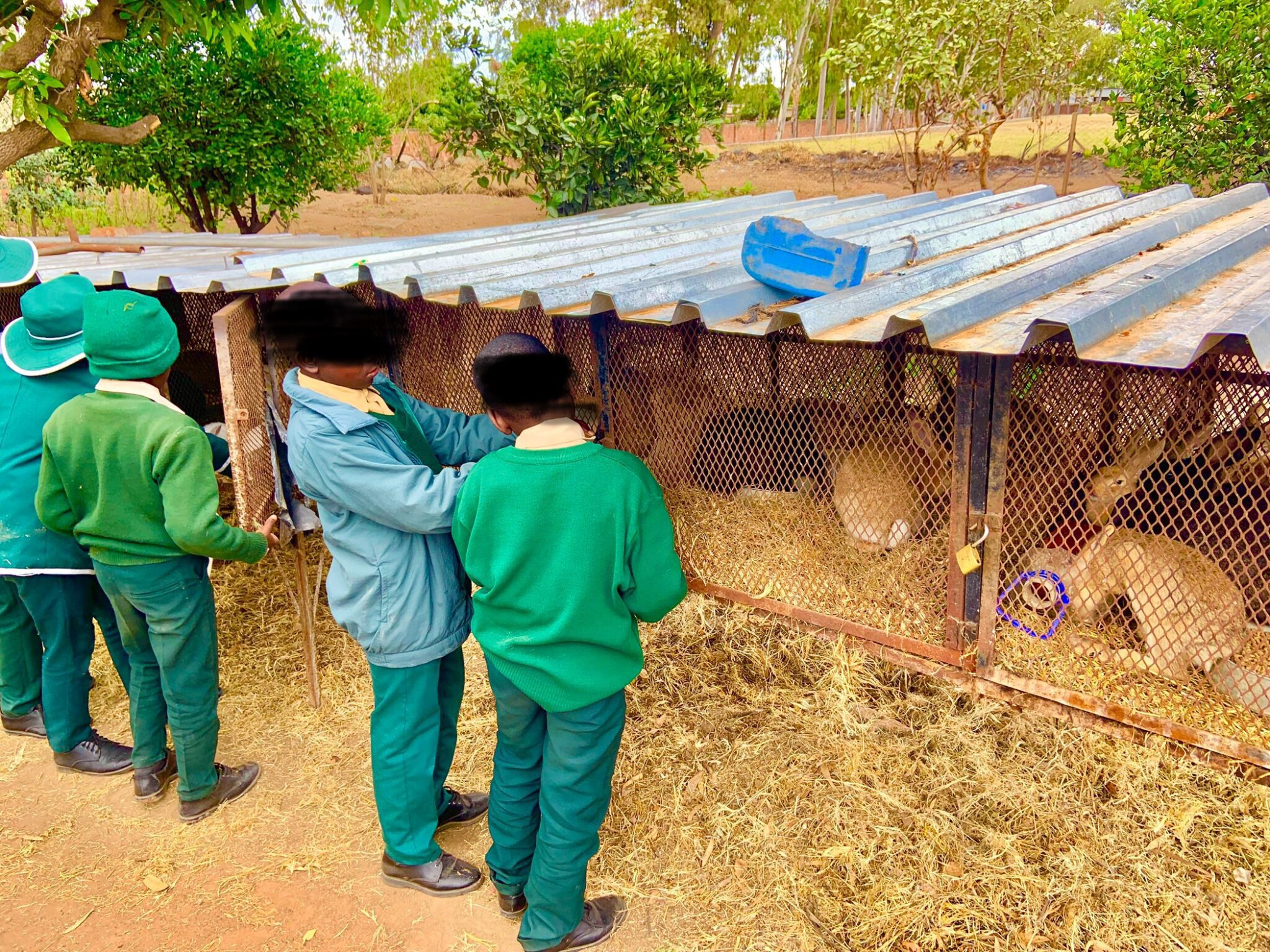
At Mawaba Primary School in Lobengula West in Bulawayo, a group of children gather around a rabbit enclosure, carefully feeding the animals and replenishing their water.
To an outsider, it may appear to be an ordinary school project.
However, for some learners, particularly those facing abuse, neglect or emotional trauma, these furry companions have become an unexpected source of healing.
The school has introduced a child therapy initiative using rabbits as part of its Guidance and Counselling (GNC) programme, helping vulnerable learners develop empathy, trust and emotional stability through caring for animals.
On this topic
Mawaba Primary headmistress, Nokuthula Sibanda, said the initiative is one of several interventions the school has adopted to support learners beyond academics.
Established in 1987, the City of Bulawayo-run school has an enrolment of 1 321 learners, comprising 691 boys and 630 girls, including 10 learners with intellectual disabilities.
“As a school, we do a lot of projects because we believe education is not only about academics. We impart skills to our learners and make sure every child has an opportunity to develop,” Sibanda said during a National AIDS Council (NAC)-organised media tour on Tuesday to showcase the GNC activities implemented at the school.
The school does have other projects for its learners such as gardening programmes, bead-making, detergent production, sports development and feeding schemes.
However, it is the rabbit project that has emerged as one of the school’s most unique therapy interventions.
“We keep rabbits especially for our Guidance and Counselling learners. Those learners who are abused, we make them love animals,” said Sibanda.
The school currently has 12 rabbits, with more expected.
While each term a designated class is responsible for feeding, watering and caring for the animals, children identified through counselling sessions are also incorporated into the programme as part of a therapeutic process.
“We have a GBV room where learners are counselled. If the Guidance and Counselling teacher identifies that a learner has been facing challenges, that child is then allowed to join the class responsible for looking after the rabbits,” the headmistress explained.
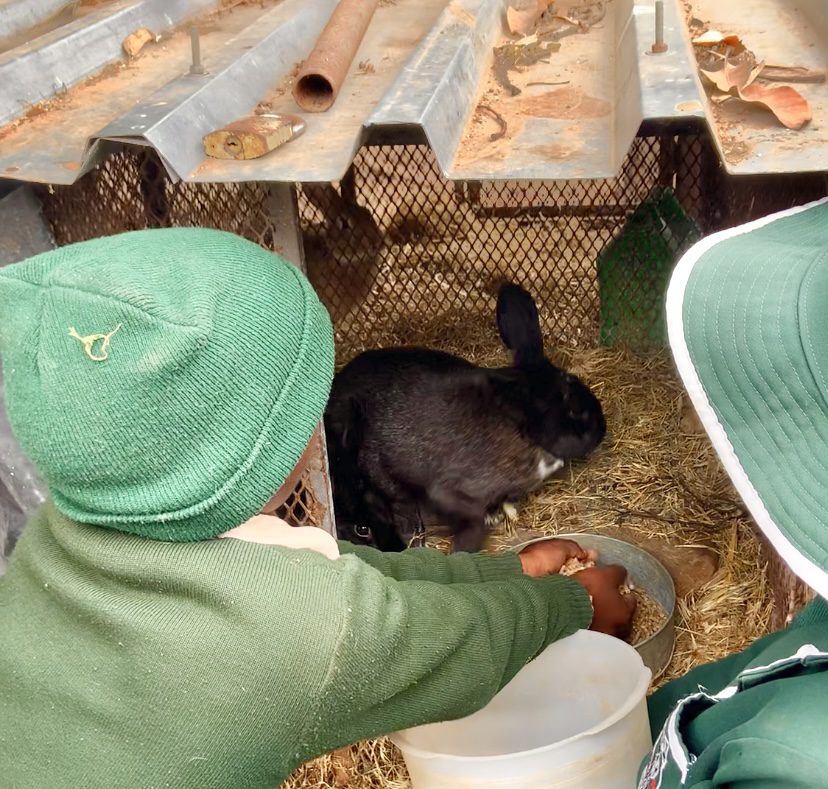
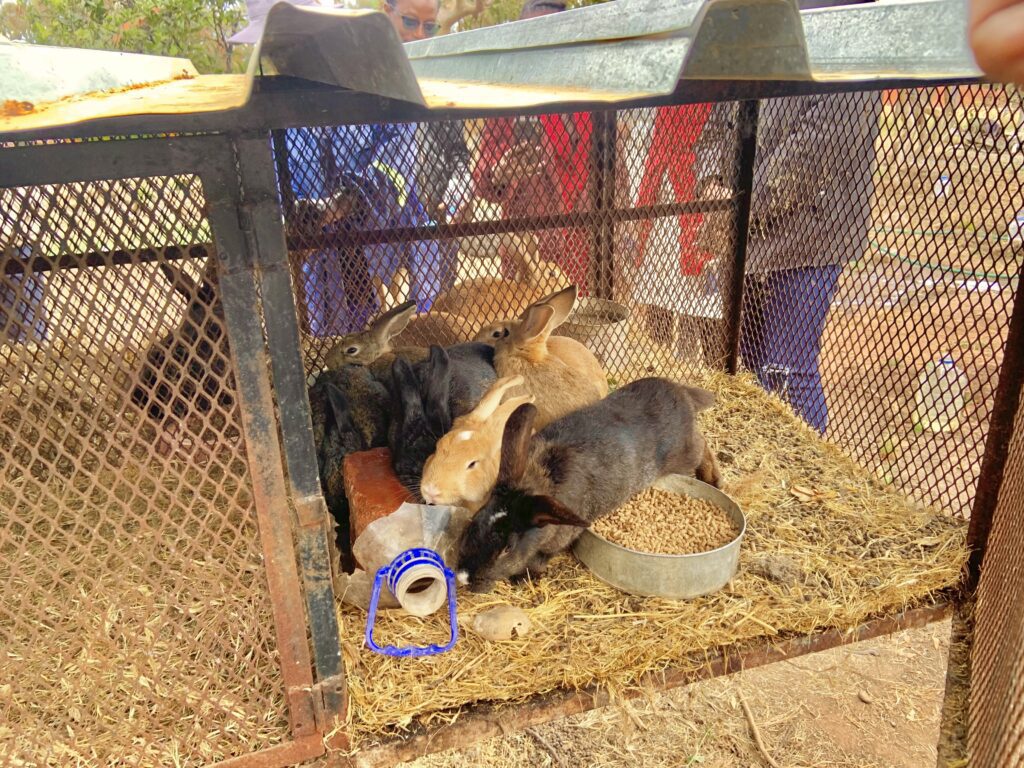
The headmistress said the objective is to help children rediscover compassion and emotional connection after experiencing violence or neglect.
“When a child is neglected and develops a love for the animal, we are trying to nurture love depending on the abuse that would have been identified,” said Sibanda.
She said some children reveal deep emotional scars during counselling sessions.
“Our Guidance and Counselling teacher will tell you that when some children are given dolls to play with, they start breaking them or hitting them. That behaviour often reflects the abuse they are experiencing at home,” Sibanda said, stating that for these children, violence has become normalised.
“That child no longer has love and may think violence is the normal way of life because they constantly see parents fighting or experience abuse themselves. But when they start feeding rabbits, giving them water and taking care of them, something changes.”
Sibanda says many learners gradually form strong bonds with the animals.
“The animal doesn’t talk, but a bond starts there. Some children even talk to the rabbits. That process becomes an attempt to restore the child emotionally because abuse disturbs a child, even in class where they struggle to concentrate,” she said, highlighting that the intervention seeks to bridge emotional gaps created by abuse.
“We are trying to nurture love. The child starts by loving an animal and eventually grows to love fellow human beings.”
The initiative is part of a broader multi-sectoral approach involving the National AIDS Council (NAC), Ministry of Primary and Secondary Education and other partners working to protect children from abuse, gender-based violence and other social challenges.
NAC Provincial Manager, Sinatra Nyathi, said schools play a critical role in the national HIV and AIDS response because they provide opportunities to equip children with life skills that protect them from future risks.
“There is no way you can implement the national multi-sectoral response without the Ministry of Primary and Secondary Education,” she said.
“We have been working with schools through programmes such as school health master programmes, AIDS clubs and previously the United States funded DREAMS programme, which focused on building Determined, Resilient, Empowered, AIDS-free, Mentored and Safe girls.”
Nyathi said interventions like those at Mawaba Primary demonstrate how schools can provide more than academic instruction.
“We need life skills alongside academic education. There is no point in having learners with excellent grades but who are unable to navigate life’s challenges,” she said.
She added that guidance and counselling programmes remain critical in helping learners address issues such as abuse, bullying, HIV prevention and gender-based violence.
“We want children who are determined, resilient, empowered, AIDS-free, mentored and safe. Every adult has a responsibility to support children and make sure they are protected.”
Nyathi also praised Mawaba Primary as one of NAC’s strongest partner schools.
“As NAC, we are excited that Mawaba is one of our best schools working with us. We have trained teachers on age-specific and culturally acceptable sexual and reproductive health education and continue supporting school-based programmes,” she said.
Since Mawaba Primary falls under NAC’s Magwegwe District, District AIDS Coordinator, Kenneth Ncube, said the organisation works closely with schools to identify needs and coordinate support from various partners.
“Our role is to identify the needs of schools so that we can assist them. Teachers may require training, learners may require information, and together we plan interventions to address those needs,” he said.
Ncube described schools as ideal platforms for prevention and life-skills programmes.
“In the community we often have to mobilise people to attend workshops, but in schools the learners are already there. It becomes easier to reach them with information and support,” he said.
Ncube said NAC also helps connect schools to specialist organisations capable of addressing particular challenges.
“If you go around Mawaba, you will find different interventions supported by different partners. What we do as NAC is identify who is best placed to assist in each area,” he said.
These partnerships have translated into practical support that goes beyond classrooms at Mawaba Primary.
“The simple act of feeding a rabbit has become a healing method. This is something that we have learnt today and perhaps implement in our homes,” summed up NAC programmes officer, Douglas Moyo.







Leave a Reply