
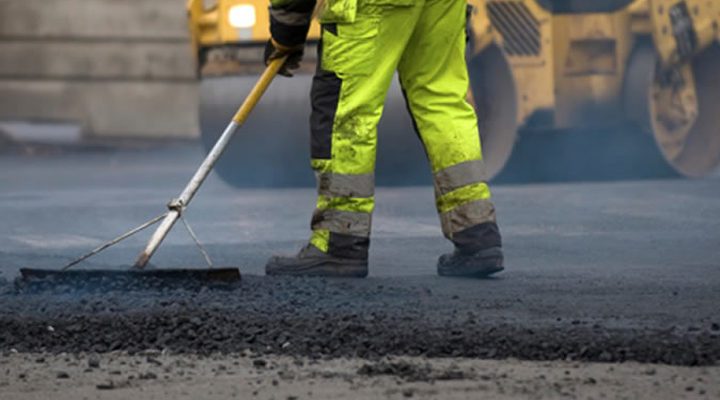
The Zimbabwe National Road Administration (ZINARA) has called on mining companies to help fund and develop road infrastructure, warning that rapid growth in the mining sector is placing increasing pressure on the country’s transport network and driving up maintenance costs.
Speaking at the Suppliers, Energy and Infrastructure Symposium held alongside Mine Entra 2026 in Bulawayo on Wednesday, ZINARA chief executive officer Nkosinathi Ncube said closer collaboration between government and the mining industry was essential to ensure infrastructure kept pace with growing demand.
“We are here primarily for partnership,” Ncube said.
“Our key goal today is to talk to you about the key challenges on our roads and why we believe partnering with you will help. As you all know, the roads are congested. Over time they require maintenance, and one of the biggest users of the road network is the mining industry.”
On this topic
Ncube said increased movement of mining equipment and minerals by heavy commercial vehicles was accelerating the deterioration of major highways.
“The load that comes through is heavy. It’s heavy for the roads and, at the same time, Zimbabwe’s economy is growing. From what we see at tollgates and licensing offices, traffic is increasing every day.”
He cited congestion at the Beitbridge Border Post as evidence of mounting pressure on the country’s transport infrastructure.
“Today, if you go to the Beitbridge border, you will be greeted by an eight-kilometre queue of trucks. Yesterday that queue stretched 16 kilometres. Agencies worked overtime to clear as much as they could, but there are still trucks being processed.”
Ncube said the growing bottlenecks highlighted the need to speed up investment in roads and alternative transport corridors.
“We need to partner—the mining industry and government—to develop new roads, new routes and maintain the existing roads. We need to do that faster than we have done before.”
He warned that traffic volumes would continue rising unless infrastructure investment kept pace.
“Very soon the traffic that you are crying about will double. Once it doubles, it affects the supply chain in and out.”
Ncube encouraged mining companies to work with the Ministry of Transport on infrastructure projects, saying several firms had already entered into road development partnerships with the government.
“Our recommendation is that we work with you, whatever route you have, and we develop either a new route, maintain the existing one or expand the one that’s there with a view to unlocking the supply chain.”
He said better transport infrastructure would improve mining operations while stimulating economic activity in communities along key transport corridors.
However, he acknowledged the high cost of road construction and rehabilitation.
“The cost of developing, maintaining or rehabilitating a road in Zimbabwe ranges from US$500,000 to US$1.3 million per kilometre. It is a high-cost project but, once done properly and maintained through good partnerships, it benefits the industry and the country.”
Ncube said ZINARA was also promoting greater use of rail to transport bulk freight in order to reduce damage to roads and improve the efficiency of the country’s logistics network.
“If we continue putting all the loads on the roads, you will continue seeing us repairing the same roads every few months. We need to take some of the loads off the roads, probably to rail,” he said.
He also revealed that ZINARA had developed a new funding model aimed at attracting greater private sector investment while lowering transport costs for industry.
“We have designed a new model that we would like to discuss further with you in various forums, where charges will be based on both the load carried and the distance travelled. We don’t want to increase the cost to industry. We actually want to minimise it while ensuring the model remains sustainable.
“You will see us coming to your various operations to discuss how you can participate in developing these routes while either benefiting commercially or reducing your transport costs through what we call a distance-and-time express model.”
Ncube identified the country’s main freight corridors—including Beitbridge, Chirundu, Victoria Falls, Plumtree and Harare—as priority routes for future public-private partnerships.
“Those are the routes that we would love to discuss with you to make sure your sector benefits while ensuring Zimbabwe’s economy continues to grow,” he said.
Zimbabwe’s mining industry has expanded significantly in recent years, increasing demand for reliable transport infrastructure to move minerals, equipment and supplies efficiently to processing centres and export markets.








Leave a Reply