
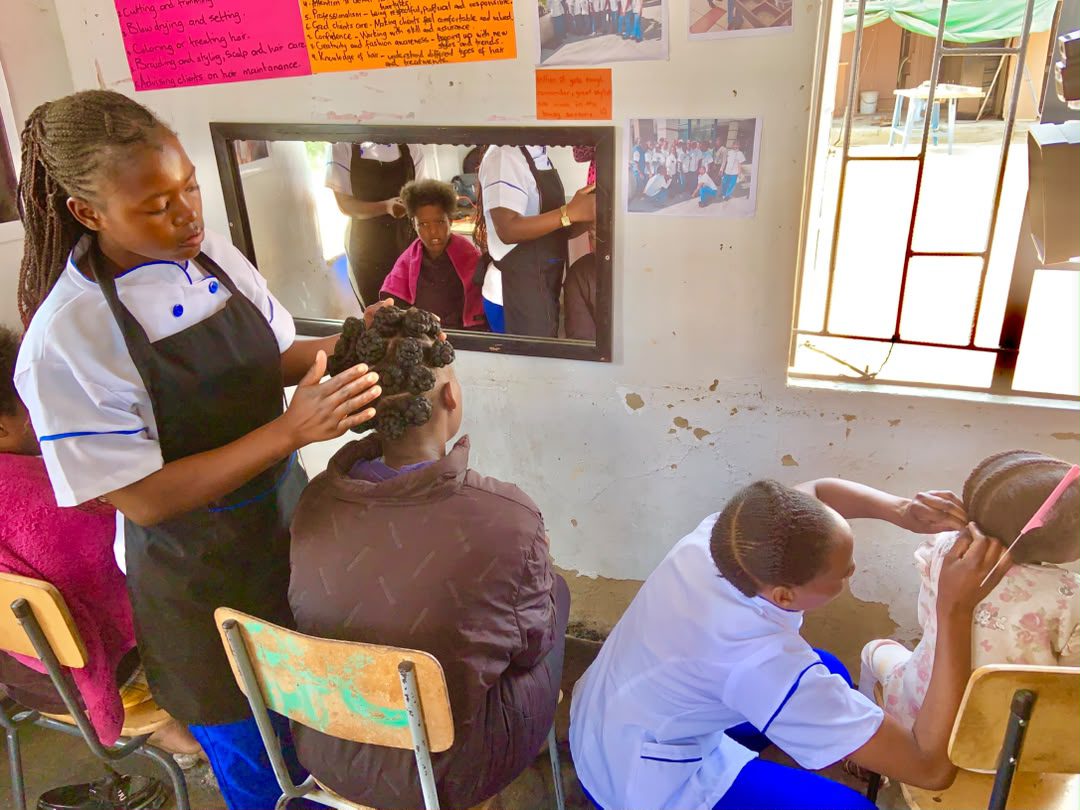
A TECHNICAL and vocational training programme targeting 150 young people in Umguza has exposed social and economic barriers that can undermine youth empowerment efforts, including teenage pregnancies, opposition from partners and safety risks faced by young women travelling to work.
The recently completed programme saw Bulawayo Projects Centre (BPC), in partnership with SOS Children’s Villages Zimbabwe and with funding from the Heimstaden Foundation, train young people in various trades at Hope Fountain Primary School.
However, BPC said its experience showed that providing young people with technical skills was only part of the solution, particularly in communities grappling with poverty, artisanal mining and high HIV prevalence.
Speaking during a recent media tour hosted by the National AIDS Council, BPC Programmes, Partnerships and Communications Officer Tichafa Chiramba said the organisation had to address challenges affecting beneficiaries both inside and outside the training programme.
On this topic
“These are some of the things that you encounter when you go into these communities,” Chiramba said.
One of the challenges was teenage pregnancy, with some young women enrolling while already pregnant and others falling pregnant during the programme.
“We had so many young women either falling pregnant during the project or joining the programme when they were already young mothers,” he said.
The situation became particularly challenging when beneficiaries were required to undertake workplace attachments, most of which were in Bulawayo.
Some women faced resistance from their partners, who were uncomfortable with them travelling to the city for attachments.
“Our training also emphasises exposure to the industry via attachments. We required these young women to also go under attachment, and most of that attachment was to be done in Bulawayo. There was a challenge of their partners, who were not quite happy for their partners to come to do attachment in Bulawayo with the various companies with whom they could be attached,” Chiramba said.
“We had a lot of cases where we had to literally sit down with the partners and explain the importance of their partners actually attaining a skill.”
BPC had to convince some men that allowing their partners to acquire skills could strengthen their families’ economic security.
“In some cases, in our discussions, we tried to make [men] realise that their children are far better off with a mother who has an income than one without, in the unforeseeable event that you, as the man of the house, pass away. If your wife or partner has a skill, she is better placed to look after your children than if, for example, she doesn’t have a skill,” he said.
“It was a tough time convincing those men to let their partners come for attachment in Bulawayo. But we continually engaged with the husbands, with the partners, up until some of them bought into what we were doing.”
BPC also encountered safety concerns involving young women working in restaurants and other businesses, particularly those returning home late in areas where artisanal mining was prevalent.
The organisation subsequently engaged businesses hosting the trainees to allow the women to knock off earlier.
“We had to go back again and continually engage with the places where they were attached to say, please allow these women to knock off earlier than everyone else because of the risks that’s attached to them getting home late,” he said.


Chiramba said the project nevertheless produced positive results and provided lessons for BPC’s broader approach to skills development.
As part of the project’s green-skills component in Bulawayo, BPC trained 12 young people in solar installation. About nine of the trainees are now earning an income, either installing solar systems or working in shops selling solar products, according to Chiramba.
The results prompted BPC to place greater emphasis on digital skills, marketing and other soft skills alongside technical trades.
“That gave us an idea again that we need to have a strong emphasis on digital skills and marketing,” Chiramba said.
The approach is intended to give trainees alternative opportunities within the same industry if they fail to secure employment in their primary trade.
“If these young people do not get to be solar installers, then they can work selling the products because they understand them very well,” he said.
Chiramba said the experience demonstrated that Technical and Vocational Education and Training (TVET) programmes needed to take into account the circumstances surrounding beneficiaries rather than focusing solely on technical training.
BPC has implemented skills development programmes across the country, including in Lupane, Matabeleland North, in partnership with Bantwana Zimbabwe, as well as in Manicaland and Masvingo under the Takunda Project.
Chiramba said the organisation’s approach was built around empowerment, inclusivity, sustainability, innovation and collaboration.
“We talk about empowerment, inclusivity, sustainability, innovation and collaboration,” he said.
The Umguza project also highlighted the importance of linking training directly to employment and income-generating opportunities.
While organisations such as BPC provide technical training, funding partners provide resources, industry partners create opportunities for workplace exposure, and community engagement helps address the social and economic barriers facing beneficiaries.
Chiramba said the main lesson was that youth empowerment could not stop at teaching a trade.
TVET programmes, he said, also needed to equip young people with digital and marketing skills, industry exposure and support systems that could help them turn their training into sustainable livelihoods.
The experience in Umguza showed that technical skills must be matched with the social support and soft skills young people need to navigate the realities of work and life.








Leave a Reply