
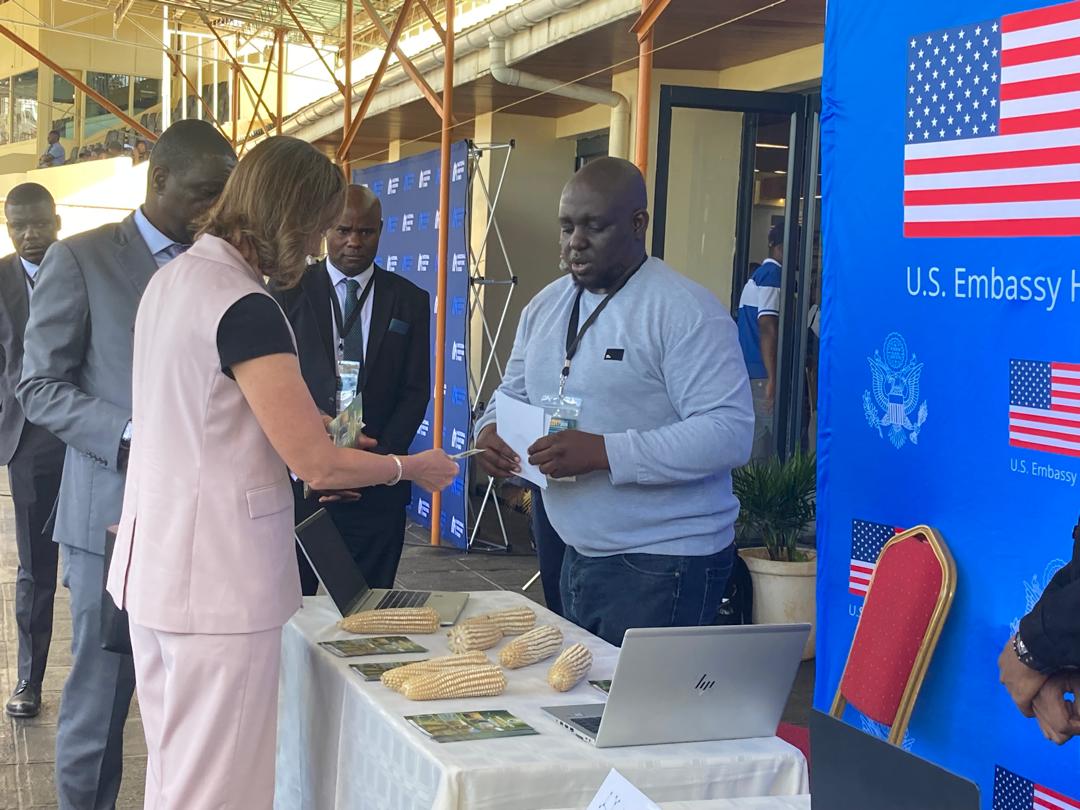
As climate change continues to affect crop yields, local innovators in Zimbabwe are turning to Geographic Information Systems (GIS) to help farmers improve productivity and reduce losses.
Agriventures Zimbabwe chief executive Nhlonipho Ndlovu says the technology is designed to guide farmers on which crops are best suited to their specific environments, at a time when weather patterns have become increasingly unpredictable.
“We are using GIS information to help farmers make informed decisions about the crops they can grow. This is critical at a time when climate change is making farming more uncertain,” he said in an interview at the US Embassy Exhibitors Forum.
Mr Ndlovu said one of the biggest challenges farmers face is planting crops that are not suited to their regions, a problem compounded by shifting rainfall patterns.
On this topic
“Farmers sometimes plant crops that are not suitable for their areas, and with climate change the risks are even higher,” he said. “That is where GIS becomes important because it gives accurate, location-specific guidance.”
The system analyses environmental factors that directly affect crop performance, including rainfall trends, soil types and temperature variations.
“This allows us to recommend crops that are more resilient under those specific conditions,” Ndlovu said. “Climate change has disrupted the patterns that farmers used to depend on. What worked 10 years ago may not work today, so farmers need data-driven support.”
He said the technology helps farmers minimise risk before planting begins.
“Our goal is to reduce losses. If a farmer plants the right crop for their environment, they are already increasing their chances of a good harvest,” he said. “We are simplifying GIS data so that it can be useful to everyday farmers. They need practical information they can apply immediately.”
Agriculture remains a key pillar of Zimbabwe’s economy, and climate variability has increasingly threatened food production in recent years.
Ndlovu said innovations such as GIS-driven advisory systems could strengthen food security by stabilising production and improving livelihoods.
“If farmers are able to adapt to climate change using tools like GIS, we can stabilise production and improve livelihoods,” he said.
He added that platforms such as the US Embassy Exhibitors Forum were important in promoting local solutions and forming partnerships to scale innovation.
“Scaling this innovation is essential if we are to reach more farmers and reduce climate-related losses,” he said.
Support CITE’s fearless, independent journalism. Your donation helps us amplify community voices, fight misinformation, and hold power to account. Help keep the truth alive. Donate today







Leave a Reply