
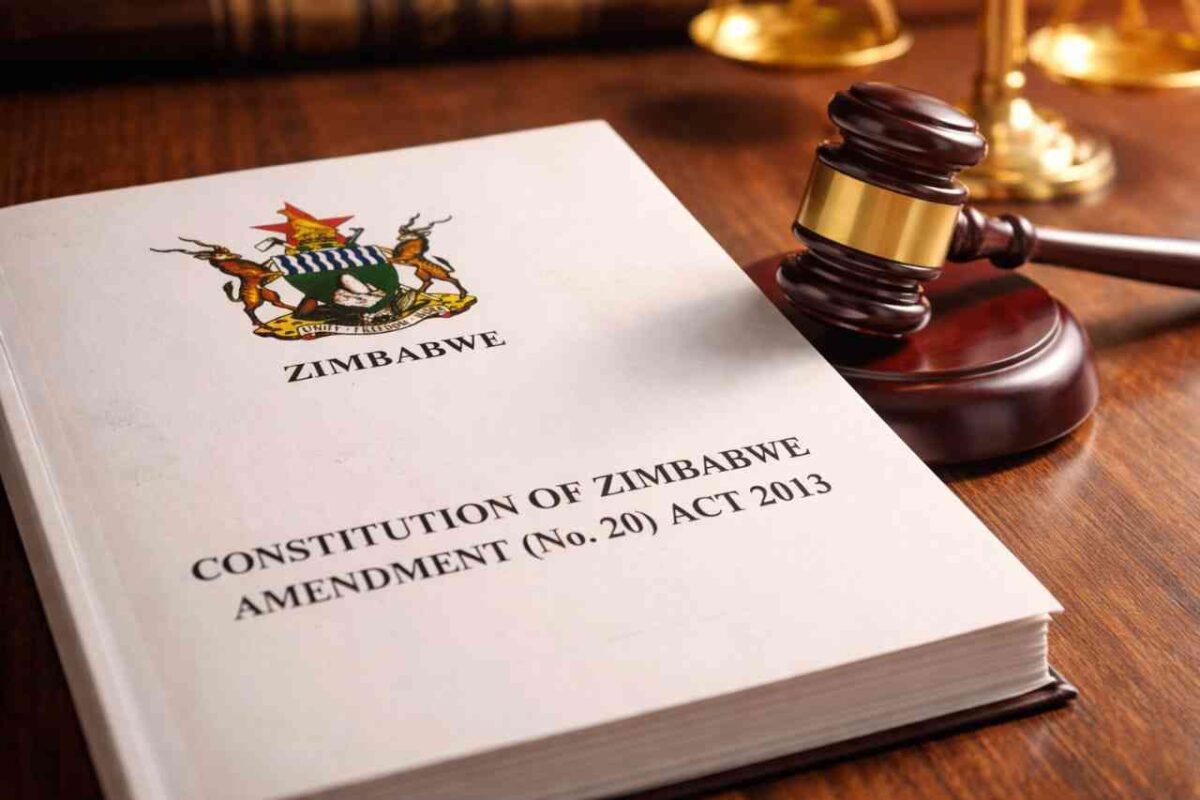
Matabeleland South Senator Solani Moyo has urged Zimbabwe’s Senate to reject Constitutional Amendment Bill No. 3 (CAB3), warning that the proposed reforms would weaken democratic safeguards, concentrate power in the Executive and erode citizens’ role in choosing their leaders.
Speaking during debate on the Bill in the Senate on Tuesday, Moyo said the proposed amendments undermined key constitutional principles, including universal suffrage, separation of powers and accountability.
“Our Constitution is founded on a simple but powerful idea: all authority is derived from the people,” he told senators.
“That principle is not symbolic, it is binding. It is expressed through universal suffrage, regular elections, separation of powers and accountability of those in office. This Bill strikes at each of these principles.”
On this topic
Moyo first challenged the process through which the amendments were being pursued, arguing that constitutional safeguards under Section 328 had not been properly followed.
“Before we even consider the substance, the process of amending the Constitution is already fatally flawed,” he said.
He argued that public consultations had been inadequate and, in some cases, marred by intimidation and violence.
Moyo also questioned whether the parliamentary majority backing the Bill genuinely reflected the will of the electorate, and raised concerns over attempts to avoid a referendum.
“A Constitution cannot be amended through an unconstitutional process,” he said.
A major point of contention is the proposal to extend the terms of elected officials from five years to seven.
Moyo said Parliament had no moral or constitutional authority to lengthen its own mandate without first returning to voters.
“What we as the Senate are being asked to do is to extend our own term,” he said.
“No elected body has the authority to extend its own mandate without returning to the people.”
He warned that such a move could set a dangerous precedent.
“That is how democracies die — not in a single moment but through incremental extensions of power without accountability.”
“The people elected us for five years, not seven. We have no mandate to change that.”
Moyo said lawmakers had not campaigned in the 2023 elections on a promise to remain in office beyond 2028.
“None of us told the people that if you vote for us, we will change the Constitution so that we remain in office until 2030,” he said.
The senator also accused the Bill of attempting to sidestep Section 328(7), which prevents incumbents from benefiting from constitutional amendments affecting term limits.
“Section 328(7) exists for one reason — to prevent those in power from changing the rules to benefit themselves,” he said.
“That is not constitutional amendment. That is constitutional defiance.”
Moyo strongly opposed Clause 3 of the Bill, which proposes removing direct presidential elections and transferring the power to elect the President to Parliament.
He said the change would weaken democratic participation and increase the risk of political manipulation.
“Clause 3 proposes to remove the people’s right to directly elect the President,” he said.
“It reduces millions of voters to a small group of politicians and opens the door to elite capture, patronage and corruption.”
“A President chosen by politicians is not the same as a President chosen by the people.”
He raised concerns that the proposed system could allow individuals unknown to the public — or even those rejected by voters — to become President through parliamentary processes.
Moyo also questioned why the Bill did not require a secret ballot for the election of a President by Parliament.
“Why is a secret ballot necessary for the election of the President of the Senate and the Speaker of the National Assembly, but not for the highest office of the land?” he asked.
Turning to the Senate’s composition, Moyo criticised proposals to increase the number of unelected senators appointed by President Emmerson Mnangagwa.
He warned that the change could tilt the balance of power in the Upper House.
“This is not reform,” he said. “It is manipulation of the democratic system.”
Moyo also rejected government arguments that more appointed senators would improve parliamentary oversight.
He said executive appointments to the legislature would weaken, rather than strengthen, accountability.
“How having persons appointed by the Executive to the Legislature will enhance the Legislature’s oversight role over the Executive is unclear,” he said.
“Clearly, it will have the opposite effect.”
The senator also objected to proposed changes affecting election management, including transferring control of the voters’ roll from the Zimbabwe Electoral Commission to the Registrar General and creating a new delimitation commission appointed by the President.
“If the Executive controls the process, the credibility of elections is destroyed,” he said.
Moyo further warned that judicial independence could be weakened by reforms giving the President broader powers to appoint judges.
He said the Bill would remove public participation in judicial appointments and reduce the role of the Judicial Service Commission.
“When one office controls appointments across the system, the risk is obvious: justice becomes vulnerable to political influence,” he said.
“The proposed amendment is a threat to judicial independence and will erode public confidence in the rule of law.”
Moyo said the various provisions in the Bill revealed a broader pattern of centralising power.
“Each of these changes is concerning on its own, but together they reveal a clear pattern,” he said.
“Power is being centralised, the people are being excluded, safeguards are being removed and accountability is being weakened.”
“This is not constitutional reform. It is a fundamental shift away from democracy.”
Urging senators to reject CAB3, Moyo said any constitutional reform should be transparent, lawful and grounded in public consent.
“This Bill violates the Constitution, undermines democracy and removes power from the people of Zimbabwe,” he said.
“The Constitution belongs to the people and we are merely its custodians. Let us not betray that trust.”







Leave a Reply