
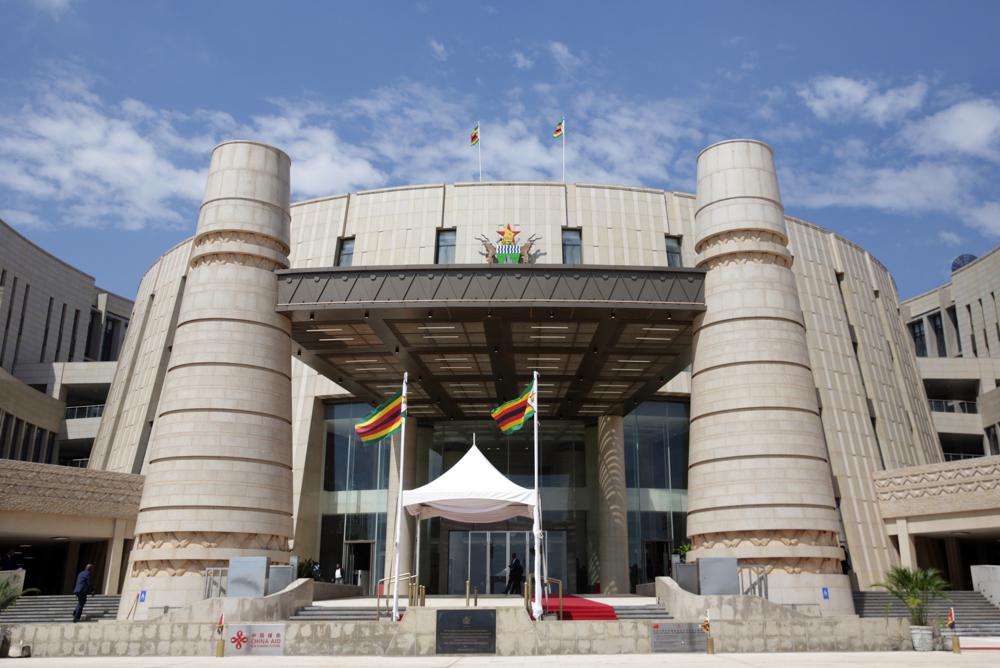
Parliament has adopted a motion calling for unpaid care and domestic work to be recognised in national policy and economic planning, with MPs saying the burden falls disproportionately on women and girls and limits their access to education, paid work and leadership.
The motion, tabled by Otillia Sibanda, calls for a national policy and legislation on unpaid care work, as well as a survey to assess its economic value and contribution to gross domestic product (GDP).
It also calls for increased government funding for social protection, infrastructure and services that can reduce the time people spend on unpaid care work.
MP Tendai Pinduka said unpaid care work was an important part of the economy, particularly in rural communities, where women and girls often spend long periods collecting water, cooking, cleaning and caring for family members.
On this topic
He said improving access to water could reduce the burden.
“This will also cushion and lessen the burden of women mostly and girls across the rural communities,” Pinduka said.
MP Perseverance Zhou said unpaid care included childcare, caring for sick and elderly people, cooking, cleaning and collecting wood and water.
She said the work remained largely excluded from national accounts and development planning despite its contribution to the economy.
Zhou cited Zimbabwe’s time-use survey, which found that women spent more time on unpaid and domestic work than men.
She said women recorded 5.9 hours of daily committed work compared with 3.8 hours for men among those aged 25 to 34, while women accounted for 89.9% of unpaid domestic participation.
Zhou called for a national policy based on the International Labour Organisation’s five-R framework, alongside investment in water infrastructure, clean cooking technologies and care facilities.
MP Sikhuphukile Dube said the burden also affected children’s development because many caregivers had limited access to affordable childcare and early childhood development services.
“Unpaid care and domestic work is pivotal to national development,” Dube said.
She said inadequate support for caregivers affected parents’ ability to participate in the economy and could have long-term consequences for children’s education and development.
MP Tendeukai Matara said unpaid care responsibilities also restricted women’s participation in leadership.
“Leadership requires time, flexibility, mobility and the ability to participate fully in public life,” she said.
Matara said reducing unpaid care work would help create more inclusive governance.
But MP Knowledge Kaitano questioned the financial implications of compensating people who perform unpaid care work and warned that such a programme could be difficult to administer.
She also questioned whether compensation could reinforce the perception that caregiving was primarily women’s work.
MP Corban Madzivanyika said the motion was not necessarily calling for caregivers to receive salaries but sought to recognise their contribution and reduce their workload.
He said providing reliable access to water and affordable energy could significantly reduce the time spent on household chores.
Madzivanyika also called on men to take greater responsibility for unpaid care work.
MP P. Moyo said unpaid caregivers also helped sustain the country’s health system by providing care that would otherwise place additional pressure on public health facilities.
He called for caregiver training, respite services, home-based care support and stronger community health programmes.
MP Mutsa Murombedzi described unpaid care as the “invisible backbone” of society and said it was often treated as women’s work despite its contribution to households and communities.
The motion also calls on the Ministry of Public Service, Labour and Social Welfare to develop legislation and commission a national survey to assess the economic value of unpaid care work.






Leave a Reply