

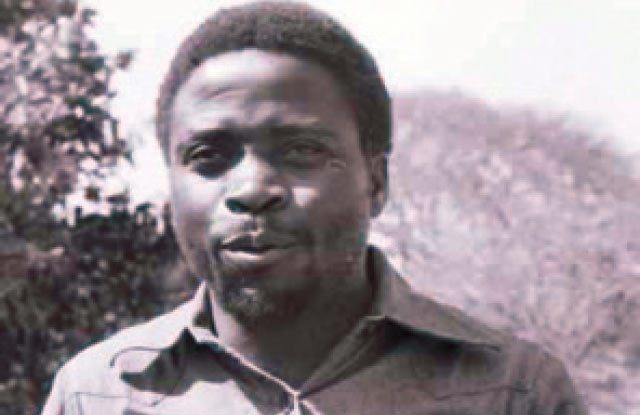
The death of Rodgers Mangena (Alfred Nikita) in a landmine explosion in June 1978 sent shockwaves through ZAPU and the broader African liberation movement, much like the later deaths of Josiah Tongogara and the assassination of Chris Hani.
As with ZANLA supremo, Josiah Magama Tongogara, easy explanations were not sufficient in understanding Mangena’s death. Mangena became the founding Chief of Staff of ZPRA at a pivotal moment. His leadership came after the 1971 FLORIZI split, led by James Chikerema, which nearly derailed ZAPU’s role in the liberation struggle. At that time, the title “Commander” was exclusively reserved for the party president. Stepping into the role, Mangena played a crucial part in reshaping ZPRA from the remnants of the unit previously known as Special Affairs.
Tragically, Mangena was killed on June 28, 1978, when the vehicle he was traveling in detonated a landmine. His death, therefore, has since been shrouded in controversy, sparking speculation and ongoing debate for more than four decades. Numerous conspiracy theories have emerged around his demise, with some suggesting that his death was not an accident but an assassination orchestrated by rivals within ZPRA or the ZAPU leadership.
However, within ZAPU and Zimbabwe’s liberation movement, it is widely accepted that Mangena was killed by the Rhodesian Front, who made no secret of their satisfaction at his death. In this article, we republish an excerpt from Barbra Cole’s book The Elite: The Story of the Rhodesian Special Air Services, which details how the Rhodesian SAS allegedly planned and executed the operation that led to Alfred Nikita’s death.
One of few men who military prowess was celebrated during his career, Nikita became the founding Chief of Staff of ZPRA at a critical time, after James Chikerema’s FLORIZI split in 1971 nearly derailed ZAPU’s role in the liberation’s struggle After stepping into the hot seat, Mangena significantly shaped ZPRA from the remnants of the unit formerly known as Special Affairs.
It is therefore no surprise that the mercurial commander’s death triggered a frenzy of controversy, speculation, and debate which have refused to subside more than four decades on, and have given birth to a myriad of conspiracy theories. Among the most sensitive of these conspiracy theories is that Mangena’s was assassinated by his rivals within ZPRA or in the ZAPU leadership.
However, within ZAPU and Zimbabwe’s liberation movement in general, Mangena was undoubtedly killed by the Rhodesian Front, who made no secret of their joy at his demise. In this article, we republish an account authored by Barbra Cole from her book “The Elite: The Story of the Rhodesian Special Air Services.” The excerpt provides details of how the Rhodesian SAS allegedly planned and executed the operation that resulted in Alfred Nikita’s death.
Operation Elbow June 1978.-The Rhodesian SAS operation that killed ZPRA’s commander Alfred Nikita Mangena
Over in the early-warning position, Sergeant Phil Cripps and a lance corporal had been taking it in three-hour stints to keep watch on the road while two other men behind them provided protection. Their position was the best possible, but had limited views of the road.
At precisely 11h15 on June 24, eleven days after the mission had got underway, Sergeant Cripps was watching the road intently as usual, when, to his great astonishment, around the corner swung a huge brand-new dark green Russian-manufactured Zil truck.
Not only that, but it was laden down with what looked very much like brand-new ZIPRA in crisp new khaki-coloured uniforms and floppy hats, carrying brand-new AK-47s.
Quickly, the excited sergeant got on the radio to the main ambush group. “Here it comes,” he reported.
“How many trucks?” came the voice at the other end of the radio.
“Not sure,” the sergeant replied. “I only saw one.”
When another truck swung around the corner, the sergeant and his companion worked out that there had to be three trucks in all… and all carrying terrorists. Quickly, Phil relayed the information to the men in the ambush position.
“Well, where are they?” the ambush party demanded to know.
“I don’t know,” the equally-puzzled sergeant replied. “The engines keep stopping then starting up again. But they should have reached you by now.” Perhaps, he thought to himself, they had stopped for a smoke break.
To the group lying in wait, it seemed like an eternity. What should have taken only a couple of minutes took an agonising ten before the first Russian truck came into sight.
The convoy was moving cautiously and the ambush party could see why. There was a sweep-line of ZIPRA troops walking ahead of the first truck and it was divided into two teams of four men on either side of the road.
They were checking the road for landmines and examining the sides of the road for the signs of an ambush.
The ambushers—the likes of the very people who were already primed and watching—were crowded with bodies clearly seeing machineguns on the first truck. All three lorries were crowded like enemy. Some were standing; some appeared to be sitting on what looked like equipment.
The sweepline advanced moving ever and dangerously nearer to the eight SAS soldiers lying in ambush behind the pile of rocks on the side of the road.
There were, in fact, not one but two grids in the road and, having meticulously swept through one looking for trouble, ZIPRA were obviously taken aback to find yet another ahead of them.
They decided that they had done enough checks for one day. They couldn’t be bothered with any more.
The sweepline halted just ten metres from the Rhodesian landmine. Then ZIPRA climbed on to the first truck and it moved off again. The other two trucks were now about 200 metres apart.
Corporal Lucy with the RPG-7 rocket launcher and two companions had been tasked to take on the trucks in the event of the command-detonated landmine failing to do the job. Lucy could not conceal himself satisfactorily and knelt by the road waiting to put a rocket into the truck.
The sergeant major meanwhile was watching his tree—his aiming mark—and the first vehicle. Stand by… prime… wait… wait… wait. Then the back of the truck passed over the hidden landmine.
A split second earlier, Lucy’s companion shouted a warning to him that the enemy had seen him, and were shooting at him. Lucy sent a rocket into the vehicle.
But by then Captain Fritz had already given the word to initiate the ambush. The sergeant major pressed the button and that was it. The enemy didn’t have a hope.
There was a sudden wind-sucking whoosh and the first truck vanished in a gigantic mushroom-shaped fireball of smoke and flames 15 metres in diameter. Amazingly, the ambush group never heard the explosion.
Lucy’s rocket had merely added to the commotion of the moment. When he looked for the enemy who had been shooting at him a fraction of a second before, he had disappeared.
The size of the fireball came as a complete surprise to the ambush party. It was certainly nothing like the trial run back at Deka.
And no wonder. For there was more than ammunition exploding that day. The lorry had been carrying a highly-inflammable cargo and as the landmine exploded it ignited the ammunition—and a 200-litre drum of petrol.
The fireball was so enormous that for one horrifying moment the Rhodesians held their breath as they feared for the lives of Lucy and party positioned a mere 15 metres from the detonation point.
But they were safe… and the moment the landmine detonated, Lucy and his team jumped to their feet and put rockets into the two remaining trucks as fast as they could, while the remainder of the party raked the trucks with machinegun and rifle fire.
The second lorry was also carrying a 200-litre drum of petrol and that too went up in flames as it ran into the wreck of the first truck, which was still burning, the exploding ammunition feeding the fire.
The driver of the third vehicle fled. The door was wide open as his truck careered down the hill and crashed into the other two, where it too immediately burst into flames.
The scene was an absolute holocaust. Trucks were blazing and exploding; there was the constant roar of gunfire and the air was filled with the screams of burning and wounded enemy.
All the ZIPRA on the first truck had been killed in the initial explosion. The ZIPRA men on the second and third vehicles attempted to flee in all directions. But they were either killed by the exploding ammunition or cut down by small arms fire.
Several wounded managed to get clear and eventually staggered into the Zambian Army base at Kabanga to report the ambush.
The ambushers had no concept of time but the event they had been waiting for so long to be played out must have only taken minutes.
The ambush group stopped firing and remained watching the area. The radio operator and a trooper moved back to the hill to report the ambush to Deka.
As the early-warning group moved in to join the main party, a burning figure stumbled towards them, his flesh hanging in shreds. They shot him and he went down.
They rejoined the ambushers and swept the area, avoiding the immediate vicinity of the trucks which were burning and the ammunition still exploding.
Wounded enemy lying among rocks and thick clumps of bush opened fire, but the ZIPRA men were quickly outflanked and a further four were killed.
A body-count and search was carried out, documents and weapons were retrieved and photographs were taken of possible commanders and of the ambush site.
Their count, arrived at from the number of whole bodies plus parts of others, revealed that 69 ZIPRA had been killed. It was the highest kill-rate from any ambush in the entire war.
Pieces of bodies, arms, legs, chunks of flesh and intestines, even a rib cage, were hanging in the surrounding trees.
Charred bodies lay scattered in the surrounding undergrowth close to the trucks.
A line of dead was sprawled for 100 metres along the edge of the road, killed as they attempted to jump and run from the last two trucks as they careered out of control and into the ambush area.
A trail of new hats lay in a single line along the road, blown off by the force of the wind as the survivors ran away. They had kicked off their shoes as they fled… their hard bare feet better suited for running.
Every man had been in freshly-issued kit. They had even had new toothbrushes still in wrappers in their pockets.
As the explosions died down, all enemy weapons were recovered or thrown into the still-blazing trucks.
The SAS moved back to their former position on the hill to collect their packs. Suddenly, they saw the same burned terrorist who had been shot by the early-warning team get up and with super-human strength, stumble away from them. He was shot again. This time he did not get up.
A party was sent to lay landmines either side of the trucks in the hope of getting even more enemy when they came to investigate. Then, they regrouped and moved along the road to await extraction.
A group of Zambian civilians and their donkeys sauntered towards them, and, fearing the weight of the heavily-laden donkey cart might set off their new landmines, the soldiers detained them while they awaited the arrival of the choppers.
Soon the faint beat of rotors could be heard. The SAS released the locals with a warning not to go down the road. Then they slung their kit into the choppers and were gone.
Two choppers containing the main ambush group flew back to Deka … but for Sergeant Phil Cripps and his team in the remaining chopper, there was still one more job to do.
They headed down the road towards Kabanga Mission and the pilot landed them far enough away from the ambush site not to arouse suspicion. They were near a kraal, so quickly moved into the bush and pulled back to the hills.
The Rhodesians were now planning to bait the big fish. They knew that the terrorist hierarchy made a practice of visiting the scenes of major incidents… but only after a few days’ grace during which the local army contingent checked the area for anything the Rhodesians might have left lying around.
That night, Phil Cripps’s mine-laying party moved back down the escarpment towards the road. It was a beer-drinking night in the local kraals and as the SAS men lurked in the bushes by the side of the road, they could hear a drunk stumbling along the road whistling and singing to himself.
The man blundered down the road and soon all fell silent again. The mine-party cautiously moved out into the road.
Aided by what little light there was from the poor moon that night, Corporal Lucy set about digging a hole for the landmine, while two men kept watch either side of him.
Sergeant Phil Cripps was on hand to remove the excess soil and spread it among the bushes, but it was to be some time before he had any. The road was rock hard and Corporal Lucy had to chip it out bit-by-bit with his bayonet. In normal conditions where the soil was in granular form, the job would only have taken an hour. This time it took him four, and by then his hands were cut and bleeding from his labours.
The hole he eventually carved was just large enough to take the mine and he wasn’t happy with it.
There was no space to put anything fancy like anti-prod devices or boosters. It would have to be just a straight-forward landmine.
The mine really needed to be deeper in the road and camouflaging it was not going to be easy. Vehicle tracks had been engraved into the dry hard road and it would be impossible to reproduce that sort of look.
Then Lucy heard the sound of cows and had an idea. He knew that a huge pile of dung would provide the perfect solution. Better still, he managed to find a suitably brittle piece that had been well and truly flattened by a passing vehicle. Carefully, he eased it onto his bivvy then carried it over to his mine. It fitted perfectly.
The sun was just coming up as he patted the cow dung in place. Soon, the locals would be up and about and maybe even the Zambian Army would be along to sweep the road for landmines.
They gathered up their kit and anti-tracked away…
Three days after the ambush, ZIPRA hierarchy and their bodyguards travelling in two Land-Rovers rolled along the road to carry out an on-site inspection of the devastation. Included in the VIP party was ZIPRA army commander Alfred Nkita Mangena … a big fish indeed.
Hidden under a piece of cow dung was the very thing, which, if activated, could strike right at the heart of the enemy’s command structure.
But the two vehicles passed over the landmine uneventfully and the passengers continued on their way unharmed.
Their inspection over, the VIPs reversed and roared off in the direction they had come. Nothing untoward had happened on their way in. The Zambians had already swept up and down the road, checking the area out for landmines after all. There was every reason to feel confident on the way out.
But the ZIPRA men could not have been more mistaken. The rear wheel of the last Land-Rover bearing Alfred Mangena detonated the SAS landmine … and the ZIPRA army commander and three of his colleagues went up in the blast… When the dust settled, it was found that in addition to the three dead men, six others, three of them senior commanders, had been injured.
Back at Deka, the SAS had been monitoring Zambian Army messages in the days after the ambush and when Captain Colin Willis heard the Zambian Army commander at Kabanga telling his HQ that the “comrades” had hit a second landmine, he scrambled the choppers, organised a small SAS stick and crossed the border once more in the hope of getting hold of Mangena’s body and claiming it as a propaganda prize. But by the time they got there, it had already been taken away.
It had certainly been a bad week for ZIPRA. Both the ambush and the landmine incident were major blows, and the death of Mangena was to hit the ZIPRA high command hard and have a demoralising effect on the men in the field.
Had Mangena survived, he would have gone on to be the most powerful man in ZIPRA next to Joshua Nkomo. According to SB thinking, his death was equivalent to having accounted for 1 000 run-of-the-mill enemy.
Mangena’s death was to cause considerable friction between ZIPRA and the Zambian Army. ZIPRA blamed the Zambians for it. They were supposed to have checked out the road after all. They even accused the army of calling in the Rhodesians.
The Zambian Army very reluctantly cleared up the ZIPRA corpses and eventually convinced the local Africans to help them bury the bodies and remains. The burnt-out shells of the trucks were never removed and right until the last days of the war they were still there, serving as a reminder to ZIPRA of what might befall them if they strayed too close to the border.
In the days following Mangena’s death, SAS reconnaissance groups reported numerous sightings of ZIPRA in the Simani Mine area… and Captain Colin Willis and Captain Fred Watt, of 1 Commando, RLI, decided that the time had come to go into the mine complex itself.
Sad to have lost a dedicated hero who fought with determination.Salute Comarada