
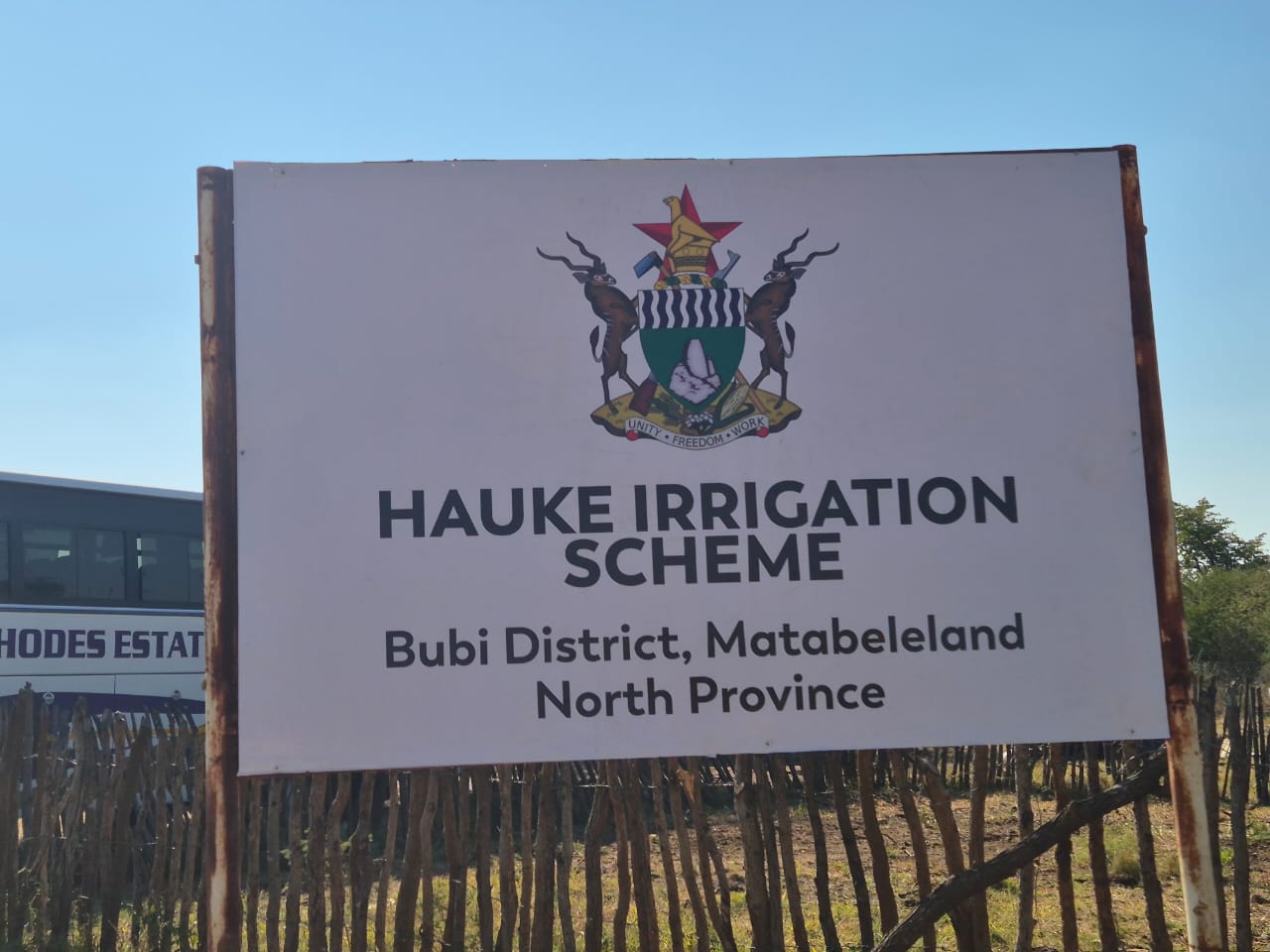
Farmers at Hauke Irrigation Scheme in Inyathi, Bubi District, are transforming agricultural waste into valuable resources through the Circular Food Programme being implemented by the International Crops Research Institute for the Semi-Arid Tropics (ICRISAT).
What was once discarded as useless waste is now being converted into livestock feed, organic fertiliser and other income-generating products that are improving household incomes, strengthening food security and protecting the environment.
Under the Circular Food Systems in Africa project, funded by the Australian Government through the Australian Centre for International Agricultural Research (ACIAR), smallholder farmers are being trained in climate-smart agriculture and sustainable food systems that encourage the full utilisation of farming by-products.
From crop residues to livestock waste, farmers are adopting innovative methods to ensure that nothing goes to waste.
On this topic
Speaking during a community field visit, several farmers said the programme had changed their understanding of agriculture and resource management.
Instead of burning or discarding crop residues, farmers are now using them to make compost, livestock feed and organic manure.
One farmer, Nobuhle Sibanda Mpofu, said the project had helped communities maintain healthy livestock during drought periods.
“During this drought period, the pasture has very little nutritional value, so we make supplementary feed to help our livestock,” she said.
“I make urea lick blocks because when livestock feed on low-nutrient pasture, they produce weak calves. The blocks help them gain energy and stimulate their appetite.”
She said the livestock feed on the blocks in the evening before grazing during the day.
“When they go into the bush, they scavenge and eat more because they would have already licked the block,” she said.
According to Sibanda Mpofu, the blocks are made from maize bran, molasses, salt, sunflower residue, cement for binding, calcium, phosphorus and urea fertiliser.
Another farmer, Mark Khabo, said crop residues that were once thrown away had become a reliable source of livestock feed.
“After threshing cowpeas, we keep the residue and use it as stock feed. I also make bales from cowpea residue so that I can measure how many animals can feed from one bale,” he said.
He said he also uses leaves from bambara nuts, groundnuts and beans, which are dried, baled and stored as protein-rich feed for livestock.
“There is also grass that we clear from the farm to get rid of snakes. We bale that as well for stock feed,” he said.
Khabo added that maize and sorghum stover treated with urea, as well as sunflower residue, were also mixed into livestock feed.
“All of this feed can be mixed together. You only add salt and molasses. The material is free because I do not buy any of it,” he said.
He said the feed had helped him maintain quality livestock, meat and milk production, particularly during winter and drought periods.
“During the previous drought season, I did not lose any livestock and the milk quality remained good,” he said.
“The meat was also good because the buyers inspect it and want quality products.”
Khabo said he now sells some of the stock feed to other farmers.
“There is a good market and I make a lot of money from it,” he said.
Another farmer, Thandanani Khabo, said mechanisation services had also become a source of income for local farmers.
“We bought this thresher in 2021 as two families after noticing demand from the irrigation scheme,” he said.
“We thresh maize, sorghum, millet, sunflower and beans. We charge US$25 per tonne or five buckets.”
He said remnants from the threshing process were kept for livestock and chicken feed.
Meanwhile, Libele Mbambo said poultry waste had become an important source of organic fertiliser.
“I keep layer chickens. I use the chicken waste in my vegetable garden as fertiliser,” she said.
“I do not spread it everywhere because it is too strong, so I apply it directly to each plant.”
Mbambo said waste from her groundnut farming was also used as stock feed for goats.
“I do not throw away anything,” she said.
Tanyaradzwa Tenesi from ICRISAT said the organisation was promoting sustainable production systems for dryland crops such as millet, finger millet, sorghum and groundnuts.
“At ICRISAT, we focus on sustainable production systems from farm to food,” she said.
“We look at variety development based on farmers’ needs and also focus on how farmers can use both the grain and the by-products.”
Tenesi said small grains could be used to produce a wide range of nutritious food products beyond traditional meals such as sadza and porridge.
“There are many products that can be made, including cakes, biscuits and muffins,” she said.
“We call these smart foods because they are nutritious, environmentally friendly and require fewer inputs.”
Farmer Richard Nyathi said communities were also producing organic liquid fertiliser from livestock manure.
“We use 40 kilograms of goat or chicken manure in a 200-litre drum filled with water,” he said.
“We stir it twice a day, in the morning and evening, and after three to four weeks the fertiliser is ready for use.”
Nyathi said farmers dilute the fertiliser with water before applying it to vegetables, maize and other crops.
“This helps reduce the cost of buying artificial fertiliser,” he said.
Gertrude Ncube said the programme had also encouraged farmers to embrace compost-making and sustainable farming methods.
“ICRISAT taught us that we should not throw away any waste from the field,” she said.
“We use twigs, dry grass, rotten crop material, green material and manure to make compost.”
She said the compost was turned every seven days and carefully monitored to maintain the correct temperature and moisture levels.
“When it becomes dry, we spray water to keep it moist,” she said.
“After about eight weeks, the compost is ready for use.”
As farmers at Hauke Irrigation Scheme continue adopting circular food systems, the initiative is helping reduce waste, improve food production and build resilient livelihoods in the face of climate change and recurring droughts.
Support CITE’s fearless, independent journalism. Your donation helps us amplify community voices, fight misinformation, and hold power to account. Help keep the truth alive. Donate today




Leave a Reply