
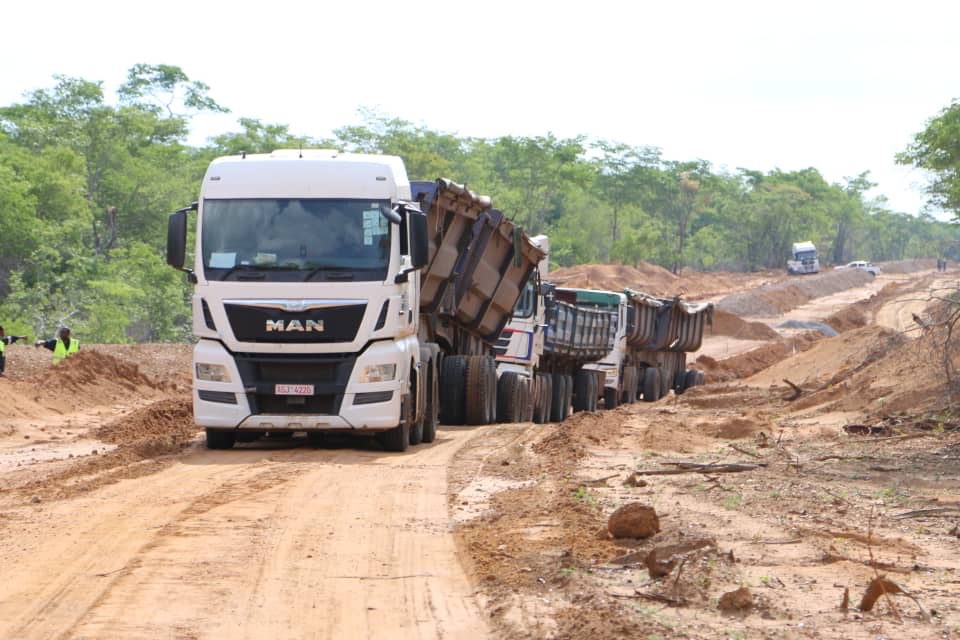
GWANDA communities have called for the urgent rehabilitation of a road leading to a lithium mine, saying heavy truck traffic has damaged the road, generated excessive dust and raised concerns over the safety of a bridge.
The call was made by Gwanda community member Siduduzile Masilela during the Zimbabwe Alternative Mining Indaba (ZAMI) in Bulawayo, held under the theme “Powering Tomorrow: Reimagining Mining, Energy, Agriculture and Community Development in Zimbabwe”.
Masilela said about 150 trucks, each carrying approximately 34 tonnes, were using the road to Gwanda Lithium Mine daily, placing a heavy strain on the infrastructure.
“Dusty from trucks along Mahongola road to the Gwanda lithium mine. About 150 trucks a day of 34 tons which already damaged the road. There is no road that side. Even the bridge. We fear that it might crack anytime,” Masilela said.
On this topic
She said the deteriorating road and dust were making living conditions difficult for some residents, with some families abandoning their homes.
“There is dust leading to TB especially from Ntephe to Mahongola, thus where there is Gwanda Lithium trucks which are travelling almost every day. Some of the communities have deserted their homes because there’s too much dust. You cannot stay in that area,” Masilela said.
She called for government intervention to rehabilitate the road and enable affected residents to remain in their communities.
“We wish the government can really chip in and rehabilitate that road. So that people can stay in their homes as usual,” she said.
Masilela said mining was an important source of livelihoods in Gwanda, with many families depending on small-scale mining and businesses serving mining communities.
“In Gwanda, mining is not just on the news, but it’s daily life. Most families have someone either mining as a small-scale miner or selling to the miners. So that’s how they survive, with informal jobs,” she said.
She said women were earning livelihoods by selling food, clothes and beer to miners, while shops, hardware businesses and rental properties were also benefiting from mining activity.
However, she said communities should not be left to bear the environmental and infrastructure costs associated with mining.
Masilela also raised concerns about blasting vibrations, saying mining activities were causing cracks in some areas. She said the expansion of mining claims was also reducing land available for farming and grazing.
“Open pits left uncovered. Children and cattle fall in water and trenches. Rivers and wells turning mud or dry up due to siltation,” she said.
She said other challenges associated with mining communities included school dropouts, gender-based violence, family breakdown, alcohol abuse, child labour and early pregnancies.
“Social school dropouts, boys leaving school for artisanal mining. GBV and family breakup around mining sites, high alcohol use, child labor, early pregnancies in gold rush settlement crime,” she said.
Masilela said government and mining companies should ensure that communities benefited from mineral extraction while being protected from its environmental and infrastructure impacts.
She cited Blanket Mine’s support for schools, clinics and road works as an example of how mining companies could contribute to community development.
Her comments came as the Centre for Natural Resource Governance (CNRG) launched its Follow the Money: A Practical Guide to Understanding Mining Revenues and Public Finance toolkit at ZAMI.
The toolkit is intended to help communities, civil society organisations and journalists track mining revenues and monitor how public resources are allocated and spent.
Masilela welcomed the initiative, saying communities needed greater capacity to track money generated from mining and intended for community development.
“I’m happy because we are now having this toolkit that will help us to follow our money to that trust,” she said.
For communities living alongside expanding mining operations in Gwanda, Masilela said the immediate concern was ensuring that infrastructure could withstand increased mining traffic.
The call for road rehabilitation, she said, was aimed at enabling villagers to remain safely in their communities while continuing to benefit from the livelihoods created by mining.






Leave a Reply