
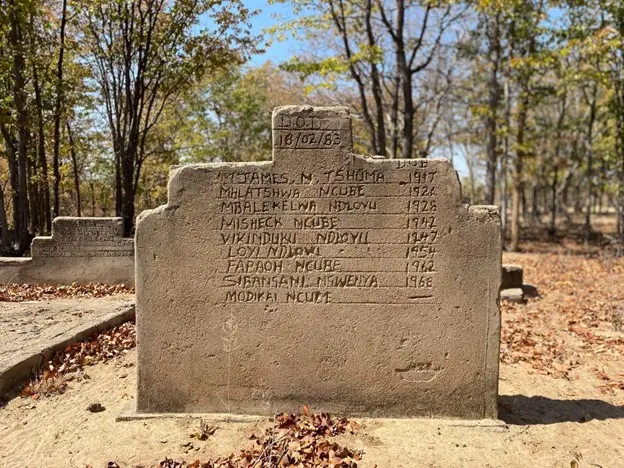
Families of people who disappeared during the Gukurahundi atrocities should use existing laws to obtain legal recognition of their missing relatives and compel authorities to investigate their disappearances, Zimbabwe Lawyers for Human Rights (ZLHR) lawyer Prisca Dube has said.
Dube said the continued absence of the bodies of those who disappeared had left wives, mothers and children without closure while preventing them from accessing benefits and property belonging to their missing relatives.
She was speaking yesterday during commemorations of the International Day of the Victims of Enforced Disappearances, hosted by Ibhetshu Likazulu under the theme “Remembering the Disappeared: Truth Telling, Justice and Healing”.
Dube said Zimbabwe had yet to ratify the International Convention for the Protection of All Persons from Enforced Disappearance, which was adopted in 2006 and came into force in 2010.
On this topic
“The International Conversion for the protection of all victims from enforced disappearance says no exceptional circumstances whatsoever whether a state of war, a threat of war, internal political instabilities or any other political emergence maybe evolved as a justification for enforced disappearance,” she said.
“This is a conversion that has been there from 2006 and operationalized in December 2010 and funnily enough, it identifies both the disappeared and the family of the disappeared as victims of enforced disappearance.”
Dube said recognising relatives of disappeared people as victims was important because the consequences of enforced disappearance extended beyond the person who was taken.
“I don’t know whether you get what a game changer this is, it identifies the disappeared, and the family of the disappeared as the victims of enforced disappearance and this is a law that was operationalized, where other countries signed and made it a law in their countries in 2010,” she said.
“We are here today 30 August; Zimbabwe has not signed.”
She said women had carried the burden of uncertainty for decades, particularly in cases linked to Gukurahundi, which claimed thousands of lives in the Midlands and Matabeleland provinces in the 1980s.
While many of those who disappeared were men, Dube said women and children were left to deal with the social, emotional and economic consequences.
“We commemorate on 30 August, what we forget by large the disappeared are man, but the victims that are here are women and children, can we shift our mindset, the disappeared has disappeared, what does the woman left behind say, does she mourn? because for us, if we don’t go to a grave site to bury someone, then you don’t mourn, what are you mourning for,” Dube said.
“So think of these women as far back in 1983 up to 2026, they have not mourned, they have not worn the mourning clothes, she doesn’t have closure, she has the livestock book under his husband’s name since 1984 up to 2026, the book is under the husband’s name.”
Dube said families had also been left in legal and economic limbo because houses, livestock and other property remained registered in the names of relatives who disappeared decades ago.
“The house is under the husband’s name. Their husbands were stolen from them, their brothers, their kids while still in their youths in the 80 and more than 40 year later, what has happened with their lives as they stopped at the enforced disappearance bus stop and they are still there,” she said.
“We have never taken our time, Internationally, yet alone nationally to situate women, be it the wives or the mothers of the enforced disappearance.”
Dube urged Gukurahundi-affected families to use available legal mechanisms to establish what happened to their relatives and obtain documentation recognising their status.
She said families could apply for information about the whereabouts of their relatives and use the courts to push for investigations.
“What does it me to me and you, when we take Gukurahundi and situate it, for me as a lawyer it them means of all these people that were disappeared, show us the body,” she said.
“That means everyone who was disappeared, it is time now that we start to have a conversation as a country and say each and every family of the disappeared, have they done an application to say show us the body so that there is indeed something legally that is there that says this person is not there.”
She also called for investigations into the circumstances surrounding the disappearances, saying authorities should be required to account for progress.
“Can we start investigations to say who took him and put a duty on those who are meant to investigate to start investigating and say if they are investigating can we engage lawyers and find a way to say they must report back to the court whether three or six months to show how far they have gone with their investigations,” Dube said.
Dube further urged families to make use of the Missing Persons Act, which provides a legal mechanism for declaring a person missing.
“The second way is the missing persons act, this is an act that says if you know your relative comes home this time and they don’t do that, the very next day something must be done, if not a report then with time, families have a duty to use the Missing Persons Act to say the person is missing,” she said.
Dube said applications could be made at the nearest magistrates’ court, although she acknowledged that the law placed a significant burden on families.
“That is done at your nearest Magistrate court, unfortunately the law has a gap in that it gives burden the families but once you have done that report, the police don’t mingle to do investigations with you,” she said.
“What merely happens is that the Magistrate will say you should do adverts.”
She said the process could involve publishing notices in the Government Gazette and newspapers before the magistrate considers evidence from relatives and associates of the missing person.
“If it is advertised in Government gazette and the Chronicle, which is the widely read newspapers this side, then the Magistrate can call the relatives, work colleagues, in chambers to get evidence that indeed the person is missing,” she said.
Dube said the laws had originally been formulated in a different historical context, including cases where people disappeared after leaving the country for employment opportunities.
“Remember the formulation of these laws, when it happened there was Wenela syndrome, someone would meet friends and get recruited to South Africa, the place of gold, they would only come after 3-5 years, so that is why evidence needed to be there,” she said.
However, she said families affected by the Gukurahundi massacres had largely not taken advantage of the legal mechanisms available to them.
“The victims of the genocide have not used these laws, they are not perfect laws but they are there and all of us need to then utilize them so that the death certificate can come out saying declared missing by virtue of this law, then women are able to use that document to claim whatever benefits are there that are meant to cushion the wife, the mother or the children,” she said.
Dube said greater use of the law could help open conversations around justice, accountability and the long-term impact of enforced disappearances.
“We have not been robust enough in this side of the country to use these laws so that we start to have these conversations,” she said.
She also pointed to the 2013 Constitution, saying it provides a further legal basis for families seeking remedies.
“With the 2013 Constitution, section 50 subsection 7 provides for that application, so it’s something that is there in our constitution that we can start to use to say how do we address some of these things,” Dube said.







Leave a Reply