
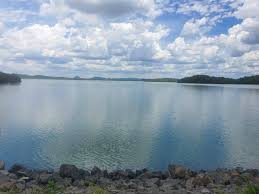
A major water and irrigation project aimed at improving climate resilience and food security in drought-prone Insiza District has been commissioned by the Government of Zimbabwe and the United Nations Development Programme (UNDP), with funding from the United Kingdom’s Foreign, Commonwealth and Development Office (FCDO).
The Wanezi Dam, Irrigation Scheme and Piped Water System were officially commissioned on Friday under the Climate Adaptation Water and Energy Programme (CAWEP), as part of efforts to strengthen water security and sustainable livelihoods in one of Zimbabwe’s driest regions.
The project combines climate-resilient infrastructure, renewable energy and community-led development to improve access to water and support agricultural production.
Key components include the rehabilitation of Wanezi Dam to a storage capacity of 1.7 million cubic metres, a 30-hectare centre-pivot community irrigation scheme, a seven-hectare drip irrigation system at Wanezi Secondary School, solar-powered piped water systems, a water treatment plant, 11 boreholes and an automatic weather station.
On this topic
The initiative directly supports 76 households through irrigation, while thousands more are expected to benefit from improved access to clean water, climate information services and economic opportunities.
Speaking at the commissioning ceremony, UNDP Resident Representative in Zimbabwe, Dr Ayodele Odusola, warned that climate change is expected to worsen drought conditions in the country.
“Climate change projections clearly show a warmer and drier future for Zimbabwe, with an increased likelihood of heat waves, greater rainfall variability and longer dry spells,” he said.
He said the impact on agriculture could be severe, particularly because much of Zimbabwe’s farming remains dependent on rainfall.
“With the majority of the sector remaining rain-fed, it is highly vulnerable to climate-related disasters, with long-lasting effects on livelihoods, food and nutrition security, and the economy,” Dr Odusola said.
According to UNDP, the irrigation scheme is already in its first production cycle, with 36 hectares planted under maize, sugar beans and chilli.
The project is expected to produce about 119 tonnes during the current season, generating projected sales of around US$65,600 and a gross margin of approximately US$27 000.
Dr Odusola said efforts had also been made to secure market access for farmers, including chilli export contracts to Germany and the United States.
He added that farmers had received financial support, equipment and insurance cover to improve productivity and protect infrastructure.
Minister of Agriculture, Dr Anxious Masuka, described the project as a major step towards transforming rural livelihoods and donated fertiliser, seedlings for 30 hectares and a tractor to irrigation farmers.
“When Wanezi Dam was breached by Cyclone Dineo, government looked for partners to redevelop the dam. We are pleased that UK Aid and UNDP came on board,” he said.
Dr Masuka said the project aligns with President Emmerson Mnangagwa’s vision of turning dams into economic hubs rather than simply water storage facilities.
“The dam must not be the end, but the means to transform rural livelihoods,” he said.
He said the project would support fisheries, provide potable water to more than 700 households and enable year-round irrigation using modern farming systems.
Representing the British Ambassador, King Lartey, Head of Strategy and Engagement at the British Embassy, said the project demonstrated the value of international cooperation in tackling climate challenges.
“The project stands as a testament to what can be achieved when commitment, expertise and shared purpose come together,” he said.Lartey said worsening droughts and unpredictable rainfall made climate-proof infrastructure increasingly essential.
“The dam has not only been rehabilitated, it has been strengthened to withstand climate pressures,” he said.
Permanent Secretary for the Ministry of Environment, Climate and Wildlife, Simon Masanga, said climate change remains one of Zimbabwe’s biggest development challenges.
“We have witnessed extreme climate events, including prolonged droughts and destructive flooding such as Cyclone Dineo in 2017, which damaged Wanezi Dam,” he said.
He said the government had introduced policy measures aimed at strengthening climate adaptation and long-term resilience.







Leave a Reply