
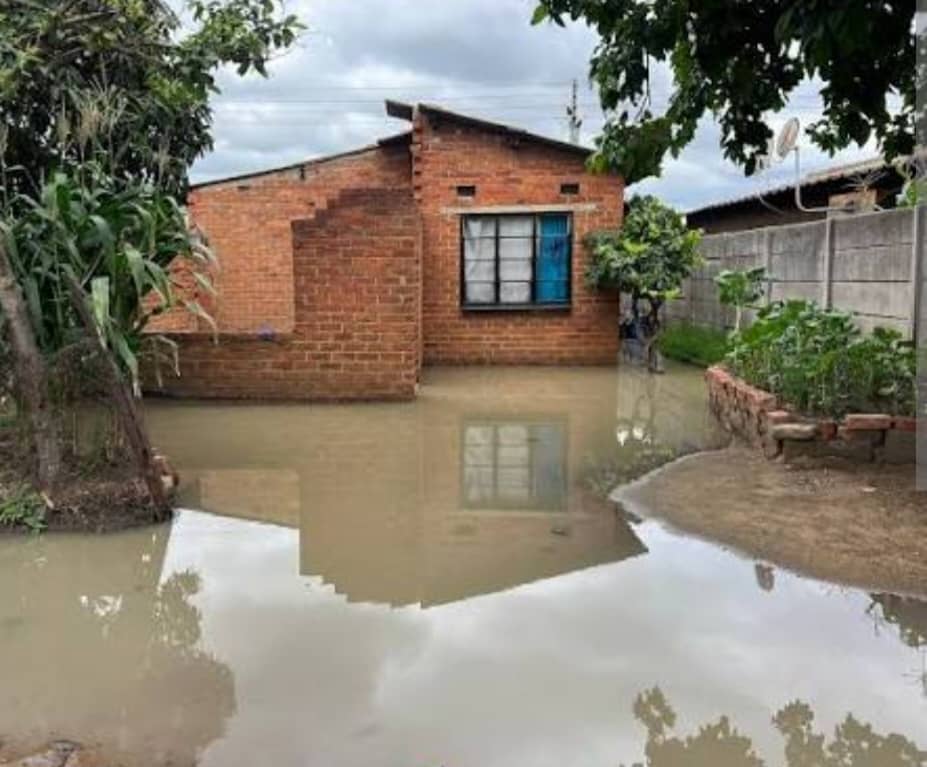
Bulawayo City Council is facing continued challenges in responding to sewer bursts and blockages, with councillors raising concerns over delays in attending to sewer-related problems and shortages of service vehicles.
According to the latest council minutes, Ward 25 Councillor Aleck Ndlovu concurred with concerns over the lack of progress in addressing sewer bursts across the city.
He observed that the persistence of sewer bursts and blockages could be attributed to the council’s inability to consistently meet the stipulated response time of two to three days.
Ndlovu also pointed to shortages of tools of trade as another challenge affecting service delivery.
On this topic
“I therefore propose that obsolete vehicles be disposed of and additional service vehicles be procured to make sure that each zone is adequately equipped with at least one service vehicle,” the councillor said.
Ward 14 Councillor Dumisani Netha, also raised concerns over how sewer maintenance work was carried out in his ward.
“The contractor assigned to Ward 14 had been concentrating on historical recurring sites while neglecting other emerging sewer hotspots that required urgent maintenance,” he said.
Ward 5 Councillor Dumisani Nkomo, sought clarification on the regulatory framework governing the use of petty cash and the prescribed expenditure limits.
He further proposed that the limit be reviewed to make sure it remained suitable for operational needs.
“The petty cash expenditure cap should be periodically reviewed to make sure it remains responsive to prevailing operational requirements,” Nkomo said.
As a means of purchasing vehicles that could be used to respond to sewer bursts, Ward 29 Councillor Royini Sekete raised the possibility of using ward retention funds.
Sekete suggested wards could work together to purchase smaller vehicles for use within their constituencies.
“Three or four wards could collectively purchase a small vehicle such as a Nissan NP 300 and each vehicle would be used to respond to incidents within a specific constituency,” he said.
In response, Principal Engineer Macdonald Funi, explained that vehicles such as a Nissan NP300 were not suitable for sewer maintenance operations.
He said a Nissan Cabstar was preferred because of its larger carrying capacity, which would allow it to transport equipment while providing staff safety.
Funi also explained the purpose of retention funds held by the council from contractors.
“When contractors undertake work in a particular area, the council retains a portion of the contract payment as a retention sum to safeguard against unsatisfactory standard of work. The contractor had been required to repeatedly redo work in the same area because the council had continued to withhold the retained funds until the required standard of work was achieved,” he said.
Acting Director of Works Methusi Dibidi also addressed concerns over the use of petty cash to purchase vehicle parts, explaining that doing so would bypass the prescribed procurement procedures, while low-value vehicle parts were required to be procured in bulk through the approved process.
“In accordance with procurement regulations, low-value items such as vehicle parts should be procured in bulk through the approved procurement process. The Department is restricted to a petty cash limit of US$100 per transaction, an amount insufficient to cover the cost of most vehicle parts,” he said.
“I advise that the Committee that proceeds from the road levy be utilised to procure 28 vehicles, and Council is in the process of finalising the outstanding payments for the fleet.”
Bulawayo’s Chamber Secretary, Sikhangele Zhou, explained the petty cash limit had been introduced as an administrative control measure by the Internal Audit and Risk Management Department.
She said the measure was intended to minimise the risk of the facility being misused, while noting the limit could be reviewed where justified.
Zhou also cautioned that any review of the limit should not replace the required procurement procedures.
“In terms of the procurement regulations, vehicle parts are classified as stock items that should be procured in bulk and maintained in stock for use as and when required,” she said, emphasising that procurement regulations applied beyond the council.
Zhou said any proposal to increase the petty cash limit would have to be supported by evidence showing the existing procurement procedures were affecting operational efficiency.
“Any proposal to review the petty cash expenditure limit would need to be supported by evidence demonstrating that the prescribed procurement processes are now impeding operational efficiency. I also advise that any amounts spent once acquitted can be replenished,” said the chamber secretary.






Leave a Reply