
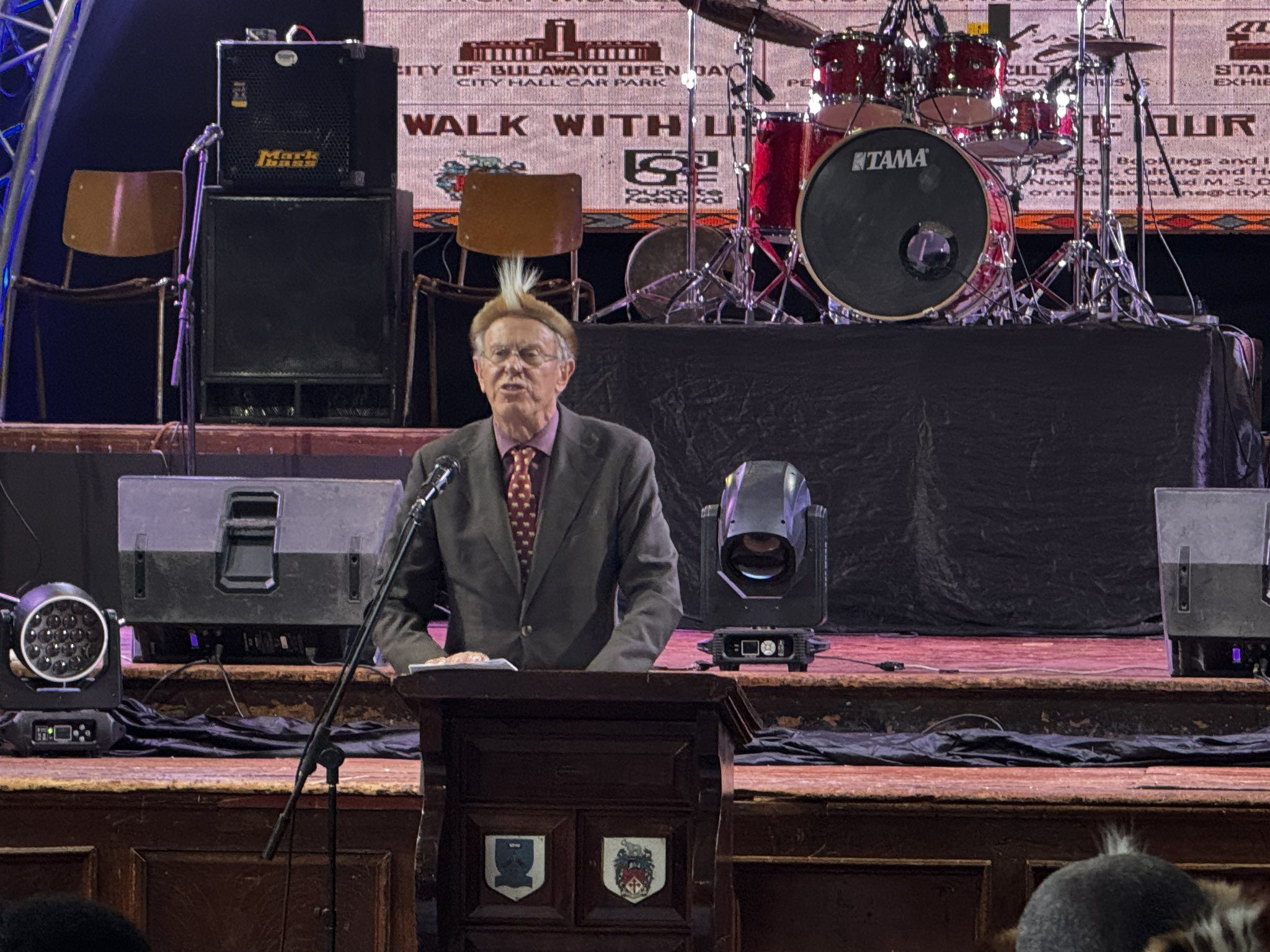
Bulawayo Mayor David Coltart has called for urgent action to restore the city’s neglected historical landmarks, warning that sites central to the city’s identity have been allowed to fall into disrepair.
Speaking during the 132nd Bulawayo Day celebrations on Monday, Coltart singled out Old Bulawayo, the historical capital established by King Lobengula, as a site that had been left in a state unworthy of its significance.
“I’m not sure if you’ve driven recently out to koBulawayo, but it is not in a good state,” he said. “It was allowed to burn down. We have not rebuilt it as a fitting memorial to King Lobengula’s first capital. The road out there is appalling and people have been dumping on the side of it. If we truly respect and honour our culture, then these cultural landmarks must be respected.”
He raised similar concerns about the grave of King Mzilikazi. “When I go down the old Gwanda Road and see that pitiful sign — as we celebrate the kings of this nation, we must do better. We should be doing it from our city, with the resources that we have, to truly respect, not just in word, but in deed, these great icons from our history.”
On this topic
Beyond preservation, Coltart said Bulawayo’s cultural heritage is an untapped engine for tourism and growth.
“These sites are not just historical and cultural artefacts. They can be part of our future,” he said. “As we seek to reimagine the economy of this city, we need to understand that tourism can be a driving force, to get people flying in from China, Japan, America and Europe.”
The mayor drew on a recent trip abroad to press his point. “I’ve just been in London, and in many ways we’ve got far more to offer than a city like that. And yet thousands of tourists come into London. We need to be exploiting this rich culture and heritage to boost tourism.”
Coltart used the occasion to remind residents that Bulawayo’s history stretches well beyond its 1894 municipal declaration, back to the arrival of King Mzilikazi in 1840 and the establishment of KoBulawayo by King Lobengula as his capital.
“We are celebrating 132 years of modern-day Bulawayo, but the history of our great city goes much deeper,” he said. “The dances and traditions we see today didn’t come from 132 years ago. They came from almost 200 years ago, and that needs to be truly respected.”
The Bulawayo Day carnival procession passed several of the sites Coltart referenced, including Inxwala site, the Hanging Tree, King Lobengula’s regimental parade ground and the statue of the late nationalist leader Joshua Mqabuko Nkomo on the street that bears his name.
“All of this is highly symbolic,” Coltart said. “It serves as a memory of different timelines in the history of our city, timelines we can take great pride in.”
Support CITE’s fearless, independent journalism. Your donation helps us amplify community voices, fight misinformation, and hold power to account. Help keep the truth alive. Donate today






Leave a Reply