
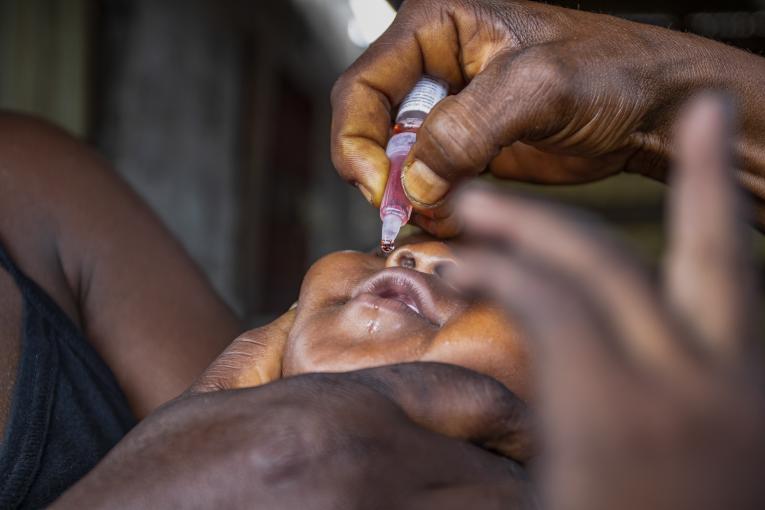
Bulawayo has stepped up a mass polio vaccination campaign targeting all children under the age of five, as Zimbabwe joins four neighbouring countries in a coordinated effort to prevent the spread of the virus.
The Ministry of Health and Child Care said the campaign would be carried out in two phases. The first round runs from 20 to 23 April, with a second round scheduled for 2 to 5 June. Both urban and rural areas are included.
Health officials say the synchronised campaign, conducted alongside Malawi, Zambia, Mozambique and Botswana, is designed to stop cross-border transmission and ensure no child is left unprotected.
The city’s Director of Health Services, Dr Edwin Sibanda-Mzingwane, said wide-ranging measures had been put in place to reach every eligible child.
On this topic
“We have deployed house-to-house teams across every suburb, each consisting of a vaccinator, a recorder and a mobiliser,” he said. “We also have teams operating around the Zimbabwe International Trade Fair grounds, as well as transit teams along busy transport routes to reach mobile populations. In addition, vaccinations are being offered at health facilities and outreach points.”
He said conducting the campaign simultaneously with neighbouring countries was critical.
“This synchronisation stops the virus from moving across borders,” he added.
Polio is a highly infectious disease that mainly affects young children and can cause paralysis.
Dr Sibanda-Mzingwane said the city had prioritised direct engagement with communities to counter misinformation and address safety concerns.
“We have learned that face-to-face communication works best,” he said. “Our vaccinators are trained to answer questions on the spot. Before the campaign began, we held advocacy meetings with community leaders and stakeholders.”
He said the nOPV2 vaccine being used had undergone rigorous safety assessments and was approved under the World Health Organization’s Emergency Use Listing.
“It is safe, effective and critical to keeping Bulawayo and Zimbabwe polio-free,” he said.
At community level, local leaders are working with health teams to encourage participation. Recorders document every household visited, including those without children, and note any missed children for follow-up visits.
“We also hold daily review meetings with team supervisors to adjust plans as needed,” Dr Sibanda-Mzingwane said.
He acknowledged logistical challenges, including accounting for every vaccine vial daily and maintaining strict cold-chain requirements.
“We must account for every vial, unopened, partially used or empty, each day,” he said. “We also need sufficient ice packs and transport for all teams. Because nOPV2 is used under emergency listing, enhanced surveillance for any adverse events is required.”
In Matabeleland South province, vaccination teams are operating in districts including Bulilima, Mangwe, Matobo and Gwanda.
Health authorities say the campaign forms part of Zimbabwe’s broader effort to prevent outbreaks and maintain its polio-free status. Parents and guardians are being urged to ensure that all children under five receive the vaccine, regardless of previous vaccination history.







Leave a Reply