

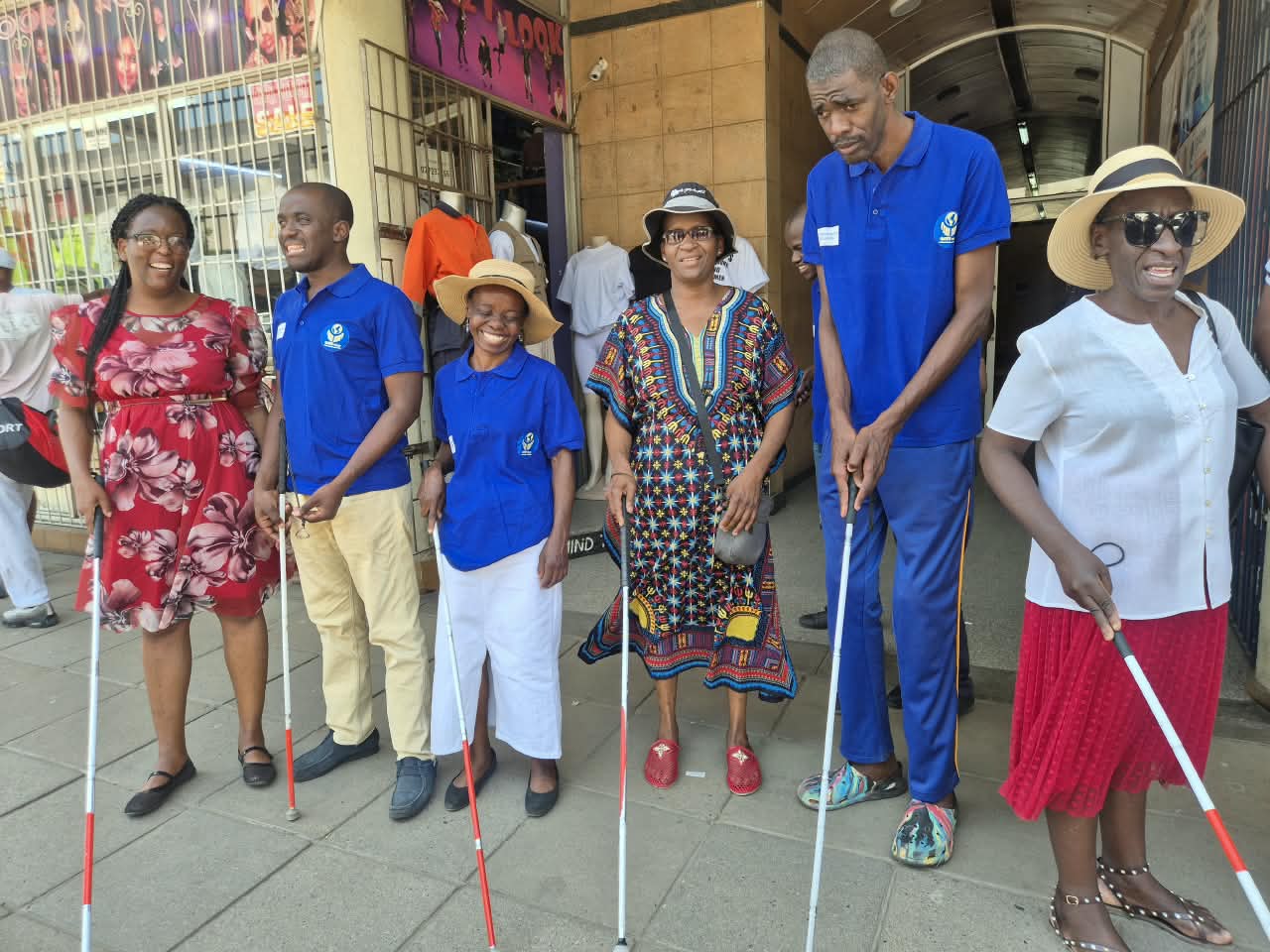
Bulawayo City Council’s proposed US$457 million 2027 budget has drawn criticism over its provision for people with disabilities, with a local governance expert questioning whether US$8 765 earmarked for ramps adequately addresses their needs across the city.
Tsepang Nare said the proposed allocations risked leaving people with disabilities behind in key areas such as education, healthcare and access to public infrastructure.
The concerns emerged during CITE’s Fix My City programme, which reviewed the proposed budget as the council consults residents and other stakeholders ahead of its finalisation.
Nare questioned the allocation for constructing ramps, particularly at youth centres, against the needs of a disability community he said numbered more than 60 000 in Bulawayo.
On this topic
“The other issue, obviously, is when they clearly put it out that there’s 8 765 for the construction of ramps, particularly in youth centres, then the question that arises is, so that is what accrues or is given to a constituency that is above 60 000 in Bulawayo,” Nare said.
He also questioned whether people with disabilities had been adequately considered in the proposed health, education and recreational facilities budgets, which he put at US$3.4 million, US$4 million and US$17 million respectively.
Nare said the US$8 765 allocation represented 0.06% of the proposed US$130 million capital expenditure budget.
He argued that the council needed to consider disability inclusion across its spending plans rather than treating accessibility as a stand-alone issue.
“When you look at the education sector for learners with disabilities, various impairments, the city has not managed to construct resource units so that the aspect of inclusive education is really brought to reality. Within the health sector, challenges still persist, particularly when we look at issues of policy inconsistency,” Nare said.
He said access to healthcare services varied between residential areas, with some vulnerable communities paying for services at council clinics while others did not.
People who use wheelchairs and other assistive devices also faced difficulties navigating roads in poor condition, he said. In some areas, residents had resorted to filling potholes themselves.
Nare further criticised the council’s use of policy documents in preparing the budget, saying it had not adequately considered the National and Domestic Disability Policy or Zimbabwe National Statistics Agency reports.
He called for budget decisions to be informed by comprehensive data reflecting residents’ circumstances, particularly those living in poverty.
Residents question rising council charges
The proposed budget, which totals US$457 million and is almost double the 2026 allocation, includes a planned 74% increase in rates and charges intended to cover operational costs and fund service delivery.
Monthly refuse collection charges in high-density suburbs are proposed to rise from about US$7 to US$15, while those in low-density suburbs would increase from US$10 to US$22. The council has also proposed a US$2 public lighting charge.
Bulawayo Progressive Residents Association programmes officer Claude Phuti said the budget appeared to prioritise compliance with minimum service delivery standards over residents’ rights.
“We appreciate the government’s efforts in terms of coming up with their minimum service delivery standards, but in terms of the realisation of those minimum service delivery standards, what are we seeing? We’re seeing local authorities, not only Bulawayo, being more concerned in terms of the compliance issue, rather than looking at human rights-based approaches to service delivery, which are actually engraved within our own constitution, in terms of protecting the right to dignity, the right to water, the right to education,” Phuti said.
He warned that the proposed increases could worsen household debt, particularly in high-density suburbs, where he said many residents were already struggling to meet their obligations to the local authority.
Phuti also questioned the transparency of revenue collected through levies, including the road levy, and called on the council to explain how the money was being managed and what projects it would fund.
Bulawayo resident Khetiwe Tshuma questioned whether spending on road rehabilitation was producing meaningful improvements, saying work on the roads had largely involved patching rather than proper rehabilitation.
She also raised concerns about shortages of medication and staff at council clinics.
The proposed budget includes spending on water and sewer infrastructure, roads, stormwater drainage and sporting facilities. However, residents and civic representatives have questioned whether the planned expenditure will translate into better services and more inclusive development.





Leave a Reply