
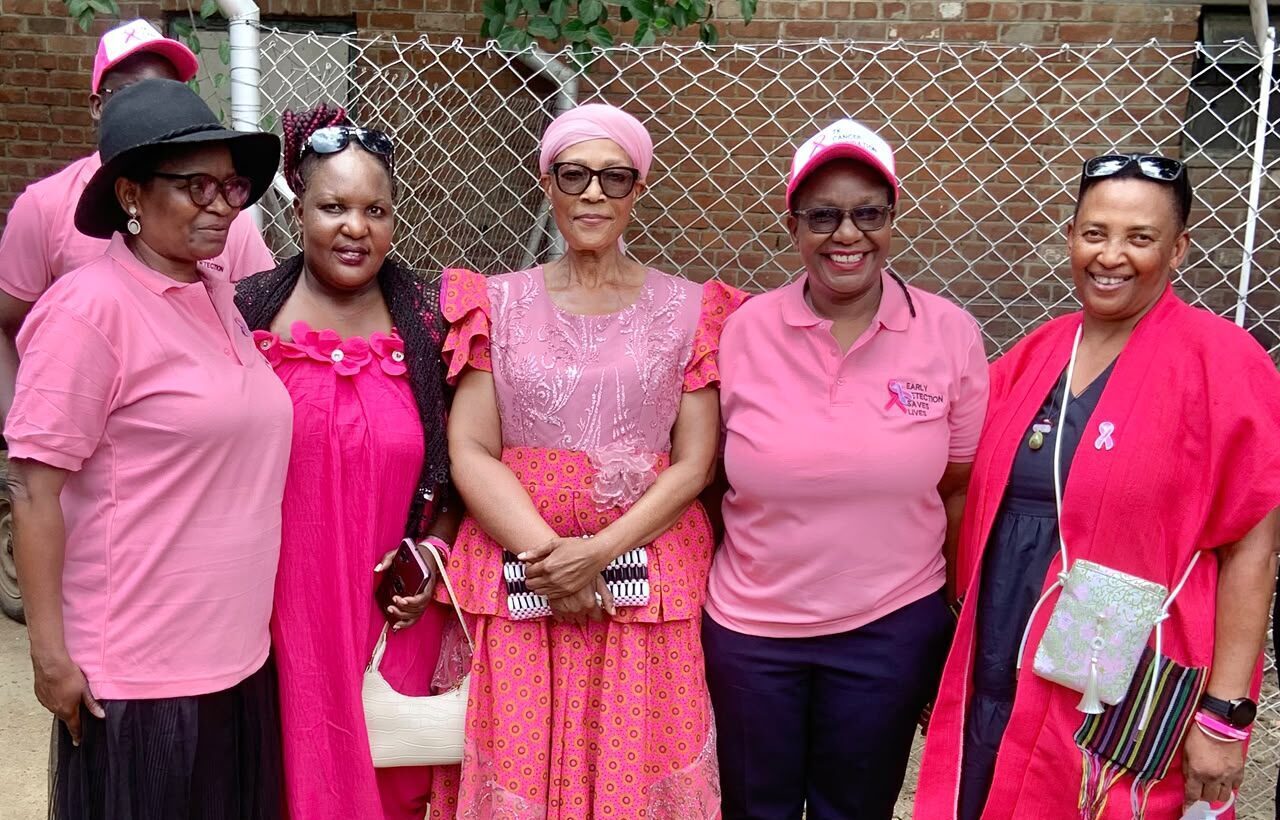
Former Zimbabwe Deputy Prime Minister and Bulawayo Member of Parliament, Dr Thokozani Khupe, has recounted her harrowing battle with stage four breast cancer, revealing how the disease left her extremely weak and thin, unable to walk, eat or speak and at one point convinced she would not survive.
Khupe, however, says she is responding well to her current medication and is gradually regaining her strength after undergoing treatment abroad, describing her survival as a second chance at life.
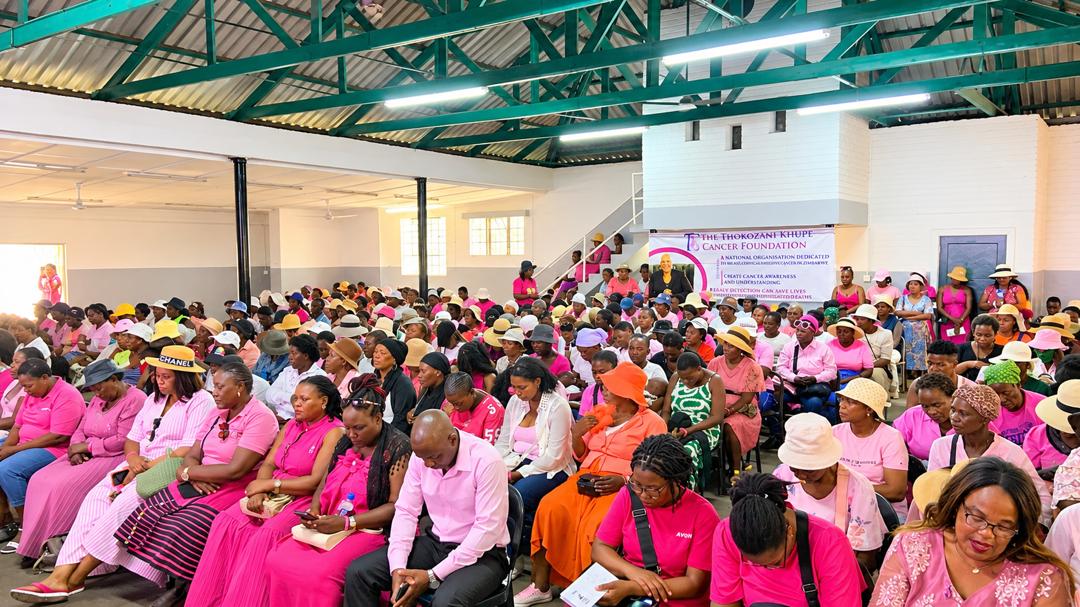
She shared her experience with Bulawayo residents during a belated Pink October commemoration organised by the Thokozani Khupe Cancer Foundation (TKCF) at Stanley Hall in Makokoba on Saturday, where she called for increased cancer awareness, early detection and improved access to treatment in public hospitals.
Khupe said her cancer journey had been physically and emotionally devastating, describing it as a difficult road she would not wish anyone to travel.
On this topic
“This journey I am on is travelling on a very difficult road, a road full of potholes. It is very rough. I don’t wish anyone else to go through this,” she said.
She revealed her condition deteriorated to the extent that she lost significant weight and became so weak that she could no longer perform basic activities.
“I lost weight and became like a skeleton. I wasn’t walking, talking or eating. It is God’s grace that I am here. I had even told my children that it was over. You were going to receive a corpse,” she said.
Khupe said she had reached a point where she was preparing for her death, having visualised her funeral and begun putting her affairs in order.
“I was even preparing for my funeral and visualised it. But God said no,” she said.
Speaking to journalists after the event, Khupe said she was now feeling considerably better after experiencing complications with her initial treatment overseas.
“I am feeling much, much better. When I went overseas for my treatment, I became very sick. I was very thin. You would have been surprised to see me,” she said.
“When I left here, I was okay, but when I got there, I got very sick because there was resistance in the medication that I got the first time around. But the medication that I am on right now, I am responding very well. So now I am getting back and I am hoping that next year you will see me, I will be back.”
While addressing residents, Khupe disclosed she had spent eight months unable to eat properly or even drink water without vomiting, adding she had been hospitalised for two months.
Khupe also described the debilitating side effects of chemotherapy, including skin damage to her hands and feet and excessive fluid retention that required her to undergo weekly fluid drainage.
“The other one will tear the skin on my feet and hands. I would have water drained out of my body every week. If you saw me, you would say I was pregnant with triplets,” she said.
Despite the physical toll, Khupe said her experience had strengthened her determination to advocate for cancer patients and encourage communities to seek early diagnosis.
“Looking at me now will also make you rise up. Let’s go to be tested. Cancer is not a full stop but a comma, a short pause, yes, it is a difficult turning point,” she told residents.
She urged people diagnosed with cancer not to lose hope, emphasising the importance of emotional and practical support from families, friends and communities.
“Support is needed to lift your spirits. Let’s support each other all the time,” she said.
Khupe said her decision to share her experience publicly was deliberate, as she wanted people to understand the devastating effects of advanced cancer and the importance of seeking medical attention before the disease progresses.
“It is important for me to stand in front of you to show you that cancer is there, it is bad, it affects and ravages your body. I am hoping it will motivate you to go for early detection,” she said.
She vowed to continue fighting the disease and advocating for better cancer services in Zimbabwe.
“I have vowed to fight cancer until the end,” she said.
Beyond raising awareness, Khupe used the occasion to challenge the government to strengthen cancer treatment services in public hospitals, particularly Mpilo Central Hospital in Bulawayo and Parirenyatwa Group of Hospitals in Harare.
She said cancer treatment was prohibitively expensive, especially for patients diagnosed at advanced stages, unlike HIV, where patients can access free antiretroviral drugs through public health programmes.
“Cancer is now worse than HIV. With HIV, it is better because there are ARVs which are given for free. But with cancer, cancer treatment is very expensive, especially when that cancer is advanced,” she said.
Khupe said her own experience with stage four breast cancer had exposed the difficulties patients face in accessing specialised treatment and medication.
She expressed concern over delays in operationalising newly unveiled cancer treatment equipment at Mpilo, questioning what would happen to patients requiring urgent care during the three-month period before the machines become operational.
“If somebody realises they have a problem between now and February, what are they going to do?” she asked.
She called on the government to make sure revenue collected through the three percent sugar tax was channeled towards strengthening cancer services, including acquiring diagnostic equipment, medicines and recruiting specialised personnel.
Khupe said Mpilo needed adequately equipped diagnostic facilities and specialists such as oncologists, medical oncologists, oncology nurses, radiographers, radiologists and technicians to ensure patients received appropriate diagnosis and treatment.
She also called for increased investment in cancer research, urging Zimbabwean scientists, researchers and innovators to explore the country’s flora and fauna for potential medical breakthroughs.
“We have got all the flora and the fauna which they can use in making sure that we have got cancer treatment. Mark my words, Zimbabwe will make a breakthrough,” she said, calling for collaboration between researchers and traditional health practitioners, including the Zimbabwe National Traditional Healers Association (ZINATHA).
Khupe said she had already engaged the Minister of Finance over the need to direct sugar tax revenue towards cancer treatment facilities.
“Money is available because they are deducting that money every day from the sugar tax. I think what is needed is a push, but I am already pushing,” she said.
The foundation, launched in October 2012, conducts awareness programmes focusing particularly on breast and cervical cancer, with early detection as a central message.
The belated Pink October commemoration brought together residents from various Bulawayo suburbs, legislators, councillors, cancer survivors and community representatives, with participants calling for greater public awareness and improved access to healthcare.
Khupe said she hoped that by sharing her personal experience, more people would overcome fear and stigma, seek screening and encourage others to be tested.




Leave a Reply