
By Dr Shame Mugova
Leonard Zhakata asked a question in Dambura Mbabvu that deserves a place in Zimbabwe’s economic conversation: “Tiri kurasikira papi mukuronga? Pfungwa dzedu dzinonetera papi?”
Where are we going wrong in our planning? Where is our thinking failing us? Imicabango yethu isisa ngaphi?
The song reflects on wisdom, collective effort and the difficulties that may lie ahead. I think of it whenever we celebrate the resourcefulness of Zimbabweans while confronting the limited opportunities available to so many of them. Hard work matters. But hard work alone cannot substitute for an economy organised to make that work productive.
On this topic
We have universities, engineers, entrepreneurs, mineral wealth, agricultural resources and businesses with decades of experience. We also have ambitious development plans. Yet too many educated people struggle to find work that uses their skills, while firms capable of expanding face formidable obstacles.
Perhaps our problem is not chiefly a shortage of ideas. It is our difficulty turning knowledge, resources and commercial opportunities into lasting productive capabilities.
Zimbabwe is not starting from nothing. At independence in 1980, manufacturing accounted for approximately a quarter of GDP. That industrial economy was unequal and partly protected from international competition. It required reform and modernisation, but it also contained factories, technical skills and networks of suppliers worth developing.
Successive economic disruptions weakened parts of that foundation. When a factory closes, suppliers lose customers, apprentices lose places to learn, and specialist knowledge can disappear. A country can lose productive capabilities much faster than it can rebuild them.
There are encouraging signs. The Confederation of Zimbabwe Industries reported manufacturing output growth of 13% in 2025 and capacity utilisation of 55.9%. Recovery deserves recognition. But recovering output from existing factories and developing the ability to produce more sophisticated goods are different achievements.
Our mineral wealth illustrates the distinction. We debate how much more gold, lithium or other minerals to extract and process locally. Those are legitimate questions. But industrial ambition should extend to the technologies and businesses surrounding extraction.
Mines require pumps, electrical equipment, machinery components, laboratories, maintenance and specialist engineering. Could more Zimbabwean firms learn to supply these products and services competitively?
Imagine a workshop in Bulawayo whose technicians repair imported mining equipment. They understand how the machines work and which components fail. With suitable machinery, technical testing and credible customer orders, could they manufacture selected replacement parts? Could that experience eventually lead to specialised equipment supplied across the region?
Some components will remain cheaper or better to import. Industrialisation is not a contest to manufacture everything domestically. It is the disciplined process of discovering what our firms can learn to produce competitively.
Instead of beginning with a factory we want to establish, we should begin with a product somebody is willing to buy and determine what it would take to produce it well.
A mining company could identify a product it already purchases. Interested manufacturers could demonstrate their capacity. A university could assist with testing, a lender with equipment finance, and a buyer with a conditional trial order. Nobody should be required to purchase inferior goods or finance a project without credible demand.
Yet opportunities can stall. A manufacturer cannot obtain equipment without orders. A customer will not place orders without proof of capacity. A bank requires evidence that the investment can be repaid. Everyone has reasonable concerns, but nobody coordinates the steps needed to resolve them.
An opportunity can remain unrealised not because nobody recognises it, but because nobody has organised the relationships required to make it productive.
The same principle applies to agriculture. Growing more crops can create opportunities in storage, packaging, transport, food processing and irrigation technology. But not every district needs a processing factory. Some need a reliable road, cold storage or a buyer prepared to purchase at a viable price. We should identify the economic constraint before deciding which project to construct.
This forces us to confront the cost of doing business. We urge people to invest, manufacture and formalise. But have we considered the cumulative cost of electricity, transport, finance, taxes, licences and regulatory compliance?
The World Bank found that some subsectors in agriculture, food processing and tourism faced as many as 28 separate legal and regulatory requirements. Government has begun simplifying some obligations. That progress matters, but the test is whether firms actually save time and money.
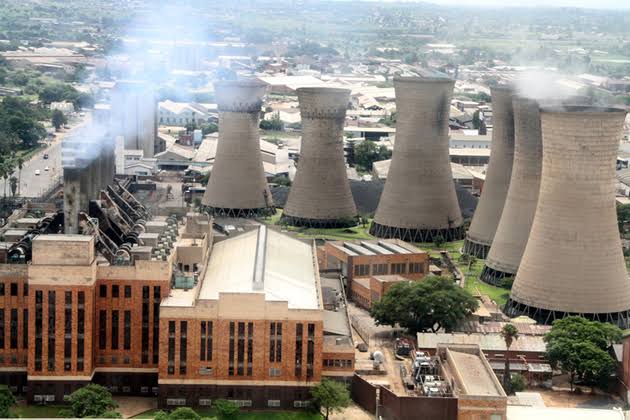
Electricity is even more fundamental. The World Bank estimates that shortages impose annual economic losses equivalent to 6.1% of GDP. This is an economic estimate, not a direct fiscal bill, but it illustrates the damage unreliable power can do to production.
Cheap labour and abundant raw materials are not sufficient advantages when everything required to make them productive is expensive or unreliable.
Government needs revenue for essential services, but it must also consider whether today’s cumulative business costs discourage the investment that could generate tomorrow’s incomes and taxes.
Finance requires similar care. A researcher testing an irrigation device, a manufacturer purchasing machinery and a business fulfilling confirmed orders need different forms of support. Competitive innovation grants, equipment finance and working capital each serve different purposes.
Banks cannot prudently finance every untested idea, while established firms should not automatically receive public grants for commercial expansion.
Where public support is justified, decisions must be transparent and professionally assessed. An entrepreneur should not need political connections to obtain a fair hearing. Nor should businesses become permanently dependent on public subsidies.
The measure of success is not how many grants are distributed, agencies established or industrial zones designated. It is whether firms gain customers, learn new techniques, increase productivity and develop sustainable operations.
The current efforts to remove vendors from Zimbabwe’s streets illustrate another weakness in how we approach economic problems.
Cities have legitimate reasons to maintain sanitation, protect pavements and regulate trading. But removing vendors does not remove the economic pressures that brought many of them onto the streets.
A person who depends on vending to support a family still needs an income after being moved. Designated markets may help, but they must offer realistic access to customers. Others need opportunities to move into more secure and productive livelihoods.
We can remove vendors from the streets, but we cannot remove the economic necessity that put them there simply by clearing the pavements.
If the economy does not develop sufficient employment, viable businesses and other productive opportunities, more people may be driven into the same precarious activities. We risk repeatedly managing the visible consequences of economic hardship without changing the conditions that produce them.
This is why development cannot be measured simply by the completion of projects or the enforcement of regulations. It must also be judged by the opportunities available to ordinary people.
A road must remain usable after it is opened. A power project must provide reliable electricity. A research laboratory must retain equipment and expertise. Infrastructure creates lasting value when it is maintained and used productively.
These decisions involve difficult tradeoffs. Healthcare, education and essential services cannot be sacrificed for speculative industrial ambitions. Nor can government predict which technologies will dominate in 2050. Its responsibility is to make credible investments, remove unnecessary obstacles, protect fair competition and build capabilities that allow firms to adapt.
That brings me back to the future.
ZIMSTAT projects that Zimbabwe’s population aged 15 to 64 will grow from about 8.35 million in 2022 to 12.76 million in 2042. These are people of working age, not a prediction of how many jobs will be needed. But they reveal the scale of our responsibility.
The child entering school today may be entering employment in the early 2040s. What industries are we preparing for that child? What will Zimbabwean engineers design, our factories manufacture and our agricultural businesses process that they cannot produce competitively today?
We are already educating tomorrow’s workforce. Are we investing with equal seriousness in tomorrow’s workplaces?
A more capable economy cannot be announced into existence when that generation graduates. It must be built through years of learning, commercial relationships, infrastructure investment and institutions that improve rather than repeatedly restart.
Mineral deposits can be exhausted, commodity prices can fall and agricultural conditions can change. But engineering knowledge, adaptable businesses and institutions that help people innovate can continue creating value.
The most valuable inheritance from a natural resource may be the productive capabilities developed while using it.
For every major public development investment, we should ask what Zimbabweans will be able to do in ten or twenty years because it was made. Who will maintain it? What benefit should it deliver? How will the public know whether it worked? And what will we do differently if it fails?
These questions require patience, accountability and a willingness to judge decisions by outcomes rather than intentions.
Zhakata’s question is therefore not an invitation to despair. It is an invitation to think more carefully about what collective effort can achieve. Zimbabweans work hard, but a manufacturer needs suppliers, a farmer needs markets, an investor needs credible opportunities, and a graduate needs organisations capable of using specialised knowledge.
We have spent years asking Zimbabweans to adjust themselves to the economy. We must become equally serious about building an economy capable of making productive use of Zimbabweans.
The children entering school today will not inherit our speeches or the excitement of project launches. They will inherit the industries, infrastructure, institutions and opportunities our decisions leave behind.
When that Zimbabwean child reaches adulthood, what will our generation have built for them?
Dr Shame Mugova is a Lecturer in Finance at Birmingham City University. He writes on finance, economic policy, governance and development, with a particular interest in Zimbabwe and Southern Africa. He writes in his personal capacity.






Leave a Reply