
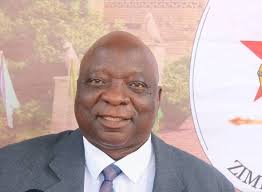
Binga South MP Fanuel Cumanzala has called on the Government to consider establishing a Zambezi Valley Province, arguing that communities in the region have suffered years of underdevelopment because of geographical isolation and inadequate public infrastructure.
Cumanzala made the proposal in a motion before Parliament, which seeks to promote inclusive development and national cohesion through provincial restructuring. He proposed creating a new province that would bring together communities with shared geographical and developmental circumstances.
The motion was seconded by Dzivarasekwa MP Edwin Mushoriwa, who said communities in Binga and Kariba shared cultural and geographical connections that were not adequately reflected in the existing provincial boundaries.
Cumanzala said the proposed province could include communities in Binga, Kariba, Gokwe, parts of Hwange, Mbire and Muzarabani. However, he said the final boundaries would be determined through a comprehensive feasibility study.
On this topic
“For many years, geographical isolation, inadequate roads, limited telecommunications, insufficient public infrastructure and restricted economic opportunities have affected the ability of our communities to participate fully in national development,” Cumanzala said.
He said poor infrastructure had a direct impact on ordinary families, particularly those in rural communities.
“Consider an ordinary family in rural Binga. A poor road can determine whether a pregnant mother reaches a health facility safely, whether a child attends school during the rainy season, whether a farmer transports produce to market and whether a young person accesses opportunities in the digital economy,” he said.
Cumanzala questioned why children born in remote communities should have fewer opportunities than those growing up in major cities.
“Why should the geographical circumstances of a child’s birth determine the opportunities available to that child? A child born in Binga deserves the same opportunities to dream, learn, innovate and prosper as a child in Harare or Bulawayo,” he said.
He argued that a new provincial arrangement could improve regional planning, bring government services closer to communities and give historically underserved areas a stronger voice in setting their development priorities.
Cumanzala also highlighted the economic potential of the Zambezi Valley, particularly in tourism, fisheries and agriculture.
“The Zambezi Valley must not be defined only by poverty and underdevelopment. It has enormous potential in tourism, fisheries, agriculture, livestock production and other economic activities,” he said.
“Lake Kariba and the wider Zambezi River system offer significant opportunities for investment, employment creation and community enterprise.”
He said the region’s development would require investment in transport infrastructure, health and education facilities, electricity, telecommunications and irrigation, as well as initiatives to empower women and young people.
Seconding the motion, Mushoriwa said the proposed province was justified by the geographical and cultural connections between communities currently separated by provincial boundaries.
“None of us here can doubt that, culturally and geographically, the people in Kariba and Binga share more in common than possibly Kariba would share with Chinhoyi or Norton,” he said.
Mushoriwa said communities in Kariba, the Midlands and Gokwe, including Tonga-speaking people, shared connections with those in Binga, which falls under Matabeleland North.
He argued that bringing communities with shared historical and geographical ties under a common administrative framework could improve development planning.
However, Mushoriwa supported the establishment of an expert commission to assess the proposal and determine appropriate provincial boundaries before any new administrative structure was adopted.
Cumanzala acknowledged that provincial restructuring would have constitutional, administrative and financial implications. He said a feasibility study was therefore necessary to assess population distribution, geographical accessibility, economic potential and administrative viability.
He proposed establishing a multi-stakeholder commission comprising constitutional experts, historians, geographers, development planners, traditional leaders, local authorities, cultural and linguistic representatives, civil society, women, young people and persons with disabilities.
The commission would conduct public consultations, examine the feasibility of establishing the province, assess proposed boundaries and recommend the constitutional and legislative measures required.
Cumanzala proposed that the Government report to Parliament within 12 months, setting out its findings, recommendations and an implementation roadmap.
He said the proposed arrangement should deliver tangible improvements without creating unnecessary bureaucracy or diverting resources from essential services.
“I am not asking this House to approve an untested administrative arrangement today but I am asking for a fair, transparent and constitutionally guided process. Establish the Commission, consult the people, conduct the feasibility study and bring the findings back to Parliament,” he said.




Leave a Reply