
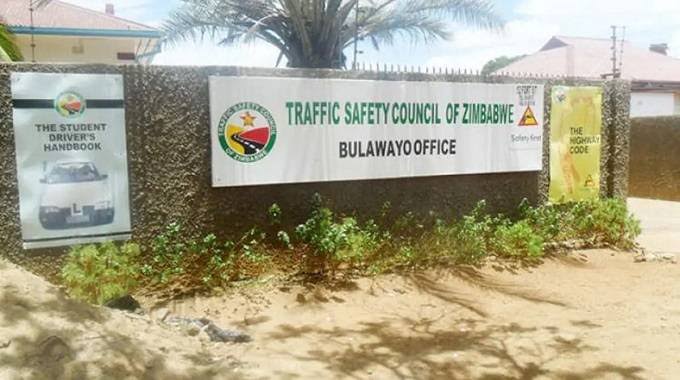
The Parliamentary Portfolio Committee on Transport and Infrastructural Development has called for the Traffic Safety Council of Zimbabwe (TSCZ) to be given powers to enforce traffic laws, arguing that road safety education alone is insufficient to curb dangerous driving.
The call comes as Zimbabwe recorded 48 150 road traffic accidents between January and September, resulting in 1,979 deaths and 8,061 injuries, according to figures released by the TSCZ.
Speaking on This Morning on Asakhe on Wednesday, committee chairperson Tawanda Karikoga said an inquiry conducted by the committee earlier this year had identified driver behaviour as the leading contributor to road accidents, ahead of road conditions.
He said establishing a road accident fund would not, on its own, reduce crashes, adding that greater attention should be paid to the causes of accidents and the high number of casualties.
On this topic
“We lack enforcement. We really need to ensure that our enforcement agencies are doing their job correctly,” he said.
Karikoga cited the overloading of unregistered public transport vehicles, commonly known as mshika-shika, as an example of dangerous practices that needed to be addressed.
“A mshika-shika should be a five-seater, but we find 16 people, sometimes 20, in a mshika-shika. So if that mshika-shika is involved in an accident, how many deaths do we record?” he said.
He also questioned the effectiveness of police roadblocks, saying overloaded vehicles continued to pass through checkpoints without being stopped.
“I drive twice a week from Gweru coming to Harare, and I’ve seen police roadblocks, and here comes mshika-shika, overloaded with three people sitting in front where two people are supposed to sit. But mshika-shika will get to a roadblock overloaded with three people seated in front, and still that vehicle will pass a roadblock overloaded with three people seated in front, and still that vehicle will pass a roadblock,” he said.
Karikoga said the committee had proposed that the TSCZ, whose current role largely centres on road safety education, should also be empowered to enforce traffic regulations.
“As Parliamentary Portfolio Committee, we had suggested that Traffic Safety Council, they do have a role to educate drivers, but they don’t have enforcement powers. So we are advocating for Traffic Safety Council to be an agency and be able to also enforce traffic and road laws,” he said.
TSCZ media and corporate communications officer Lucy Kuwandira-Mapfumo said 94 percent of road accidents had been attributed to human error.
She identified speeding, reckless overtaking, drunk driving, distracted driving, driver fatigue and disregard for traffic regulations as some of the behaviours contributing to crashes.
Kuwandira-Mapfumo said some motorists treated prescribed speed limits as targets to be exceeded, despite these representing the maximum permitted speeds on particular roads.
“So, you’d find that with speeding, this is driving above the prescribed speed limits or traveling too fast for prevailing road conditions. We have got speed limits that we have put on our roads and these are to say this is the maximum speed limit that a driver should drive at.
“But you find that most motorists would exceed that. I don’t know whether if they think that the speed limit, the stipulated speed limit is the minimum, but we are saying the speed limit that you see on the roads is the maximum and it should not be exceeded,” she said.
She also raised concern over motorists who overtook on blind rises, curves and sections marked by solid lines, warning that such practices could result in head-on collisions and sideswipes, causing deaths and injuries.
Distracted driving was another concern, particularly the use of mobile phones while driving.
“We have seen that people use their cell phones either as calling, either texting, and these days people tend to record themselves. So, they’ll be driving but recording themselves, either recording videos, taking pictures, or etc. So, a mobile phone has been also a form of distracted driving that we’ve seen most motorists engaging in,” Kuwandira-Mapfumo said.
She said other distractions included eating while driving and adjusting seats or vehicle accessories, which could take a driver’s attention away from the road.
“There are also some distractions that people tend to do, distractions such as eating while you are driving, adjusting your seats, adjusting your accessories, anything that takes away your attention from driving is distracted driving. In many cases, it results in road crashes, it results in collisions,” she said.
Kuwandira-Mapfumo also warned about driver fatigue, particularly among long-distance motorists and truck drivers who spend extended periods on the road without adequate rest.
She urged motorists to observe the Highway Code, saying traffic regulations were designed to promote safe and orderly movement on the roads.
However, Karikoga maintained that poor road conditions were not the leading cause of road accidents in Zimbabwe, saying the committee’s inquiry had found driver behaviour to be the main contributing factor.
“If we are to check on statistics, if we are to be guided by statistics, road condition, as much as I would want to drive on a good road, but bad roads in Zimbabwe, they don’t cause accidents,” he said.
“Where roads are bad, we don’t have accidents there. Where roads are good, that’s where we have accidents.”
He argued that unless traffic laws were effectively enforced and motorists changed their behaviour, Zimbabwe would continue to record road accidents and fatalities.







Leave a Reply