
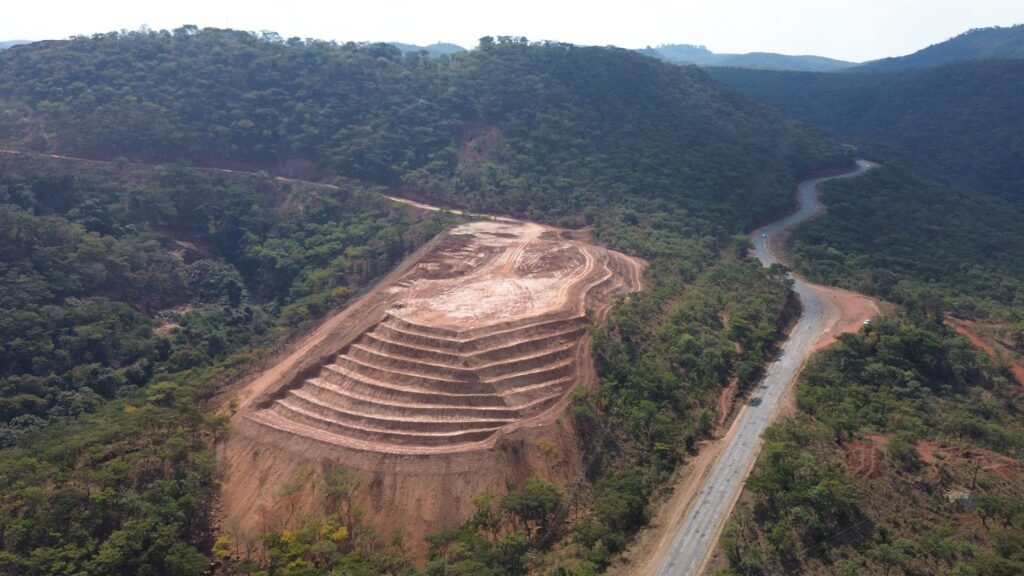
Zimbabwe’s mining communities are increasingly bearing the environmental and social costs of mineral extraction while seeing limited benefits from the country’s mineral wealth, the Centre for Natural Resource Governance (CNRG) has warned.
CNRG project officer, Tanaka Ndongera, said communities in mining areas were exposed to problems including water pollution, displacement, dust and deteriorating air quality, raising concerns over whether mining was delivering meaningful development to the people living alongside mineral-rich projects.
“When you see how communities are trying to cope, you feel this is not something that is just being spoken about. There is real evidence on the ground that this mining has become more of a curse than a blessing,” Ndongera said during This Morning on Asakhe on Thursday.
He said communities were not demanding excessive benefits from mining but basic rights, including a safe environment, participation in decisions affecting them and opportunities to benefit from the resources extracted from their areas.
On this topic
Ndongera said concerns had particularly been raised around operations involving Chinese-owned or Chinese-linked companies, but stressed mining should ultimately be conducted responsibly regardless of who owns the operation.
“We are always saying mining should be done in a responsible manner,” he said, calling for greater community participation throughout the mining process, including in environmental impact assessments and decisions affecting land and natural resources.
Ndongera also called for respect for the principle of free, prior and informed consent, arguing that communities should not be excluded from decisions involving mineral resources found in their areas.
He said Zimbabwe also needed to conclude the long-delayed Mines and Minerals Bill to provide a comprehensive legal framework for regulating the sector.
“The Mines and Minerals Bill has been hanging for a while. And we are just saying, let’s do the right and proper thing,” he said.
Ndongera said reliance on various statutory instruments had contributed to uncertainty in the mining sector and called on the government and Parliament to conclude the legislation.
He also raised concerns over inconsistencies in government policy on raw lithium exports.
“Today, there is a state instrument which says we are going to ban raw lithium export by January 2027. The next thing, there’s an immediate ban on exportation of raw lithium. So those inconsistencies help and push people to raise a lot of questions,” he said.
These concerns were echoed by Centre for Environmental and Corporate Accountability Research (CECAR), Executive Director, Nkosi Sibanda, who questioned whether mining communities were receiving the benefits intended to flow from mineral extraction.
Sibanda said mining companies operating in sectors including coal, lithium, gemstones, quarry mining and granite were required to contribute a percentage of their gross revenue towards a corporate social responsibility fund.
He said the funds were supposed to be ring-fenced and channelled back to communities in mining areas.
“None of that has ever happened. And ZIMRA confirmed that money is collected from mining companies and is going to the consolidated revenue fund yet nothing is going back to the communities,” Sibanda said.
He added the problem was not necessarily the absence of a mechanism to collect the money, but the lack of a corresponding mechanism to make sure it reached the communities for whose benefit it was intended.
“We’re told the money goes to the consolidated revenue funds because there’s no mechanism for disbursement of those funds. So there’s a mechanism to collect money, but there’s no mechanism to disburse that money back to communities,” Sibanda said.
Sibanda said mining should translate into long-term development rather than isolated corporate donations or handouts.
“We just want to see mining that is sustainable, benefits all of us, mining that develops public infrastructure, mining that leads into betterment of people’s lives,” he said.
Meanwhile, labour and environmental lawyer, Proud Nyakuni, cautioned against framing the debate primarily around the nationality of mining investors, saying the government also had a responsibility to regulate companies and protect communities.
“This is not about the Chinese. It’s not about nationality,” Nyakuni said.
“It is about the operating companies operating responsibly and obeying laws to make sure communities have a voice.”
She said Chinese companies should be held accountable wherever there was evidence of wrongdoing, but argued the central issue was whether mining companies were complying with Zimbabwean law and whether communities were protected.
Nyakuni said Zimbabwe’s governance framework and gaps in the law also required greater scrutiny, arguing the government had a constitutional responsibility to make sure communities benefited from natural resources found in their areas.
She said civil society organisations had approached the Chinese embassy because of its diplomatic role, but stressed that concerns over mining practices ultimately extended beyond the nationality of investors.
“All in all, we attack it in a legal way using the laws and using the evidence that we have,” Nyakuni said.







Leave a Reply