
The Centre for Natural Resource Governance (CNRG) has launched a toolkit aimed at helping communities, civil society organisations and journalists track mining revenues and monitor whether the country’s mineral wealth is translating into tangible public benefits.
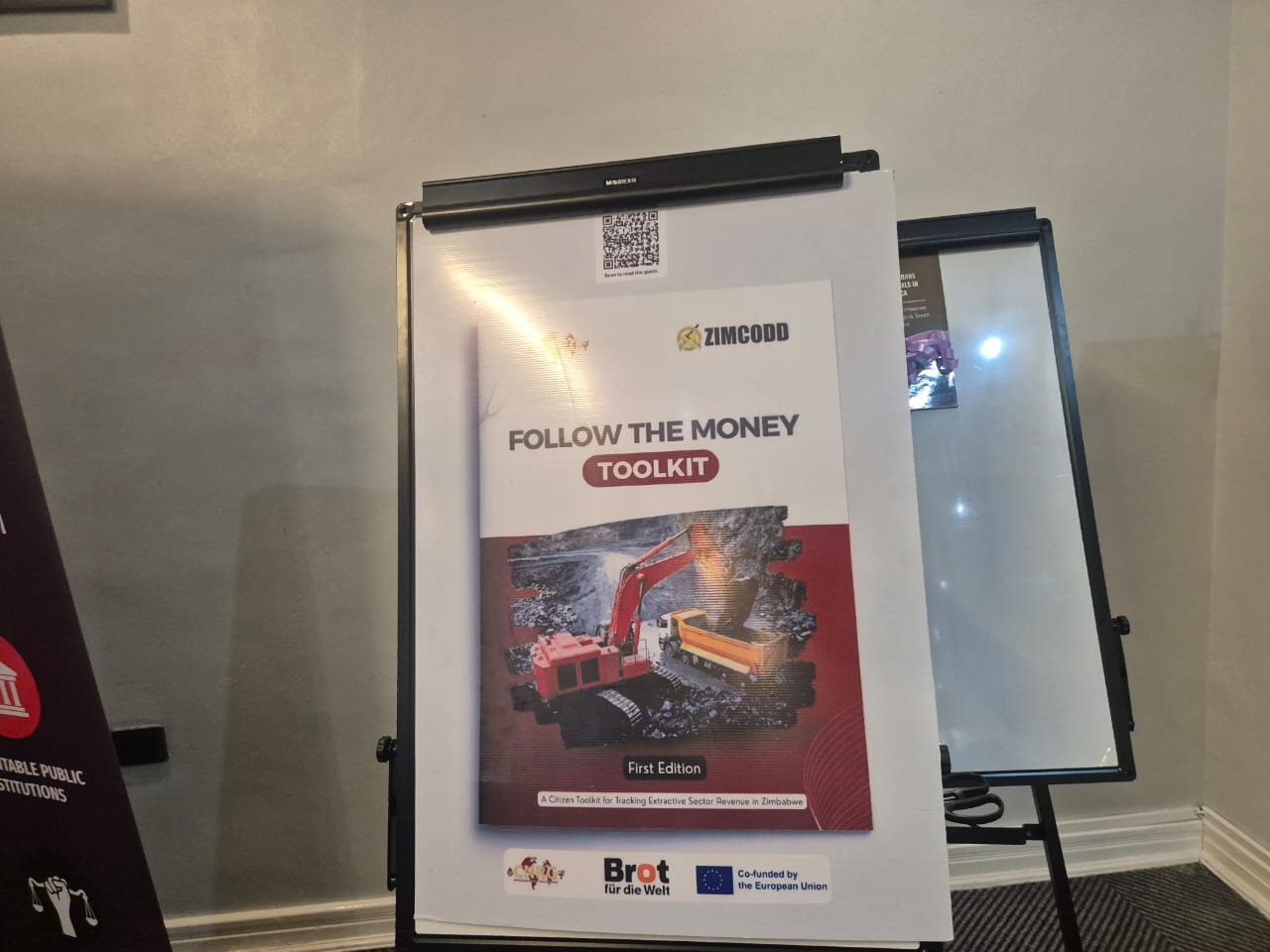
The Follow the Money: A Practical Guide to Understanding Mining Revenues and Public Finance toolkit was launched on Wednesday at the Zimbabwe Alternative Mining Indaba (ZAMI) 2026 in Bulawayo.
This year’s ZAMI is being held under the theme “Powering Tomorrow: Reimagining Mining, Energy, Agriculture and Community Development in Zimbabwe.”
The toolkit provides practical guidance on understanding public finance and mining revenues, identifying sources of information, monitoring public expenditure, documenting concerns and taking action.
On this topic
It is intended for communities, community-based organisations (CBOs), civil society organisations (CSOs), journalists and other citizens seeking to understand and monitor the flow of mining revenues and public resources.
CNRG said Zimbabwe’s mining sector generates public revenues through taxes, royalties, fees and other payments. However, communities and citizens often face challenges accessing and understanding information about these revenues and how public resources are allocated and spent.
Speaking during the launch, CNRG communications and advocacy officer, Donald Nyarota said communities had been involved in developing the toolkit to ensure that it responded to their information and accountability needs.
“It is our belief that when mineral wealth is there, it should be traceable, accountable, and visible in community well-being,” he said.
Nyarota said the toolkit was intended to give communities a practical way of understanding and demanding accountability over mineral resources.
“It is very difficult to account for what you do not know is there. So, we felt that it was very important that we then come up with a tool that communities can use in a practical way.”
He said CNRG also hoped to translate the resource into local languages to make it more accessible.
“And even in our bold vision, we hope that we will be able to translate the toolkit into a local vernacular language so that it is a bit more accessible.”
The Executive Director of SEKA, which is a responsible mining and mineral governance advocacy organisation based in Hwange, Nkosi Sibanda, welcomed the toolkit, saying mining communities were interested not only in following money but also in tracking the value generated from minerals extracted from their areas.
“We believe as communities that it is really a welcome development in the broader extractive sector accountability, and also in the broader mineral governance space.”
“Because not only is the toolkit allowing us to track the money, but it is also allowing us to track value,” he said.
Sibanda said communities wanted to see tangible socioeconomic benefits from mineral extraction taking place in their areas.
“Because as mining communities, unlike maybe some people who don’t live in mining communities, we are not only interested in where the money goes, but we are also interested in the value that is derived from the minerals that are mined from our backyards.”
“So we are interested to see how the mineral extraction that happens in our communities translates into realisable socioeconomic outcomes that we can really feel and touch.”
He said the toolkit would enable communities to track mineral value from extraction through the market and back to the communities where resources were being extracted.
“This toolkit is going to be a tool that allows us to track that value from the pit to the market and back to the communities where the mineral resources are being extracted from.”
Sibanda said this would help communities understand how value generated from natural resources was captured and distributed.
“It will also allow us to maybe try and respond or feed into the response around the main political question around, or maybe economic question around, how is the value that is being generated from our natural resources captured and also distributed.”
He said the ultimate objective was to empower communities to monitor what was being generated from their natural resources.
“So I think this is what basically this toolkit intends to do. It intends to empower the communities so that we can be able to track the value that is derived from our backyards.”
Sibanda cited mineral exports from Hwange as an example of the value being generated from communities, questioning how much of that wealth was translating into local development.
“Because as we talk right now, as someone who stays in Hwange, in the first half of the year, we have generated around US$782 million from lithium exports.We have also generated around, specifically in Hwange, we have generated around 102 million from coke and around 13.2 million from coal exports. And that is the value that has been derived from our backyards.”
“But how has that money made its way back into our communities as well? So that is what we are really interested in as communities.”
He said communities wanted to establish whether mineral wealth was translating into visible development.
“Does it end up in a school in Hwange, or does it end up in the big stomach of someone in the leafy suburb of Harare? So that is what this tool intends to do.”
Sibanda said the toolkit was not limited to mining communities but could be used by anyone seeking to understand where mineral revenues and value ultimately go.
“We hope that there is going to be a little bit of capacity building within mining communities. And it is not only for mining communities. It is for everyone who is really interested in knowing where our mineral value ends up.”
“It is for everyone who is really interested in knowing where this money that is generated from our minerals ends up at.”
The toolkit contains sections covering, Public Finance, Mining Revenue, Following the Money, Where to Go for Answers, Community Monitoring Tools, Case Studies and Taking Action.
CNRG said the guide was designed to simplify complex public finance and mining revenue issues while providing communities and civil society organisations with practical tools to engage authorities and demand greater transparency and accountability in the management of natural resource revenues.
The toolkit was produced by CNRG in collaboration with the Zimbabwe Coalition on Debt and Development (ZIMCODD) under the project “Enhancing Advocacy and Capacity Building of CBOs and CSOs for Natural Resource Governance and Community-led Engagement in Zimbabwe.”
Its production was made possible through financial support from the European Union (EU) and Bread for the World, with CNRG and ZIMCODD acknowledging contributions from project partners, communities and civil society organisations whose experiences informed the resource.
At the centre of the toolkit is the principle: “Communities cannot effectively demand accountability if they cannot follow the money.”
The resource seeks to strengthen the capacity of communities and civil society organisations to track public revenues, expenditure and resource flows while promoting transparency, accountability and meaningful participation in natural resource governance.




Leave a Reply