

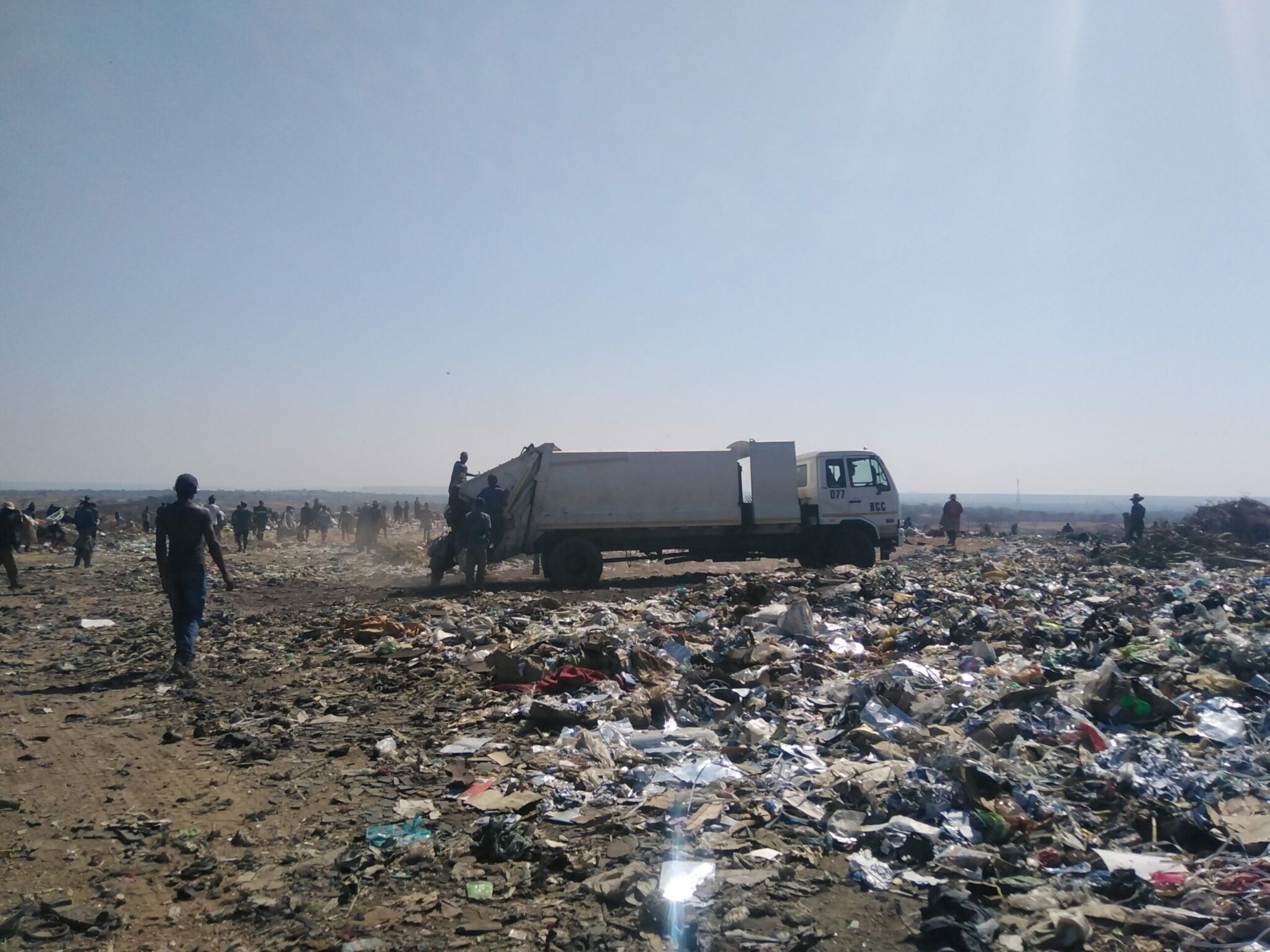
Bulawayo City Council does not have the financial or technical capacity to independently develop a waste management plant at Ngozi Mine and will have to consider working with private investors, Mayor David Coltart has said.
Coltart said the council collected about 65% of rates and other bills, leaving it without the funds needed to build a modern waste processing facility, which he said could cost millions of dollars.
“The city itself does not have the technical expertise to construct a waste management plant. Secondly, the council’s finances are on a knife edge, as it is. Only 65 percent of rates and other bills have been paid at present.
“We have a huge shortfall, and although the city remains in the black, we do not have the surplus funds available ourselves to finance a plant like this. I stress, a plant like this, if done properly, will cost millions of dollars. The city doesn’t have them.”
On this topic
Coltart was speaking on This Morning on Asakhe following a special council meeting held after Local Government and Public Works Minister Daniel Garwe directed the council and Geo Pomona Waste Management to work towards an agreement on waste management.
The mayor said the financial constraints meant the council needed to explore partnerships, but it had yet to establish what Geo Pomona could offer or what a potential agreement would cost the city.
“For that reason alone, our estimation is that we do have to work with third parties because we don’t have the capacity ourselves. We do not know what the financial implications are. We do not know at this stage what Geo Pomona can offer.”
Council has authorised its management to engage Geo Pomona and obtain a draft memorandum of understanding (MOU), which will then be brought back to councillors for consideration.
“Firstly, that we take note of the minister’s directive. Secondly, that we authorise the management to engage Geo Pomona with a view to coming up with a draft memorandum of understanding. Thirdly, that once we receive that draft memorandum of understanding, council will debate the matter further before we decide on whether to sign on that interim memorandum of understanding.”
Coltart said councillors had also resolved to visit Geo Pomona’s waste management operations in Harare before making a decision.
Many councillors, he said, wanted to assess the company’s operations themselves and form their own view about its work.
The council also intends to allow residents to scrutinise and comment on the draft MOU before councillors decide whether to proceed with the proposed partnership.
“When we have a draft memorandum of understanding, assuming that one can be arrived at, it’s critical that residents see what that draft memorandum of understanding says, that it’s not a secret document so that residents can comment on it. Let me just say this, the memorandum of understanding is not the final agreement.”
Coltart said Bulawayo’s waste management problem differed from Harare’s because the city was still collecting waste regularly.
“Harare had two problems. Harare had a problem of not being able to adequately collect waste. Secondly, it had the same problem as us at Pomona in not being able to separate waste out and process managed waste.
“What we pointed out to the Minister on Thursday is that while Harare and Bulawayo share the second problem, namely the processing of waste, we do not share the problem of collection of waste. Our Cleansing Department is one of the better departments in the City Council. As residents know, waste is being collected by our Cleansing Department regularly.”
He said the immediate question was what Geo Pomona could offer in dealing with the Ngozi Mine dumpsite and how much it would cost.
“To that extent, we are very different to Harare. We are primarily interested in hearing what Geo Pomona can do regarding Ngozi Mine. That includes what it will cost us.”
The council also does not yet know how such a project would be financed, Coltart said.
“At this stage, this morning as I speak to listeners, none of us know what the cost will be, how it is going to be paid, whether there will be any government assistance, whether there is private funding that will come in. We do not know that.”
The mayor said the council had been working with the Zimbabwe Investment and Development Agency (ZIDA) on pre-feasibility studies for a waste management project before the latest engagement with the minister.
“We were at the point of going to a full feasibility study to take into account international best practice. It was in that context that we met with the Minister.”
Coltart said the council’s longer-term plan was to develop a waste processing facility at Ngozi Mine rather than simply use the site for waste disposal.
“Our vision for Ngozi Mine is to have a waste management plant that can process waste, separate it out first and also separate organic waste from glass and plastic and metals, and then with, in particular, the plastic waste, to be able to convert that into aggregates.”
He said technology could also allow plastic waste to be converted into materials used to make products such as water tanks and in road construction, while organic and non-organic waste could potentially be used to generate energy.
Coltart said the council had also studied waste management systems in other countries and believed Bulawayo’s railway links could help the city obtain enough recyclable material to make a future plant economically viable.
“We need to recognise in Bulawayo that we have a unique position here, particularly because of the railways, and that there may be an opportunity to import waste, particularly plastic waste, from as far afield as Livingstone, Victoria Falls, Hwange, Botswana and, of course, the rest of the country.”
He said large volumes of recyclable material would be needed to support a commercially viable facility.
“You need large quantities of plastic waste to be able to scale up the size of plants and that ensures that plants become more profitable.”
The urgency of addressing the Ngozi Mine dumpsite, however, is driven by recurring fires at the site, which Coltart said release toxic gases affecting nearby communities.
“This is a festering sore and has been sore for years. It is not constant. On occasions, we get on top of the fires, but whenever fires break out, as residents know, particularly in Cowdray Park, it emits toxic gases, which are very unhealthy.”
“It has created a crisis and it’s an extremely urgent situation.”
Coltart said the council and Government might differ on how the problem should be addressed, but agreed that a solution was needed.
“Where we agree with the Minister is that this is a matter of extreme urgency and that we need to tackle it.”
He said any proposal from Geo Pomona would ultimately have to be assessed against the council’s long-term plans and the interests of Bulawayo residents.
“Are they able to offer something which meets the vision that I have just spoken about? What will it cost? Once they have done that, they will then come back to us with a draft memorandum of understanding for council to consider that and to consider whether that is in the best interests of the residents of Bulawayo. That is where things stand at present.”
Coltart said the council understood the urgency of the waste problem but would prioritise the interests of residents when considering any potential partnership.
“I just want to assure residents of two things. Firstly, that we understand that the Ngozi Mine situation is urgent. Secondly, we understand that residents want something which is in the best interests of residents primarily, rather than third parties.”




Leave a Reply