
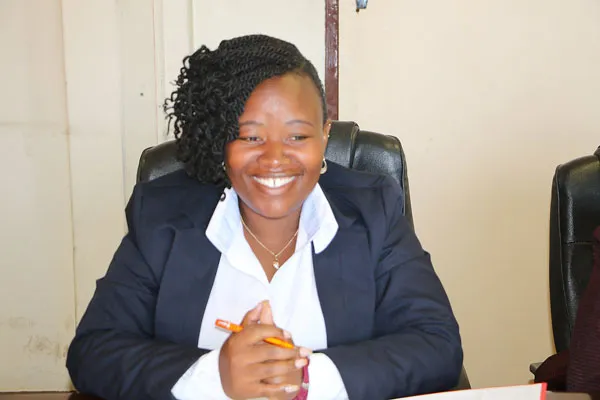
Women’s unpaid care work should be recognised in Zimbabwe’s laws, national economic accounts and budget allocations, Member of Parliament Gladys Hlatshwayo has said.
Hlatshwayo said the disproportionate burden of childcare, caring for sick family members, cooking and other household responsibilities was limiting women’s access to education, paid employment, civic participation and political leadership.
She was speaking at the Alternative Mining Indaba hosted by the Zimbabwe Coalition on Debt and Development (ZIMCODD) in Bulawayo on Wednesday.
“Indeed, it is important for us at the moment to deal with this question of unpaid care work. This is obviously putting so much burden on women in terms of childcare, care for the sick, cooking, and all the things that we do in our homes,” Hlatshwayo said.
On this topic
She said unpaid care work should be recognised at national level, including in measures of economic performance.
“Certainly, we need to make sure that this work that we do is recognized at a national level in terms of our GDP and our economic performance,” she said.
“The effect of unpaid care we can find visible for everyone to see. We have heard about the limited access to education, limited access to paid employment opportunities, perpetuation of gender inequalities, limited civic participation, and political participation.”
Hlatshwayo said the burden also contributed to the under-representation of women in leadership positions.
“We are often asking, where are the women? In parliaments, in cabinets, and in most of the cases, they are doing these communal roles. It’s unfortunate that women, because of unpaid care, have been assigned to communal roles, whilst men are given agenda roles. When we are talking about leadership, people think about men and they don’t think about women,” she said.
She cited national time-use data showing a disparity between women and men in unpaid care responsibilities.
“Nine out of ten women and girls participate in unpaid care work in Zimbabwe every day. This is half of men. Clearly, you can see how it is impacting women and why, as parliament, as government, we need to pay attention to this issue,” Hlatshwayo said.
Hlatshwayo said Parliament had adopted a motion calling for measures to recognise unpaid care work, including the development of a policy and legislation addressing unpaid care and domestic work.
“There was a motion in parliament to make sure that we recognise the five areas that are being spoken about. We recognise unpaid care work in terms of coming up with an unpaid care work in domestic work policy and legislation. I think you have heard that we don’t have that in Zimbabwe,” she said.
She said Parliament would follow up on the motion and seek clarity from the responsible ministry on how the proposed measures would be implemented.
Calls for unpaid care work to be included in GDP
Hlatshwayo also called for unpaid care work to be quantified in monetary terms and included in national economic statistics.
“Unpaid care work must be quantified and be part of the national GDP,” she said.
“This was one of the players of the motion. To say the Ministry of Finance must also go beyond just quantifying the time but also quantifying in terms of the dollar. So that is also a part of the national economic activity.”
With preparations for the 2027 national budget underway, Hlatshwayo said the Government should prioritise sectors that directly affect women’s care responsibilities, particularly water and sanitation, health, energy and education.
“Thirdly, I think it is also important to sufficiently fund sector or MTAs that directly affect women. We are now in the budget season. It is important for us to identify those key ministries that affect women from an unpaid care perspective so that we make sure that they are adequately funded,” she said.
“We are talking about water and sanitation, we are talking about health, because we know when people get sick we are the ones who look after these people. Issues around energy, education, to make sure that these are adequately funded.”
Hlatshwayo said adequate funding for public services could reduce the amount of unpaid care work pushed onto households, particularly women.
She also called for progressive taxation, arguing that sectors with greater financial capacity, including mining, should contribute more towards financing public services.
“But obviously without going the regressive route where we continue to date it as poor, we need a progressive taxation system in the public that makes sure that those who earn more and the mining sector is obviously one of the sectors that we need to look into to make sure that they contribute more,” she said.
Women urged to participate in budget consultations
Hlatshwayo urged women to participate in parliamentary budget consultations and make their demands directly to lawmakers.
“Because sometimes what we say in those meetings is not what we actually get,” she said.
“But I think as citizens, we need to continuously knock on the door. We need to attend those meetings.”
“As women, we need to attend those meetings. And tell them that these sectors are important to us because if we don’t get water, we are the ones who are going to be looking for water. So it’s important for us to attend these meetings and to gain our views.”
She also criticised the handling of funds raised through targeted taxes and levies, arguing that money collected for specific purposes should be ring-fenced rather than absorbed into the Consolidated Revenue Fund.
“It’s getting into the consolidated revenue fund. And when it gets into that fund, it can be used for anything,” Hlatshwayo said.
“So it’s important for Parliament. And this is an issue that we assist with. I know Honorable Mutsuriwa last time in the budget debate, he raised this issue.”
Hlatshwayo said Parliament should push for such funds to be placed in separate accounts and directed towards the purposes for which they were collected, including health financing.
“So we are going to be pushing hard to make sure that these funds are reinvented and they get into a separate account that goes straight to health funds for instance. Because these are matters that do affect women,” she said.
Hlatshwayo questions budget disbursements
Hlatshwayo also called for stronger parliamentary oversight of Government spending, saying allocations approved in the national budget did not necessarily translate into actual disbursements to ministries.
“One of the key things that shocked me, I mean this time Parliamentarian went away. And when we were presented with the budget, the proposal of the budget that we were debating, and when we were allocating votes, I thought, well, we have done good. We have allocated this much to this ministry. We have done this,” she said.
“Little did I know that the disbursement is a problem. So sometimes you allocate 50%, but what is actually disbursed might be 5%.”
Hlatshwayo questioned the justification that Government was operating on a cash budget when the Zimbabwe Revenue Authority (ZIMRA) was meeting its revenue targets.
“So, you know, I have to wait for what I’m given by Zimra. But we also know that Zimra is meeting the target. I’m sure you heard,” she said.
“You know, which is always the problem. You know, to say, why is it we are failing to disburse when Zimra is meeting the target? Where is the money going to?”
She said Parliament needed to monitor disbursements to ensure they remained aligned with the approved budget.
“Once we have passed the budget, it must be respected,” Hlatshwayo said.
“Because the minister is now rewriting the budget through this disbursement.”
She urged citizens to monitor how public resources are allocated and spent.
“We need to wake up from our slumber. We need to ask questions, ask questions as citizens. This is our country too,” she said.
“And honestly, we have a right to ask questions and to know how our fate is being governed.”
Debt burden
Hlatshwayo said Zimbabwe’s debt burden was another issue that needed to be considered when discussing the financing of public services and unpaid care work.
“The question of debt is also very central to our issues of unpaid care. We have already said that, you know, if you look at the money that is being allocated in debt clearance, for instance, just imagine if this money was being given to education, to health. We could go far,” she said.
She proposed creating a platform through which women from across Zimbabwe could directly engage the Finance Minister before the national budget is presented.
“I think, you know, maybe this might be issues of resources or whatever, but it might be important for us to create a platform where women from all corners of the country do come to parliament, meet with the minister, present their issues, ahead of, you know, him presenting the national budget so that our issues are also, you know, on the table,” Hlatshwayo said.




Leave a Reply