
By Shame Mugova
The Lake Kariba ferry disaster will ultimately require answers about the vessel, its crew, its condition, its loading and the decisions taken before it sailed. But the tragedy also raises a wider question about Zimbabwean governance: why do those responsible for supervising public institutions so often appear compelled to defend them when things go wrong?
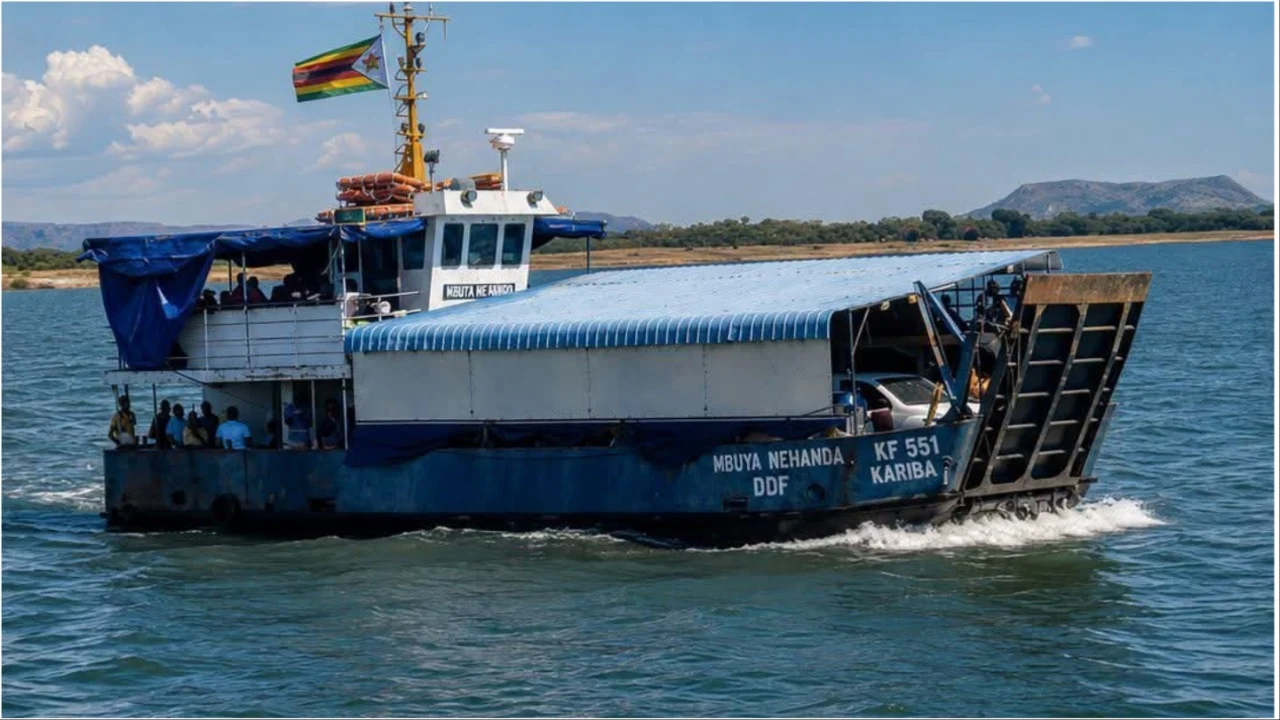
As I write, 92 people have been confirmed dead following the capsizing of the government-operated Mbuya Nehanda ferry. The investigation must determine responsibility, and it would be wrong to prejudge its conclusions. Yet some facts already justify serious institutional scrutiny. The vessel had a stated capacity of 90 passengers, while authorities initially confirmed 114 ticketed adults, five crew members and an unknown number of children aboard.
In a functioning system of accountability, that discrepancy should concern Government itself. How could more adult tickets be sold than the vessel was supposed to carry? Who supervised loading? What controls existed to prevent overloading? When was the ferry last inspected? Were previous safety concerns addressed? If adverse weather warnings were issued, what procedures governed the decision to sail?
On this topic
These are not opposition questions. They are governance questions.
Zimbabwe has developed an unhealthy tendency to blur the distinction between the ruling party, Government and the State. Criticism of a public institution can therefore quickly be interpreted as criticism of Government and, in turn, as hostility towards ZANU-PF. The result is an incentive to defend institutions that Government should instead be scrutinising.
The distinction matters. ZANU-PF is a political party that currently forms the Government. Government exercises executive authority for the period for which it has been elected. State institutions are different. ZESA, NRZ, ZIMRA, RIDA, central hospitals and other public bodies do not belong to a political party. They exist to serve Zimbabweans regardless of political affiliation.
A minister responsible for one of these institutions should therefore not regard criticism as an attack that must automatically be repelled. The minister should often be the person asking the hardest questions.
If avoidable failures at ZESA contribute to poor electricity supply, the Energy Minister should demand explanations from its leadership. If NRZ performs badly, the Transport Minister should interrogate its board and management. If patients receive unacceptable treatment at a central hospital, the Health Minister should be able to acknowledge the failure, establish its causes and require corrective action.
That is what political oversight is for.
Zimbabwe’s own Constitution requires public administration, including State agencies and government-controlled entities, to use resources efficiently, respond to people’s needs, foster transparency and remain accountable to Parliament and the public. The Public Entities Corporate Governance Act similarly establishes an accountability structure involving ministers, boards and senior management.
The problem, therefore, is not simply an absence of institutions or laws. It is what happens when political culture weakens their purpose.
Once criticism of a State enterprise is viewed primarily through a partisan lens, the incentives become distorted. Instead of asking whether the criticism is justified, officials begin by asking who is making it and why. Shortcomings are explained away rather than corrected, while political supporters can find themselves defending poor performance because acknowledging failure feels like conceding a political argument.
That helps neither citizens nor the ruling party.
The Government of the day should have a greater interest than anyone else in knowing when institutions under its supervision are failing. A power cut caused by poor planning remains a power cut whether the person complaining supports ZANU-PF or the opposition. A pothole has no political affiliation. A badly managed hospital does not improve because its shortcomings are defended, and a loss-making public enterprise does not become financially sound because an explanation can be found for its losses.
There will, of course, be legitimate external causes for some failures. Drought can constrain hydropower generation. International economic restrictions can have consequences. Ageing infrastructure creates real costs. Such factors should be recognised where they genuinely apply.
But external factors should never replace scrutiny of decisions that were within the control of public institutions.
Good governance requires distinguishing between what could not reasonably have been prevented and what resulted from poor planning, weak supervision, negligence or incompetence. If every failure is attributed externally, management eventually has little incentive to improve because no outcome is ever truly its responsibility.
Zimbabwe has seen the consequences of normalising failure in everyday life. Overloaded buses carrying standing passengers became accepted. Kombis squeezed four passengers into spaces designed for three and converted passageways into extra seating. Repetition changed perceptions: what initially appeared unacceptable gradually became ordinary because it happened repeatedly without catastrophe.
Institutions can undergo the same process.
Power cuts become something citizens are expected to accommodate. Potholes remain for years. A public enterprise repeatedly reports poor results. Government systems remain unnecessarily cumbersome. Each failure is individually explained until the accumulation of failure itself becomes normal.
That is why the Kariba disaster deserves scrutiny beyond the immediate actions of the captain.
If overloading had occurred previously, who knew? If the ticketing system allowed passenger numbers to exceed capacity, why? If safety inspections were conducted, what did they establish? If deficiencies were identified, were they corrected? Who supervised RIDA? Who regulated the vessel? Were government-operated vessels subjected to the same standards expected of private operators?
Government should own these questions rather than regard them as an embarrassment.
There is something wrong when journalists, civil society organisations, opposition politicians and grieving families appear more determined to establish what went wrong in a public institution than those politically responsible for supervising it. A confident Government should not wait to be forced into accountability. It should lead it.
Accountability does not mean finding someone to dismiss every time something goes wrong. Ministers should not pronounce individuals guilty before investigations are completed. Proper governance requires evidence, fairness and due process. Sometimes an investigation will establish that officials acted reasonably in exceptionally difficult circumstances.
But there is a large space between prejudging individual guilt and refusing to acknowledge institutional failure.
A minister can say that a public service has fallen below an acceptable standard while allowing investigators to establish why. Government can apologise to citizens who have suffered without prematurely assigning criminal liability. An agency can acknowledge that something went badly wrong, preserve evidence, commission independent scrutiny and commit to publishing the findings.
An apology is not an admission that every allegation is true. It is an acknowledgement that citizens placed their trust in a public service and that the outcome was unacceptable.
The same principle should apply beyond Kariba. When the Auditor-General identifies serious weaknesses in a State enterprise, the response should be corrective action followed by evidence that recommendations have been implemented. When an institution repeatedly misses performance targets, its board should explain why. When management fails, there should be consequences. When a board fails to hold management accountable, the responsible minister should intervene. Parliament, in turn, should hold the minister accountable.
That is the chain of responsibility.
The alternative is a system in which everyone protects the institution below them and explains the problem to the person above them: ministers defend boards, boards defend management, management blames circumstances, political supporters defend Government, and citizens remain stuck with the same failing service.
Ironically, this eventually harms the Government it is intended to protect.
Public trust is not built by persuading citizens that Government never makes mistakes. No government can meet that standard. Trust grows when people believe that, when something goes wrong, the State can establish why, tell them the truth, correct the failure and hold those responsible to account.
Support for a ruling party should therefore never require defending every institution it oversees. Those who support a Government have a particular interest in demanding competence from it because electricity, transport, healthcare and public administration ultimately become part of that Government’s record.
Zimbabwe needs to recover a simple distinction: the party is not the State. Public institutions are not extensions of the ruling party, and ministers are not appointed merely to defend the agencies beneath them. Their responsibility is to ensure that those institutions serve the public competently, lawfully and efficiently.
Where an institution performs well, Government should recognise it. Where it fails, Government should say so. Where failure results from incompetence or negligence, accountability should follow. Where Government itself makes the wrong decision, it should be capable of admitting it.
Kariba must give Zimbabwe more than an explanation of why one ferry sank. It should remind us that defending failure is not loyalty, and acknowledging failure is not weakness.
A government becomes stronger not by covering incompetence, but by confronting it.
Dr Shame Mugova is a Lecturer in Finance at Birmingham City University. He writes on finance, economic policy, governance and development, with a particular interest in Zimbabwe and Southern Africa. He writes in his personal capacity.







Leave a Reply