
Community members from Tsholotsho, Nyamandlovu and Umguza have raised funds to buy 36 000 litres of diesel towards the rehabilitation of the long-neglected Bulawayo-Tsholotsho Road, signalling growing community ownership of a project expected to improve access to markets, healthcare and tourism.
The community-led effort, which has brought together more than 3 500 people, has also attracted support from government, local authorities and institutions, with the Zimbabwe National Road Administration (ZINARA) donating 5 000 litres of diesel.
Matabeleland North Minister of State for Provincial Affairs and Devolution Richard Moyo contributed a further 1 000 litres of diesel and US$2 000, while the John Landa Nkomo Trust pledged US$2 000.

The contributions form part of the Tsholotsho Road Rehabilitation Initiative (TRRI), which is spearheading the rehabilitation of the 90-kilometre road in partnership with government and other stakeholders.
On this topic
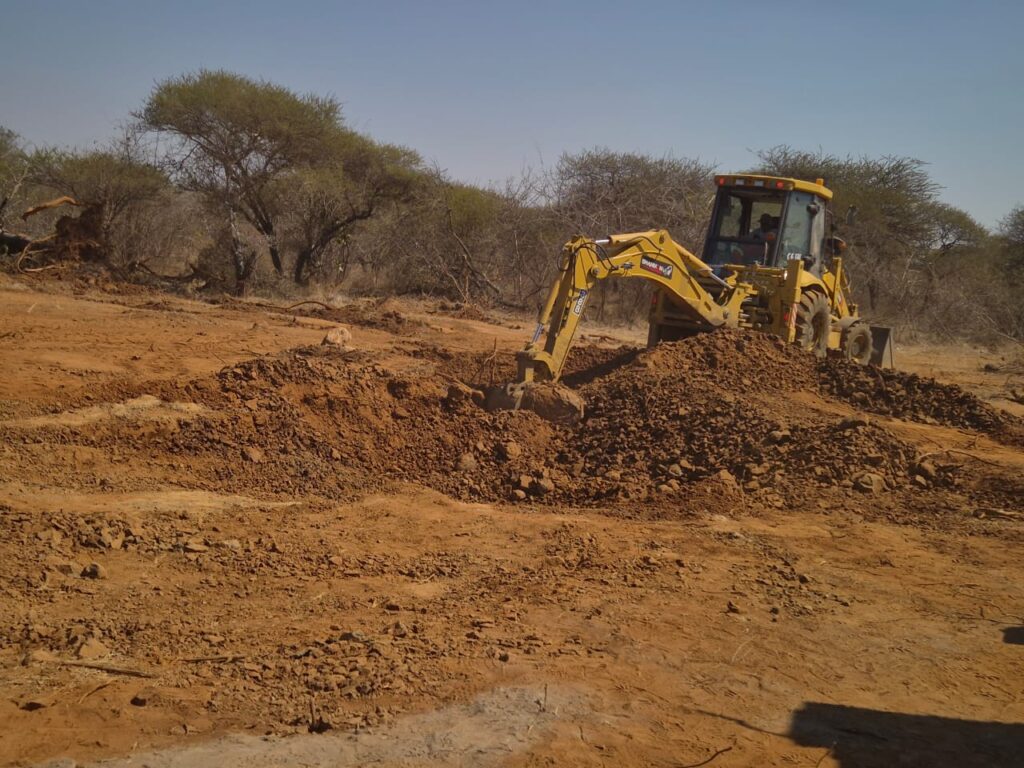
The project was officially launched on Friday, with works set to involve spot dumping, shoulder grading and full grading of severely damaged sections.
Two teams will work simultaneously from the Bulawayo and Tsholotsho ends to accelerate the rehabilitation, while gravel will be stockpiled locally to minimise interruptions to the works.
TRRI chairperson Cephas Tshuma said the initiative was driven by communities who wanted to take responsibility for improving infrastructure that directly affects their livelihoods.
“As we speak, we have plus 3 500 people from Tsholotsho, Nyamandlovu and Umguza who came together to say, let’s develop our area,” Tshuma said.
He said the initiative was not motivated by personal business interests but by the need to reduce transport costs and improve access to healthcare.
“But what affects us the most is the patients who leave Tsholotsho Hospital being referred to Mpilo Hospital. Some don’t reach their destination, so this touches us. We are not in the committee to make any cents but to make a difference,” he said.
Tshuma said contributors wanted transparency in the use of the resources they had mobilised and would monitor the project throughout its implementation.
“We are dealing with people’s monies, we told them the number of cars that you are going to use on this road. Some will come from Tsholotsho, others here, we want to send the video from Tsholotsho to the people. We are not rich people, so please use the diesel that is going to be bought responsibly,” said the chairperson.
He also appealed to Umguza and Tsholotsho rural district councils to work together to make sure the rehabilitation programme succeeds.
The road is expected to ease the movement of agricultural produce from farming communities to markets while reducing vehicle operating and transport costs.
Speaking at the launch, Moyo said the project demonstrated what could be achieved when communities, government, local authorities and institutions worked together.
“I have no doubt that when the government, communities, local authorities and institutions work together, great things can be achieved,” he said.
“This initiative clearly illustrates that national development is everyone’s responsibility. The government creates an enabling environment, institutions provide technical and financial support, local authorities mobilise resources and communities become active participants in shaping their own future.”
Moyo said the road was critical to the economic development of the area, particularly for farmers and businesses.
“Our roads are not merely strips of gravel linking one point to another. They facilitate tourism, attract investment, reduce transport costs and improve the efficiency of public services,” he said.
He said the poor condition of the road had also affected emergency medical services, particularly patients being referred from Tsholotsho to hospitals in Bulawayo.
“When you call the hospital that someone is sick in Ward 14, an ambulance driver won’t think twice as they know the road is trafficable, but at the moment, if they think of these potholes, it becomes hard,” Moyo said.
Farmers, he added, were discouraged from transporting their produce to markets because of the damage the road caused to vehicles.
“As farmers, you also send your produce to the market. If you load your cabbage, you think twice about the road as the springs of your vehicle will be affected, but now it will be easy,” he said.
Moyo said the improved road would also unlock opportunities in tourism and local business.
“Matabeleland North province is known for tourism. Tsholotsho, we are known for timber, but who can we sell the timber to when there is no road?” he asked.
He said engineers had indicated that the road could be made trafficable between Bulawayo and Tsholotsho within two months.
Moyo urged contractors and equipment operators to maintain high standards and ensure resources were used responsibly.
“To our contractors and equipment operators, ensure efficiency, safety and value for money,” he said.
He also called on companies extracting resources in Tsholotsho and across Matabeleland North to contribute to community development through corporate social responsibility programmes.
“Let us all push forward, ploughing back to our communities. My office will audit the use of these funds for accountability and transparency for all parties involved,” Moyo said.

Umguza Rural District Council has also pledged equipment towards the project, with Councillor Getrude Gumbo, representing the council chairperson, saying the road was strategically important to communities in the district and would improve access to markets, schools and health facilities.
“The equipment contributed by Umguza RDC is three tipper trucks, a 30-tonne [truck], front-end loader and a low-bed,” Gumbo said.
She said the project would benefit Wards 9, 10, 12, 13, 14 and 15, while creating opportunities for farmers, traders and entrepreneurs.
ZINARA board member Monica Ngwenya said the authority was supporting the initiative through its corporate social responsibility programme by providing fuel and personal protective equipment.
“This is your programme, shaped by your vision and driven by your commitment,” Ngwenya said.
She said while the government continued to invest in major highways and trunk roads, feeder roads also required community participation.
“This partnership is one that we hope to see replicated across the country because it places communities at the centre of their own development while drawing on the strength of public institutions,” she said.
Chief Mahlathini also urged communities to maintain their collective effort, saying the poor road was increasing the cost of transporting agricultural produce.
“I know there are farmers in Nyamandlovu. I have seen some farmers in Tsholotsho selling their produce, but travelling is hard and expensive for them. Transporting produce is very expensive,” he said.
“I hope that when the road is fixed, the cabbage we buy for R30 will be R20 as transporting will be easy, thus the importance of a road.”








Leave a Reply