
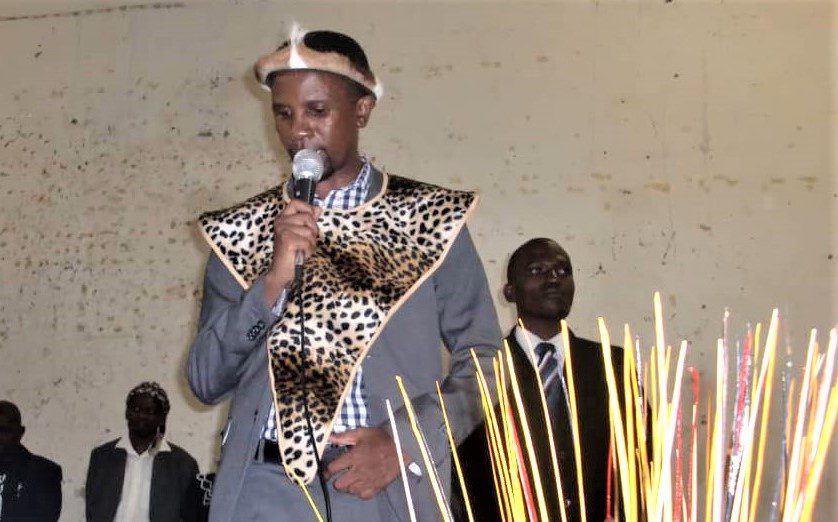
The Mthwakazi Republic Party (MRP) led by Mqondisi Moyo has urged Zimbabweans living in South Africa to take precautionary measures ahead of June 30, warning that rising anti-immigrant sentiments, political agitation, vigilantism and criminal opportunism could expose vulnerable migrant communities to violence and abuse.
Moyo said while South Africa has the sovereign right to regulate migration and enforce its immigration laws, those responsibilities should be exercised by lawful state institutions and not by private groups or individuals seeking to target foreign nationals.
His remarks come amid growing anxiety among migrants following calls by anti-immigrant groups for undocumented foreigners to leave South Africa before June 30, 2026, a deadline that has heightened fears among migrant communities and prompted concerns from neighbouring countries.
The South African government has simultaneously intensified efforts to tackle illegal immigration, reiterating its commitment to enforcing immigration laws and tightening border controls.
On this topic
Moyo told CITE that with the June 30 date beckoning, the day must not become a “day of African-on-African Violence.”
He appealed for calm and vigilance, saying Zimbabweans should prioritise their safety and avoid situations that may escalate tensions.
“Human life and human dignity must come before politics, nationality, ethnicity or immigration status,” Moyo said.
“No dispute about immigration can justify violence, collective punishment, intimidation or the destruction of another person’s livelihood.”
The MRP leader advised Zimbabweans living in South Africa to avoid demonstrations and potential flashpoints, keep identification and immigration documents readily accessible, retain electronic copies of important records and establish communication plans with family members, employers, churches and community organisations.
“Zimbabweans should neither participate in violence nor respond violently to provocation,” he said.
“Threats, attacks and unlawful conduct should be documented where it is safe to do so and reported to the appropriate authorities, diplomatic representatives and credible human rights organisations.”
He added that individuals should remain alert to threats that may emanate from vigilante groups, criminal actors, political agitators or even unlawful conduct by officials.
“Preparation is not panic, and prudence is not provocation,” Moyo said.
“Our people should remain alert to dangers that may come from vigilantes, criminal actors, political agitators or the unlawful conduct of officials. Every Zimbabwean should act responsibly, remain peaceful and protect life.”
Moyo argued the vulnerability experienced by Zimbabweans in South Africa cannot be divorced from the political and economic conditions that forced many to leave Zimbabwe in the first place.
“Few people leave their homes, their families and their language by choice,” he said.
“They left because governance at home collapsed, because the economy was destroyed, and because the institutions that should have protected them were captured or hollowed out.”
According to Moyo, many Zimbabweans now find themselves trapped between insecurity in South Africa and deteriorating conditions in the country they fled.
“They now meet exclusion in the country to which they fled and persecution in the country they left. A people pushed out of one state and unsafe in another has nowhere to stand. That is the condition the MRP asks the world to see,” he said.
Moyo said the situation also presents a broader debate about governance and accountability on the African continent, while describing his MRP as an aspirational political organisation founded on democratic principles rather than ethnic nationalism.
“Mthwakazi is the historic homeland of the peoples of southwestern Zimbabwe, centred on Bulawayo and commonly known as Matabeleland. Many of the people whose aspirations the MRP seeks to represent have carried the consequences of decades of misrule, and large numbers now live in South Africa,” he said.
“MRP is an aspirational political organisation. It is founded not upon resentment, revenge or ethnic supremacy, but upon the conviction that Africans are entitled to the same personal freedoms, constitutional protections and accountable institutions expected anywhere in the democratic world.”
Moyo said the party believes in democracy, human rights, the rule of law, meritocracy and equal treatment before the law.
“It believes in government of the people, by the people and for the people, not government by party patronage, inherited entitlement, ethnic favouritism or coercive force,” he said.
“Equality before the law is not an ambitious luxury. It is the minimum requirement of a legitimate government. A state that protects only the politically connected, the ethnically favoured or those able to purchase influence is not serving its people.”
The MRP leader also blamed decades of political intimidation, corruption, economic decline and institutional capture for weakening Zimbabwean civil society, arguing that organisations capable of protecting vulnerable communities and documenting abuses have been suppressed, divided or forced into survival mode.
As a result, he said, millions of Zimbabweans had sought opportunities and security outside the country’s borders, only to face renewed uncertainty abroad.
Moyo called on governments, diplomatic missions, journalists, human rights organisations and international institutions to closely monitor developments surrounding June 30.
He urged foreign governments to instruct diplomatic missions in the region to observe events and report through human rights mechanisms, defend the safety and independence of journalists documenting incidents, preserve accountability mechanisms against individuals implicated in violence and support discussions within the African Union on attacks against African nationals.
“International observation is not interference,” Moyo said.
“When violence is threatened, credible monitoring can serve as a safeguard against abuse and a deterrent to those who believe nobody is watching.”
He further warned instability in South Africa could have broader regional consequences, given the country’s central role in southern Africa’s economy.
“South Africa is the region’s economic anchor. If it becomes poorer, more violent and more hostile, the pressures that push people across borders will not diminish,” he said.
“We ask the world not to look away. Watch June 30. Watch how Zimbabweans and other migrants are treated in South Africa. Observe what continues to happen inside Zimbabwe.
“Then, give the people of Mthwakazi the peaceful space to demonstrate what Africans can build when they are free to govern themselves.”






Leave a Reply