
Women farmers in drought-prone Gwanda district are reporting increased productivity, reduced workloads and improved resilience to climate shocks following the introduction of labour-saving agricultural technologies under the Climate Resilient Livelihoods Project.
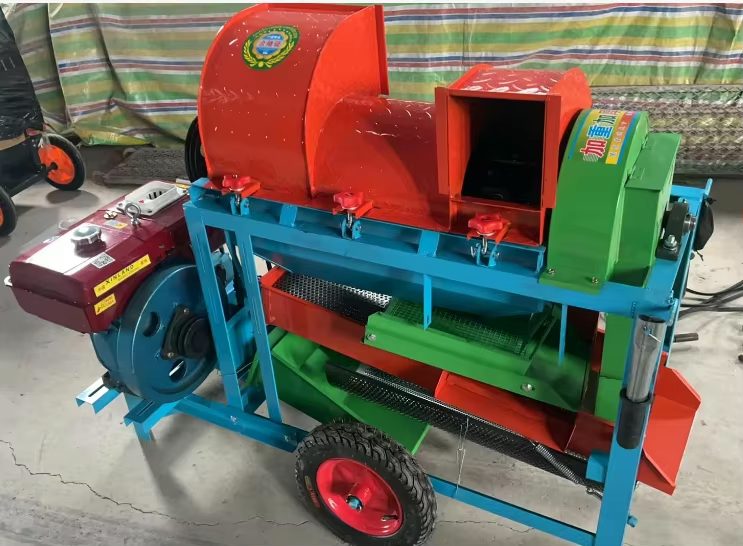
The initiative, implemented through a partnership between the Green Climate Fund (GCF), the Government of Zimbabwe and the United Nations Development Programme (UNDP), is equipping Farmer Field Schools with earth augers, multi-crop threshers and grinder-choppers to reduce the burden of agricultural labour and promote climate-resilient livelihoods.
In Nsimbi Village, women who previously spent long hours manually threshing grain and chopping crop residues for livestock feed say the equipment has significantly reduced the time and effort required to complete these tasks.
“Preparing feed for livestock used to take us an entire day,” said Precious Hobane, a farmer from Nsimbi Village. “Now the grinder-chopper does the heavy work for us. We can prepare enough feed much faster, and threshing grain no longer takes days.”
On this topic
The ability to efficiently process and store livestock feed is particularly important in areas such as Gwanda, which are frequently affected by drought. Adequate fodder preparation and storage often determine whether livestock survive prolonged dry spells.
“These machines are helping us take better care of our livestock, especially during drought periods. At the same time, women are no longer exhausted from doing everything manually,” Hobane said.
The project is supporting 230 Farmer Field Schools across southern Zimbabwe with equipment designed to reduce drudgery, improve agricultural productivity and strengthen communities’ capacity to cope with the effects of climate change.
For many rural women, farming responsibilities are combined with household duties, leaving little time for other productive activities. Tasks such as preparing planting basins, threshing grain and processing livestock feed have traditionally required intensive manual labour.
Project partners say increasingly erratic rainfall patterns and recurring droughts have heightened the pressure on women farmers, making labour-saving technologies a critical component of climate adaptation efforts.
Beyond reducing physical strain, the technologies are also creating new economic opportunities within local communities.
Several Farmer Field Schools are hiring out the equipment to neighbouring farmers for services such as land preparation, threshing and livestock feed processing. Revenue generated from these services is being used to maintain the machinery, purchase agricultural inputs, strengthen savings groups and support vulnerable households.
Women are also using the time saved through mechanisation to participate in training programmes, farmer groups, nutrition gardening projects and community decision-making processes.
“Women now have greater confidence because they have more time and energy to engage in other activities. Before, most of our time was spent doing physically demanding work,” said Hobane.
In Buhera District, where women farmers are using earth augers to prepare planting basins, beneficiaries have reported similar gains.
Christine Mudzingwa of Kichini Village said the technology has enabled women to prepare land more efficiently and plant on time despite increasingly unpredictable rainfall patterns.
“Digging planting basins manually was one of the most exhausting tasks. The auger has brought real relief to women. We can now prepare our fields much faster and plant on time. Women are no longer spending days doing backbreaking work in the fields,” said Mudzingwa.
She added that the reduced workload has created more time for family responsibilities and other income-generating activities.
“Before, farming consumed all our time. Now there is balance. I can work in my garden, spend time with my family and even rest,” she said.
The Climate Resilient Livelihoods Project forms part of broader efforts by the GCF, the Government of Zimbabwe and UNDP to strengthen the resilience of vulnerable communities while promoting gender equality and sustainable livelihoods.
By reducing labour demands, increasing productivity and expanding opportunities for women to participate in economic and leadership activities, the project is helping rural households better withstand climate-related shocks.
“These machines have changed how we live and work. Women now have time to think about improving their lives, not just surviving from one farming season to the next,” said Mudzingwa.
Support CITE’s fearless, independent journalism. Your donation helps us amplify community voices, fight misinformation, and hold power to account. Help keep the truth alive. Donate today






Leave a Reply