


Teenagers involved in the notorious “Vuzu” party culture have become increasingly crafty, abandoning traditional house parties and adopting new methods to avoid detection by parents, guardians and law enforcement authorities, the National AIDS Council (NAC) has revealed.
Now, teenagers are hiring commuter omnibuses (kombis), boarding them with alcohol, drug substances and travelling to various destinations while drinking, partying and allegedly engaging in sexual activity during that journey.
For years, Vuzu parties gained notoriety in Bulawayo and other parts of Zimbabwe as unsupervised gatherings where alcohol and recreational drugs flowed freely, often accompanied by risky sexual behaviour among young people.
The parties, usually held at private homes in both high-density and low-density suburbs, became synonymous with drug and substance abuse, underage drinking and unsafe sexual practices.
On this topic
Reports indicated some boys competed over who could have sexual encounters with the highest number of girls, frequently without protection, raising concerns about the spread of HIV and sexually transmitted infections (STIs).
The phenomenon left many parents, guardians and community leaders seeking for solutions as concerns mounted over the impact on young people’s health and future prospects.
Read: https://cite.org.zw/vuzu-parties-fuel-bulawayos-growing-drug-abuse-crisis/
However, NAC Programmes Officer Douglas Moyo says the traditional Vuzu party is disappearing, not because the problem has been solved, but that young people have changed tactics.
Speaking during an engagement programme at Isilwane Youth Centre in Old Pumula in Bulawayo, Moyo said authorities had established a provincial multi-sectoral committee involving security agencies to tackle Vuzu parties, forcing organisers to devise new ways of operating.
“As a community of Bulawayo, we now have new strategies through a multi-sectoral committee at provincial level involving security agencies where we have come up with measures to deal with Vuzu parties. The teenagers know that,” said Moyo.
“What they have since done is transform the Vuzu party into something different. They hire a kombi, get in with their girlfriends, alcohol and other substances, then simply drive around with no destination.”
Moyo said the mobile gatherings, commonly referred to by teenagers as “mjeje,” have become increasingly difficult to detect because they do not attract attention in the same way as traditional house parties.
“Along the way, anything can happen inside that kombi. They are drinking, smoking and engaging in sexual activities while moving around. The Vuzu parties that were famous before are no longer there. If you go looking for houses with loud music in the suburbs, you may not find them,” he said.
“That’s another version that we still need to deal with. We have engaged traffic police and CID officers to be on the lookout for these kombis. Most of them have tinted windows and are well-decorated and attractive-looking vehicles. They thought we don’t know, but we know.”
The changing face of Vuzu parties comes at a time when health authorities remain concerned about HIV infections among young people, particularly adolescent girls and young women.
National AIDS Council Bulawayo Monitoring and Evaluation Officer, Primrose Dube, said young people continue to carry a significant burden of HIV infections in the city.
According to NAC statistics, Bulawayo has 3 713 young people aged between 15 and 24 living with HIV.
Dube said data showed young females remained disproportionately affected by the epidemic while men had a higher positivity rate.
“Prevalence by age and sex shows young females aged 15 to 19 have a prevalence of five percent compared to between two and three percent among males, highlighting early vulnerability patterns that require targeted prevention strategies,” she said.
“HIV incidence also remains disproportionately high among young females, with girls aged 15 to 19 showing 6.5 times higher incidence than males. Among those aged 15 to 24, young women experience between two and 2.5 times higher incidence than males.”
Health experts say risky sexual behaviour, substance abuse, peer pressure and limited access to accurate sexual and reproductive health information continue to fuel vulnerability among adolescents.
In response, NAC has intensified prevention programmes targeting young people.
One such intervention is the Brother-to-Brother Programme, a mentorship initiative introduced under NAC’s social contracting model.
The programme seeks to equip boys and young men with sexual and reproductive health knowledge, life skills and mentorship aimed at reducing risky behaviour associated with HIV and STIs.
In Magwegwe District, which for NAC’s programming purposes includes Magwegwe, Pumula and Lobengula suburbs, the programme is being implemented by youth-led organisation Dot Youth (.Youth).
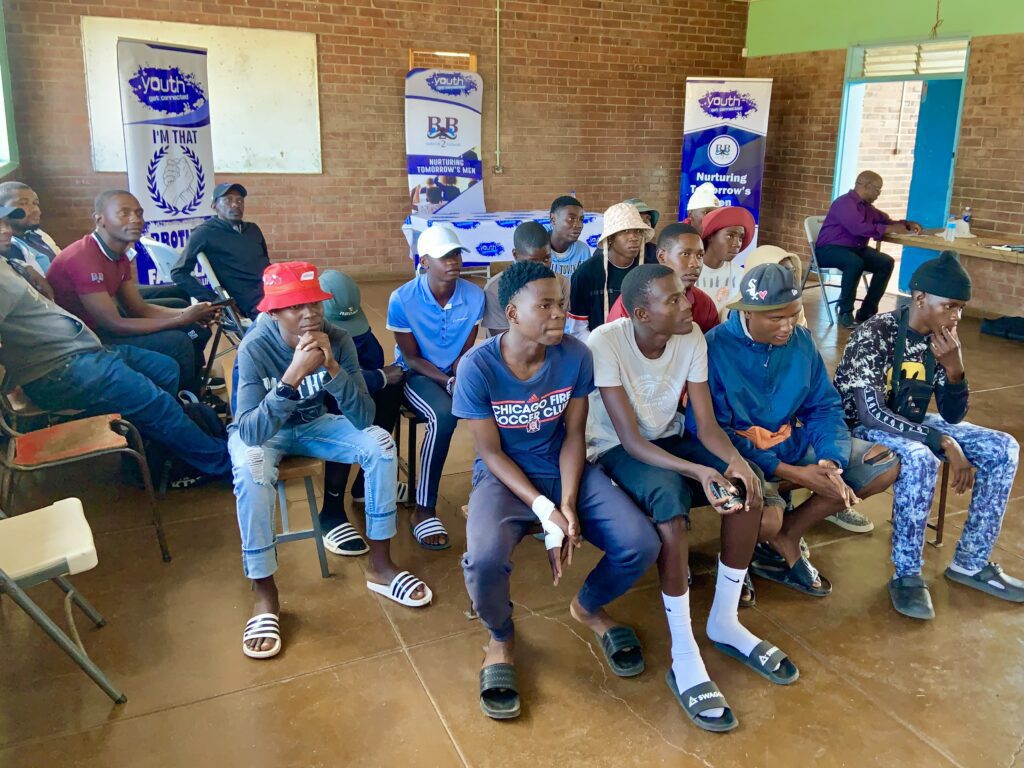
Programme facilitators say the objective is to mould informed, responsible young men capable of making positive life choices and contributing meaningfully to their communities.
Some beneficiaries say the programme has already transformed their lives.
Tafadzwa Kawusyo (19) said he had abandoned drug use after participating in mentorship sessions.
“Before joining the programme, I used to spend a lot of time with friends who encouraged me to experiment with drugs because they said that was the only way to have fun,” he said.
“The mentorship helped me understand the consequences of those choices. I learnt the dangers of substance abuse and how it affects your future and your health. Since joining the programme, I stopped taking drugs.”
Another mentee, Thabo Ndlovu (19), said the programme had given him valuable guidance but stressed young people also needed economic opportunities to avoid relapsing into destructive behaviour.
“We were pressurised by our peers. Sometimes drugs seemed like the easiest way to belong,” he said.
“The mentorship programme has helped us know there are better choices we can make. But we also need life skills training and opportunities to earn a living so that we do not end up back on the streets using drugs and substances.”
Support CITE’s fearless, independent journalism. Your donation helps us amplify community voices, fight misinformation, and hold power to account. Help keep the truth alive. Donate today







Leave a Reply