
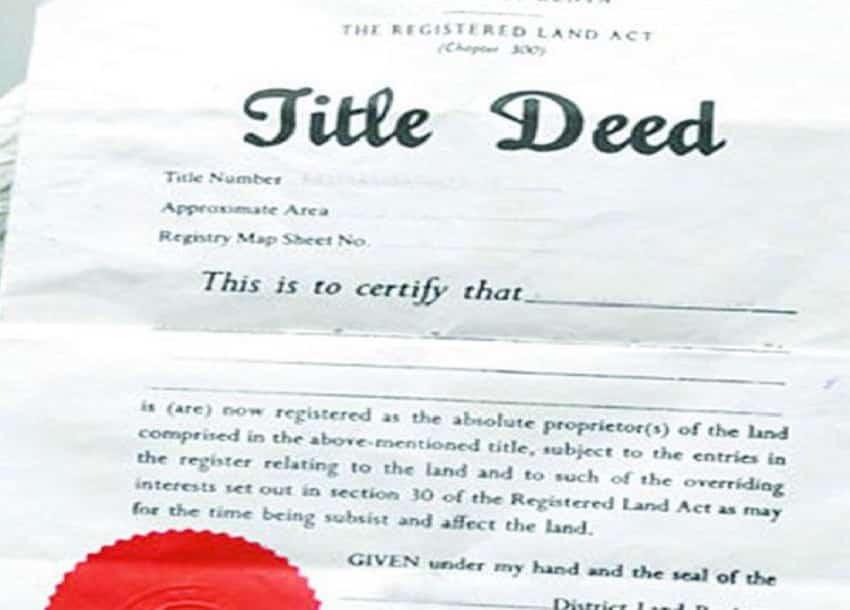
The Coalition for Market and Liberal Solutions (COMALISO) has welcomed Zimbabwe’s move to digitise land registration and title deeds but has warned that proposed conveyancing fees could place an unfair burden on low-income homeowners and undermine efforts to expand secure property ownership.
COMALISO Executive Director Rejoice Ngwenya praised the Ministry of Justice, Legal and Parliamentary Affairs, the Central Deeds Registry and Kwangu/Kwami Trust for spearheading what he described as a historic modernisation of the country’s property administration system.
“We have always supported digitalisation as a welcome step toward efficiency, transparency and the reduction of corruption in property administration,” said Ngwenya.
However, he raised concerns over plans to apply a conveyancing fee structure designed for commercial and high-value properties to homeowners in high-density suburbs, regularised settlements and rural growth points.
On this topic
“Home and property owners in these locations are mostly low-income earners, if not older persons, who have already paid for land through council schemes, housing cooperatives or government regularisation programmes. Asking them to again pay full commercial conveyancing fees is neither just nor economically sensible,” he said.
Ngwenya warned that high fees could discourage many residents from obtaining title deeds and create barriers for those who have yet to begin the registration process.
COMALISO is calling on the government to exempt urban high-density homeowners, residents of regularised informal settlements receiving title deeds for the first time, and property owners in growth points and rural service centres undergoing tenure formalisation from digitalisation-related conveyancing fees.
Among the areas cited were Highfield, Budiriro and Mbare in Harare, as well as Luveve and Nkulumane in Bulawayo, Mkoba in Gweru and Dangamvura in Mutare. Informal settlements such as Epworth, Cowdray Park and Hopley were also identified as communities that could be disproportionately affected by the proposed charges.
To ease the burden on residents, Ngwenya proposed that conveyancing work for these categories be handled through local authorities by accredited paralegals or legal practitioners on a pro deo basis, with administrative charges capped at the equivalent of US$20 per transaction.
He also suggested introducing a reduced fee schedule for low-income property owners or establishing a National Shelter Fund supported by building societies, property developers, insurance companies and pension funds.
“Digitalisation must lower, not raise, cost barriers to secure property ownership. Technology reduces processing time and administrative costs, and those savings must be passed on to citizens, especially the disadvantaged, poor and older persons,” Ngwenya said.
He urged the government to engage residents’ associations, local authorities, legal aid organisations and private-sector stakeholders to develop an inclusive framework that promotes wider access to title deeds.
According to COMALISO, the success of the digitalisation programme will depend not only on technological innovation but also on ensuring that the costs associated with obtaining title deeds remain affordable for ordinary Zimbabweans.
Support CITE’s fearless, independent journalism. Your donation helps us amplify community voices, fight misinformation, and hold power to account. Help keep the truth alive. Donate today







Leave a Reply