
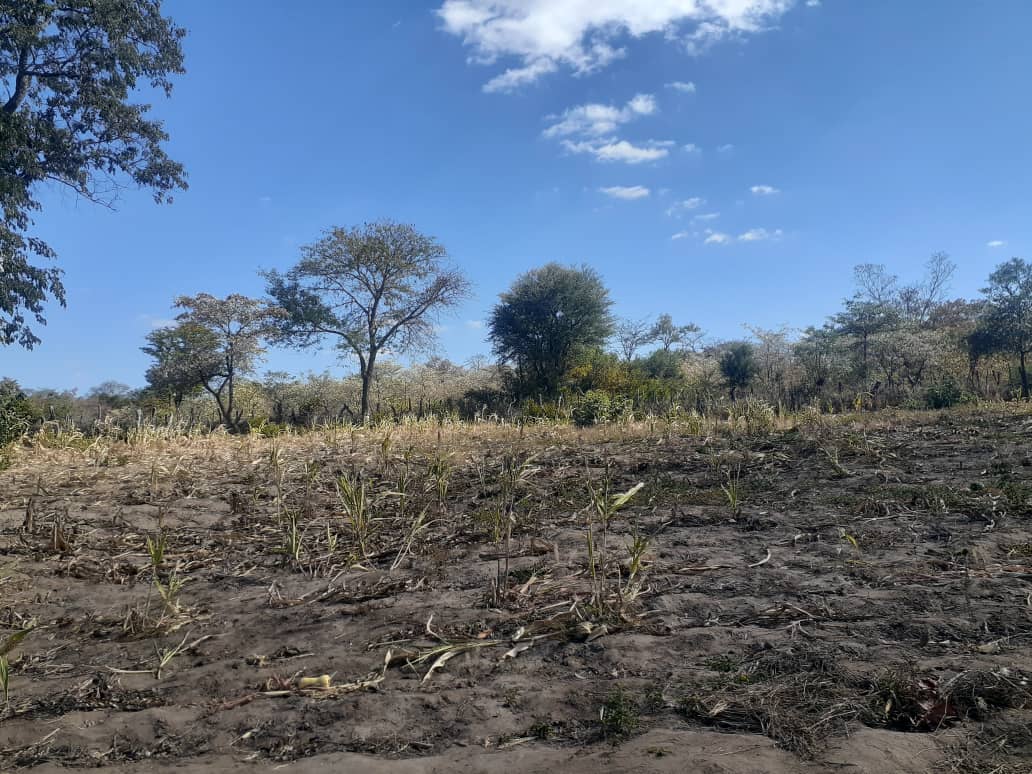
Minister of Agriculture, Mechanisation and Water Resources Development, Anxious Masuka, has warned that the anticipated El Niño weather phenomenon poses a serious threat to Zimbabwe and the wider Southern African region, amid fears of droughts and widespread crop failures.
Addressing ministers responsible for agriculture and food security during a SADC meeting in Victoria Falls on Friday, Masuka said early climate models were already predicting the development of a super El Niño during the 2026/2027 farming season.
“The development of a super El Niño in the 2026/2027 season, as predicted by early climate models, should spur us to develop appropriate mitigation and adaptation measures,” Masuka said.
He warned that Zimbabwe, like many countries in Southern Africa, was likely to become drier in the coming decades because of climate change, placing increased pressure on agriculture and food security systems.
On this topic
“Zimbabwe like many other countries in Southern Africa, is predicted to become drier in the decades ahead due to climate change. Therefore, the imperative to climate-proof our agriculture cannot be overemphasised,” he said.
Masuka said climate change had become an everyday reality across the region, manifesting through more frequent droughts, floods and extreme heat.
His remarks come as SADC countries intensify discussions on regional food security and climate resilience amid growing concerns over the anticipated El Niño conditions.
Speaking at the same meeting, SADC Deputy Executive Secretary for Regional Integration, Angèle Makombo N’Tumba warned that climate experts were forecasting a high likelihood of El Niño conditions developing towards the end of 2026 and into early 2027.
“Predictions by climate and weather experts are indicating the likelihood of El Niño towards the end of 2026 and into early 2027, with an estimated 77% chance of a moderate-to-very-strong El Niño,” she said.
N’Tumba said historical analysis showed that moderate-to-strong El Niño events were usually associated with below-average rainfall across central and southern parts of the SADC region, often resulting in significant harvest failures.
“We must start preparing now for such a possibility,” she said.
She warned that climate change continued to expose the region to increasingly unpredictable weather patterns, ranging from destructive floods in some countries to severe droughts in others.
N’Tumba said agriculture remained central to the SADC economy, sustaining more than 70 percent of the population through food production, trade and related industries.
Support CITE’s fearless, independent journalism. Your donation helps us amplify community voices, fight misinformation, and hold power to account. Help keep the truth alive. Donate today








Leave a Reply