
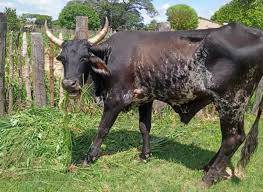
Minister of Lands, Agriculture, Fisheries, Water and Rural Resettlement, Dr Anxious Masuka, says January disease is no longer confined to the early months of the year, with climate change extending the threat deep into the year and posing a growing risk to Zimbabwe’s cattle herd.
Traditionally associated with the rainy season between November and January, the tick-borne disease has historically peaked during that period.
However, Dr Masuka told Parliament that shifting rainfall patterns are prolonging tick activity, making the disease a near year-round concern.
“There are a lot of things that we can do to prevent January disease in cattle. First of all, let us understand the term ‘January disease’. We received a lot of rainfall between November and January this year. As a result, January disease was prevalent because there were too many ticks, which came out due to heavy rains and these ticks affected our cattle,” he said.
On this topic
The minister said due to climate change, January diseases are experienced even in March and April.
“It is a disease that we would want to prevent or inoculate cattle against at all times. As a government, we cannot wait for a single type of virus dosage to protect the cattle. That is why we said we would give tick grease to every household under the Presidential Tick-Grease Programme,” he said.
The Minister was responding to a question from Mwenezi North MP, Master Makope, who had asked what measures the Ministry is taking to curb the spread of the disease.
“The January disease is now prevalent all over the country. What has the Ministry done in order to come up with a vaccine to inoculate the cattle, like what you did with lump skin and other diseases, such as foot and mouth,” he said.
Dr Masuka outlined a multi-pronged approach to control the disease, including intensive dipping and vaccination efforts.
He explained that during the rainy season, cattle are expected to be dipped on a strict schedule.
“We have coined a term that we call 5-5-4, meaning that the cattle have to be dipped once every five days, followed again after five days and thereafter, after four days. This is what we call intensive dipping to protect the cattle against all diseases that come out as a result of ticks,” he said.
The minister acknowledged, however, that due to the increasing prevalence of the disease, dip tanks are running out of water.
Dr Masuka also highlighted progress on vaccination, noting that government developed an injection called Bolvac, which was first distributed in 2021.
“Bolvac started in 2021 and continued in 2022. There were 25 000 doses that were made by the Government and these were distributed to 25 districts where the disease was prevalent. We inoculated cattle in those regions. The results showed that the cattle were immune to such a disease for their entire life,” he said.
He added that this season, they are aiming at having 30 000 injections for the immunisation of cattle.
“It is our wish that we have adequate supplies in 2028 or 2030, where we are aiming to have 500 000 inoculations, so that in 10 years, all our cattle should be vaccinated.”
Dr Masuka appealed to cattle ranchers that when the government constructs a dip tank and provides vaccinations, cattle owners should pay a US$1 per year to benefit their cattle.
Despite these efforts, legislators raised serious concerns over the challenges farmers face, particularly the high cost of dipping chemicals and treatment.
Gokwe–Kabuyuni MP, Spencer Tshuma, said expensive chemicals are undermining efforts to control tick-borne diseases, leaving cattle vulnerable.
“The tick-borne diseases that we experience are caused by the inadequacy of dipping chemicals in the dip. Hence, our cattle take a lot of time without being dipped. What measures are you putting in place to make these dipping chemicals cheap? Five litres of dipping chemicals in Zambia is about US$20,” Tshuma said.
“If you go to Farm and City, you buy it for US$80 to US$100. That is quite painful for the farmers. So, US$100 for two by five litres of dip will be equivalent to the value of cattle. Can the outside suppliers be allowed to supply us with chemicals that are affordable.”
Dr Masuka acknowledged the concerns, noting the government is engaging relevant authorities, including the Medicines Control Authority of Zimbabwe (MCAZ), to improve access to affordable livestock treatments.
“The Minister of Agriculture, the Minister of Health and the Minister of Industry and Commerce, shall investigate to find out if these chemicals that you are saying are affordable in Zambia are unaffordable in Zimbabwe. So that we can, in the end, be able to supply our farmers with chemicals that are affordable so that we eliminate these diseases that you are talking about,” he said.
Meanwhile, Gutu South MP Pupurai Togarepi raised concern over the high cost of January disease treatment, citing cheaper alternatives available in other countries.
“I went to Uganda last year with other government officials and we discovered that there is a medicine for January disease called in Zimbabwe, theileriosis. It costs about 25 cents a dose for you to save your cattle but when you come here, the drug they are using today costs US$50, which is very expensive, yet we have that drug which costs only 25 cents a sachet and it is enough to cure cattle,” he said.
“Can we acquire that because it looks like it was studied from the disease that is giving us problems in Zimbabwe.”
In response, Dr Masuka said efforts are also underway to commercialise the Bolvac vaccine to ensure wider availability, while communal farmers will continue to benefit from free vaccinations.
“At the moment, we are helping by conducting research in Zimbabwe in terms of vaccines for cattle. That is why we have the January disease vaccine. We are vaccinating Bolvac for free for all Zimbabwean farmers. What we only want is more money from Parliament for the Ministry so that we have adequate funding for free vaccines for our cattle.
“Those that we gave and discovered are powerful vaccines; the MCAZ, which is similar to the one that they have in that country, has made a request for over a year to be allowed to commercialise because we need proof of concept.
“We have shown them that all these years, this vaccine has been working. So, we want this vaccine to be available and affordable to everyone. This is what we are still waiting for from MCAZ. Once this is done, the farmers will observe that A2 farmers and others can buy Bolvac for a very low fee,” Dr Masuka said.







Leave a Reply