
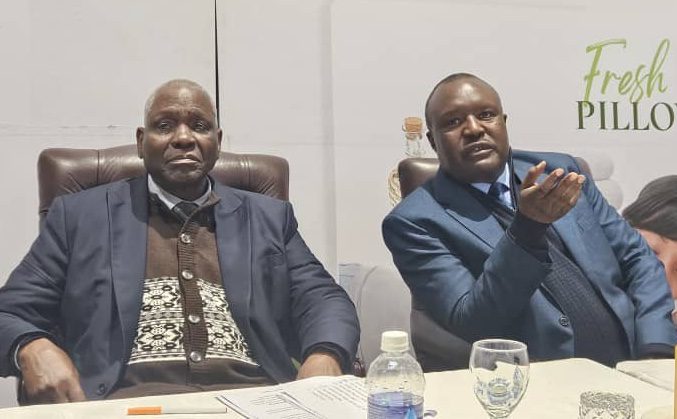
Traditional leaders are facing mounting pressure to endorse the controversial Constitutional Amendment No. 3 Bill, amid allegations that government officials have moved to mobilise chiefs through a series of urgent meetings ahead of a key national gathering.
Highly placed sources told CITE that the Ministry of Local Government and Public Works recently advised the President of the National Council of Chiefs, Chief Mtshane Khumalo, to convene emergency provincial assemblies across the country on Thursday, 26 March 2026.
These meetings were reportedly intended to consolidate support for the amendment bill before a National Council of Chiefs meeting scheduled for Sunday 29 March 2026.
The directive is said to have come from Local Government Minister, Daniel Garwe, who allegedly urged provincial chairpersons to make sure chiefs endorse the proposed constitutional changes ahead of the national indaba.
On this topic
The developments come as the Constitutional Amendment No. 3 Bill, gazetted in February 2026, continues to generate intense debate across Zimbabwe’s political and civic landscape.
The Bill proposes sweeping changes to the governance framework, including extending presidential and parliamentary terms from five to seven years and altering the method of electing the President.
If adopted, the changes could allow President Emmerson Mnangagwa, currently serving his final term under the 2013 Constitution, to remain in office beyond 2028, potentially up to 2030.
The amendment bill will also allow chiefs, who are constitutionally mandated to be politically neutral to openly participate in politics and join political parties.
However, on Thursday, chiefs from Matabeleland North and South were already gathered in Bulawayo for a workshop on capacitation in customary law and local courts, organised by the Judicial Service Commission.
Sources within the chiefs’ establishment who spoke to CITE suggested there could be a coordinated effort to endorse the Bill, since the presence of chiefs from both provinces in one location created an opportunity for parallel discussions on the amendment bill.
Media invitations circulating on Thursday also pointed to a “Constitutional Amendment Bill No. 3 Consultations for Traditional Chiefs in the Matabeleland Region,” scheduled for the same Thursday evening.
The media briefing is expected to be addressed by Chief Mtshane and legal experts as guest speakers.
Another of the most contentious aspects of the amendment bill relates to the role of traditional leaders, as the proposed amendment seeks to repeal Section 281(2) of the Constitution, which currently prohibits chiefs, headmen and village heads from participating in partisan politics.
Under the current Constitution, traditional leaders are required to act impartially and must not be members of political parties, act in a partisan manner, or further the interests of any political cause.
The chiefs are also obligated to treat all individuals within their jurisdictions equally and fairly.
Clause 20 of the proposed amendment seeks to repeal these provisions, effectively allowing traditional leaders to openly participate in politics.
The Bill suggests that their conduct would instead be regulated through an Act of Parliament.
Analysts have warned that removing constitutional safeguards that require chiefs to remain politically neutral will undermine the traditional leadership institution, particularly in rural communities where chiefs play a central role in dispute resolution and social cohesion.
Read: https://cite.org.zw/new-amendment-bill-could-politicise-chiefs/
The push to secure chiefs’ endorsement also comes against a backdrop of broader concerns about shrinking civic space and increasing pressure on dissenting voices.
In recent weeks, critics of the Amendment Bill have reported intimidation and arrests, raising questions about whether the environment for public consultation is sufficiently open and inclusive.
Observers have also said the involvement of traditional leaders in the ongoing constitutional debate is significant, given their influence in rural Zimbabwe, where a large proportion of the population lives.
“The unfolding developments are serving as a test of both constitutionalism and the independence of traditional leadership in Zimbabwe,” said legal commentator, Dr Vusumizi Sibanda.
Support CITE’s fearless, independent journalism. Your donation helps us amplify community voices, fight misinformation, and hold power to account. Help keep the truth alive. Donate today






Leave a Reply