

By Irvine Sibhona aka Barbetone Muzwambira
This is the second and last part of our discussion on the reasons behind the failure of the disastrous Zimbabwe People’s Army (ZIPA) experiment, which was intended to unify ZAPU’s ZPRA and ZANU’s ZANLA. Although it took some time, most ZPRA cadres began to refuse commands from ZANLA commanders, after realising that they were being deployed without the knowledge of their superiors in ZPRA.
INTIMIDATION
ZANLA commanders were relentless in their tactics of intimidation against ZPRA fighters, as many incidents illustrate. However, this did not crush the spirit of many gallant cadres who used every possible means to resist, focused as they were on the goals of the struggle. The case of a group of ZPRA comrades who were dumped at Mabalani near Mapai on the banks of Limpopo in Mozambique, 1974, demonstrates the humiliating experiences some of these cadres endured.
Led by Kelly Malaba, the group had suffered grossly at the hands of ZANLA leadership in Mozambique. They were regularly denied food and other necessities and generally treated as if they were prisoners and not soldiers who had left their homes at young ages to fight for their country. When their spirits could not be broken, they were herded onto the banks of the Limpopo near an outpost railway station in an area called Mabalani, which was dotted by Portuguese farms. They were left there with nothing, surrounded by wilderness and thick brush. Only Commander Malaba had an AK47 rifle, which became useful for their survival. The commander had not been given this rifle as an act of benevolence by the tormentors, but it had been assigned to him as one of the deputies within the new region of Gaza.
It is impossible to measure the predicament posed by ZANLA’s despondency in the ZIPA experiment. ZPRA units under ZIPA in Mozambique came in all shapes and sizes. There was a mixture of small and big groups. Those who came from Lusaka and Maputo, for instance, would have been in small groups of 3 or 5 in number, depending on where they were deployed.
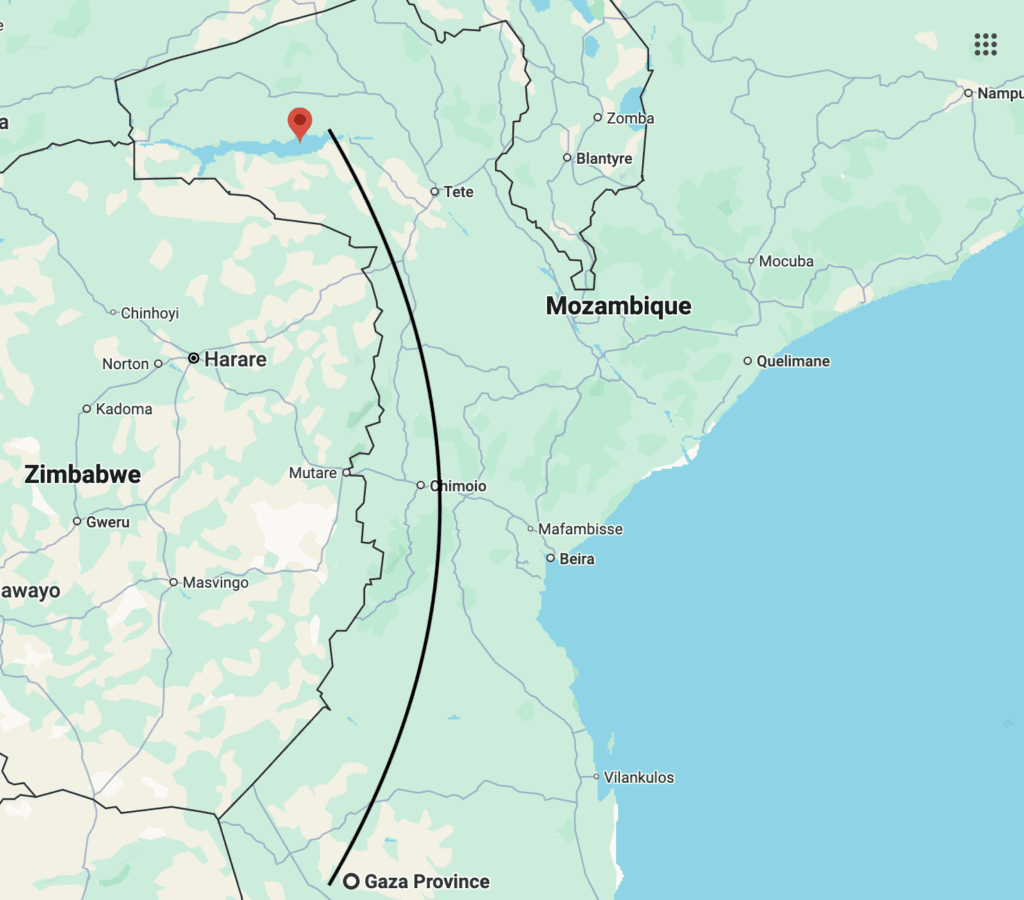
Other groups comprised senior commanders who had been sent to fill posts across the breadth of the Mozambican border, stretching from Gaza province to Carbora Basa, Tembwe areas.
All these ZPRA cadres either ended up in jail or found themselves in a deployment they were not ready for, and where they were not accessible to ZPRA commanders.
A sad example of the chaotic, sometimes deliberately cruel, manner in which ZANLA treated ZPRA guerrillas is that of Njenjema, a senior ZPRA commander. Njenjema was redeployed by ZANLA without the knowledge of his superiors in ZPRA or his close comrades. He had been seconded to ZIPA as the commander of a group, only to be deployed to the front by a ZANLA commander, without the support or knowledge of his comrades or subordinates, who were left behind in Tembwe. Njenjema tragically died in contact with the Rhodesian Front in the Mtoko area. ZANLA members of that unit reportedly fled upon contact, leaving him alone to face the RF security forces.
While it is clear that Njenjema was killed because he did not have anyone to cover him during that contact, and that, had he been with the original ZPRA unit that he commanded, the outcome would have been different. It is important that our criticism also extends to the ZPRA hierarchy. Quite clearly, ZPRA had not issued specific instructions on what was expected of its cadres upon arrival in ZANLA camps, and, most importantly, as to what the purpose of the Mozambican mission really was.
Ultimately, it took some initiative by individual cadres, confronted with that difficult situation, to establish for themselves and those in their command what needed to be done, which in most cases was to run as far away from ZANLA units and Mozambique as possible. For instance, Abel Mazinyani, Tapela Ndlovu, Tshaloba Ndlovu, Stulo Matiwaza, Makanyanga, took an initiative to run away from Tembwe after Mazinyani was flogged for refusing to sing ZANLA and ZANU chants and slogans. Many of those who failed to flee were thrown into ZANLA units and immediately sent to the front in the most chaotic of fashions in which their wellbeing and welfare as fighters were completely disregarded.
Comrades who joined ZIPA encountered very painful fates, the worst of which was miserable death in the hands of cruel officers in prison or during other forms of abuse in Mozambique, or after being recklessly pushed onto the front without their fellow cadres, as Njenjema’s tragic death shows. Others like Mazinyane and the group profiled above managed to escape because of a combination of bold thinking and good fortune. Many others also made their way back to Rhodesia and in some cases to their bases in Zambia through one fortuitous development or the other, as we recounted in part one of the feature. Among those who also found their way back to Zambia without much support were the likes of Mabuku and Savimbi. There are also others who suffered grossly in Mozambican jails and dungeons with no hope of escape, but who were also lucky to eventually gain their freedom, usually because of being favoured by fate.
Among the latter group was the likes of Gordon Munyanyi, Tshangani, Zwangami and Joseph Dube. These comrades were arrested and thrown into prison and were only released under the pretext that they were delegates to the Geneva Conference of 1976. During the same time, ZANLA guerrillas who had been detained in Zambia for executing their comrades in Chifombo and for the assassination of Herbert Chitepo were also released, which suggested a much wider deal.
Others were not so fortunate as they were captured and subjected to various kinds of torture and humiliation, which completely altered their courses in the liberation journey. The likes of Vinje and Sydney became victims when they were sold out and captured, only later to join Selous Scouts as TT turned terrorists, to help the Rhodesian Security forces. ZANLA’s calculated campaign of intimidation and disorganisation scattered nearly all ZPRA cadres who were sent to join ZIPA. Many were subjected to cruel deaths under different circumstances, while many more spent considerable time in FRELIMO jails as prisoners of conscience. There are many tales of comrades who died with axes stuck in their skulls. Even commanders did not escape this fate, as we have recounted Others were shot in the back and taunted as chipemberes (Rhino).
I recall how one Zwangami Dube, who was attached to the ZIPA Commissariat as a commander was so confident that ZANLA could be reasoned with since they were fellow Zimbabweans, was subjected to such humiliation that it seems as if ZANLA had gone out of their way to make him choke on his words. Dube, who had a significantly huge frame, rejected all complaints about ZANLA’s deceit and reminded anyone who described the organisation as distrustful that these were Zimbabwean patriots. In a cruel twist of fate, he received a baptism of fire upon his arrival at Chimoyo (Vila Perie).
The commanders there immediately said his stomach was too big and that he must have been hiding some papers in his stomach. They shoved a stick up his anus, claiming that they intended to flush the papers out. After this excruciating torture, Dube was sent to prison, where he joined many others who had been placed on death row without due process.
When others look away, we dig deeper. From ZPRA history to local corruption, CITE tells the stories that matter. Keep our journalism independent. Donate here
So sad that Zipra suffered so much in the hands of ZANLA before independence even after independence some we killed as they were referred to Gukurahundi, so when are the people of Matabeleland going to have peace, even now Matabeleland is still underdeveloped