
The Zimbabwe Community in South Africa has called on the South African government to grant a temporary amnesty to undocumented migrants until December 31, 2026, arguing it would allow them to return home with dignity while giving employers time to meet their obligations.
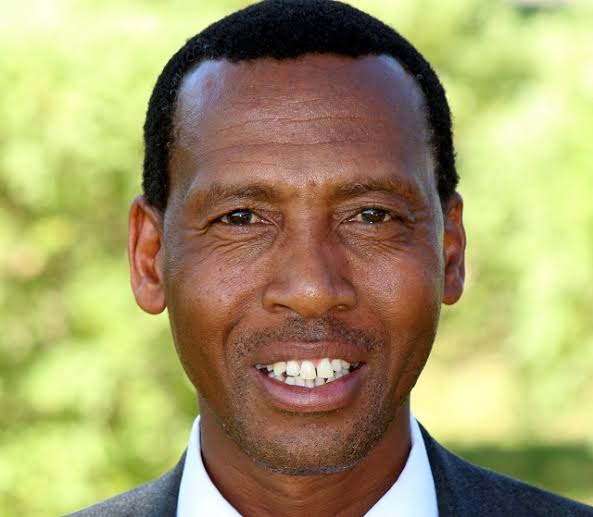
Chairperson of the Zimbabwe Community in South Africa, Ngqabutho Nicholas Mabhena made this request while speaking to the Parliament’s Portfolio Committee on International Relations during a parliamentary symposium on Migration and Social Cohesion held at the University of the Witwatersrand (Wits) in Johannesburg last week.
He also urged South Africa to revive legal migration pathways proposed in the country’s 2017 White Paper on International Migration, including work, cross-border trade and business visas.
Mabhena’s proposals come amid heightened tensions over migration in South Africa, where anti-immigration groups have been demanding stricter enforcement against undocumented foreign nationals and calling for tougher immigration controls.
On this topic
“We recognise the issues that have been raised, but we also accept that irregular migration is not proper,” he said, acknowledging concerns over irregular migration but appealed for a humane approach to undocumented migrants who have lived and worked in South Africa for many years.
“But it is common cause that you have people who have been working for years in South Africa undocumented.”
Mabhena proposed that Parliament consider granting undocumented migrants a temporary amnesty lasting until December 31, 2026, instead of carrying out mass arrests and deportations.
“Our plea to the Parliamentary Portfolio Committee is that individuals or workers must be given an amnesty for them to wind down whatever they are doing in South Africa because we believe that employers must take responsibility in transporting them together with their goods to their countries of origin,” Mabhena said.
“We think if we were to work around an amnesty of 31 December 2026 without necessarily rounding up those that are undocumented, then they travel and they leave their properties behind. We think it is not proper.”
He said many undocumented migrants have established lives, accumulated property and built businesses over several years, and should be allowed sufficient time to make orderly arrangements should they choose or be required to leave the country.
Beyond the proposed amnesty, Mabhena urged South Africa to revive provisions contained in the 2017 White Paper on International Migration, which he described as a progressive policy framework capable of addressing regional migration realities.
“Secondly, we think that we need to return to the White Paper on International Migration as gazetted in 2017, which in our view was progressive because the reality is South Africa is a member of SADC and we know that countries migrating from the SADC region are attracted to work in South Africa,” he said.
He added that the 2017 policy recognised South Africa’s role as a regional economic hub by proposing legal migration channels tailored to different categories of migrants.
“The White Paper on International Migration gazetted in 2017 proposed three visas after it realised this: that you provide a working visa for semi-skilled and low-skilled workers that are already in the Republic of South Africa, you provide a cross-border visa for those that are doing cross-border trade and you provide a business visa for those that are doing business in South Africa,” he said.
He argued restoring these legal pathways would reduce irregular migration by providing regulated alternatives for workers, traders and entrepreneurs from neighbouring SADC countries.
Mabhena said migration between Zimbabwe and South Africa cannot be understood outside the two countries’ shared history.
“South Africa and Zimbabwe, we share historical ties between the two countries. I am Mabhena, a Manana, who pays allegiance to a South African royal family in KwaMhlanga, Mpumalanga,” he said.
“(Zimbabwe and South Africa) fought together in the struggle against apartheid in Rhodesia. We remember the joint military operations between MK, the military wing of the African National Congress (ANC) and ZPRA, the military wing of ZAPU.”
Mabhena argued the current migration challenges are rooted in broader economic and political failures across the region following independence.
“Our failure, of course, to dismantle neocolonialism and imperialism post-liberation, as noted by (Ghanaian politician, Kwame) Nkrumah, has placed us in the current situation which we find ourselves in when we deal with the issues of irregular migration because we have not transferred the economy or placed the economy in the hands of society as a whole,” he said.
Mabhena also criticised South Africa’s political support for Zimbabwe after 2000, saying it had overlooked the country’s internal governance challenges.
“The political support which South Africa rendered to the Zimbabwean government post-2000 also created this problem because it was on the pretext that Zimbabwe was a victim of imperialist forces. Yet we know that it was a competition between the local bourgeoisie and the imperialist forces to loot our resources. It was not on behalf of the mass of the people of Zimbabwe,” he said.
He also reminded lawmakers that Zimbabweans had made significant contributions to South Africa’s liberation struggle, citing several freedom fighters with Zimbabwean roots.
“As I have said, we share historical ties. We remember our liberation icons born in Zimbabwe who played a critical role in the struggle against apartheid. For example, Thomas Nkobi from Plumtree became the Treasurer-General of the ANC. Makhathini Guduza from Tsholotsho was among those who provided meals to Tata Mandela when he was underground. We also know uBaba Mpofu, who was imprisoned on Robben Island after becoming chairperson of an ANC branch in Soweto,” he said.
The symposium brought together parliamentarians, academics, civil society organisations and migrant community representatives to discuss migration, social cohesion and policy responses as South Africa grapples with increasing public debate over immigration and border management.







Leave a Reply