

By Report Phelekezela Mphoko
This article was first published by CITE in December 2021
The people of Zimbabwe were united under the Zimbabwe African People’s Union (ZAPU). When ZAPU was banned, the Party Leadership decided that it would not form another political party again, because the Rhodesian Government would ban that party, confiscate its property, and have the leadership arrested. Instead, ZAPU. was placed under the People’s Caretaker Council (PCC).
Before ZAPU was banned, the party had undertaken a programme to raise an army to wage a military armed struggle as it had become very obvious that there was no other way to realise majority rule in Zimbabwe.
To achieve this, ZAPU sent its cadres to Ghana, Egypt, North Korea, and to the People’s Republic of China for military training. These were the first people in colonial Rhodesia to receive military training for the purpose of pursuing majority rule. Among them were well-known figures such as Dumiso Dabengwa, Solomon Mujuru and Jason ‘Ziyaphapha’ Moyo.
However, on 08 August 1963 the nationalist movement suffered a heavy blow when some members of the National Executive Committee of ZAPU led by Ndabaningi Sithole, who was the National Chairman with Robert Mugabe, Enos Nkala, Henry Hamadziripi, among others, broke away,, and formed the Zimbabwe African National Union, (ZANU). These leaders cited what they called the lack of a will to fight by ZAPU, and yet ZAPU had already embarked on a military training programme.
Consequently, both ZAPU and ZANU, established External wings separately in Zambia, to direct the armed struggle. These wings ZPRA and ZANLA – were to become the dominant forces in the majority black people’s struggles for self-rule in the country.
ZAPU belonged to the Six Authentic Liberation Movements that were recognised by the Organisation Of African Unity (OAU) including the African National Congress (ANC) of South Africa, FRELIMO of Mozambique, SWAPO of Namibia, MPLA of Angola, and PAIGC of Cape Verde. However, ZANU and other breakaway movements such as the PAC of South Africa were not recognised by the OAU, but were exclusively supported by President Julius Nyerere of Tanzania.
While ZAPU was still recovering from the Sithole-led breakaway, James Chikerema who was Vice-President of ZAPU and also leader of its external wing led another breakaway and formed the short-lived Front For The Liberation Of Zimbabwe (FROLIZ). Chikerema’s main scapegoat for the formation of FROLIZ was his objection to ZAPU’s collaboration with the African National Congress (ANC), then led by Oliver Tambo., Among other achievements, this fruitful collaboration led now famous joint combat operations in Wankie and Sipolilo, which raised the profile of the two nationalists movements as leaders of the struggle for African people’s freedom.
Curiously, Chikerema saw the collaboration as a tribal reunion of the Ndebele people with what he termed as their South African kith and kins. I was the Camp Commander at the Dan Nang Base where the Luthuli Detachment was training. Chikerema never set his foot on this base because of his attitude towards the ZAPU/ANC alliance. However, then ANC president, Oliver Tambowas a constant visitor to Dan Nang and also a great source of support and inspiration. Instead, Chikerema even designed a slogan, which read ‘‘WE CAN ALSO FIGHT’ as an arrogant show of his disdain for the collaboration of the movements. Meanwhile, ZANU latched onto the divisions and accused ZAPU of engaging what it called South African mercenaries in the war in Zimbabwe. It also pushed the narrative that Zimbabwe had a population of 4 million people, and therefore there was no need to use external fighters.
However in the long run, the formation of FROLIZ and it’s teaming up with UANC of Abel Muzorewa posed a very serious threat to both ZAPU and ZANU., For instance, at the Bengazi (Libya) Summit in 197…, moderate member States of the OAU demanded that the organisation rescind the recognition of ZAPU and ZANU and instead recognise Abel Muzorewa and James Chikerema. ZAPU and ZANU were accused of lack of progress. A positive outcome of this threat was that it prompted ZAPU and ZANU to form the Joint Military Command (JMC) in Mbeya Tanzania, with support from Zambia, Tanzania and other well-wishing states and actors. Fundamental principles were laid down to be followed as the parties had their Constitutions and their Mandate from their supporters. It was emphasised that this was a programme of unity, not a programme for one entity to swallow another. To guard against swallowing each other, it was agreed that if the Chairman was from one side, the side with the Deputy Chairman would provide the JMC Commander.
Accordingly, Herbert Chitepo became Chairman, and Nikita Mangena became Chief of Staff of the JMC. It was also agreed as a principle that if a head of a department were from ZPRA, his deputy should come from ZANLA and if the Head is from ZANLA, his deputy should come from ZPRA.
Finally the layout was:
-Herbert Chitepo; ZANU Chairman
-Jason Moyo; ZAPU Deputy Chairman
-Nikita Mangena; ZPRA Chief of Staff
– Josiah Tongogara; ZANLA Chief of Operations
-Sotsha Ngwenya (JD) ZPRA Deputy
-Robson Manyika; ZANLA Political Commissar
-Lookout Masuku ZPRA Deputy
-John Mataure ZANLA Chief of Personnel and Training
-Cephas Cele ZPRA Deputy
-Gordon Munyanyi; ZPRA Chief of Military Intelligence
-Webstar Gwauya ZANLA Deputy
-Phelekezela Mphoko ZPRA Chief of Logistics and Supplies
-William Ndangana ZANLA Deputy.
This principle was followed when the Zimbabwe People’s Army (ZIPA) was formed in September 1975, in Mozambique, with a lay out of;
-Solomon Mujuru; ZANLA Commander
-Sotsha Ngwenya(JD Dube ) ZPRA Deputy
-Nikita Mangena ZPRA Political Commissar
-Dzinashe Mashingura ZANLA Deputy
-Ambrose Mutinhiri ZPRA Chief of Personnel and Training
-Parker Chipowere ZANLA Deputy
-Gordon Munyanyi ZPRA Chief of Military Intelligence
-James Nyikadzino ZANLA Deputy
-Ella’s Hondo ZANLA Chief of Operations
-Jevan Maseko ZPRA Deputy
-Phelekezela Mphoko ZPRA Chief of Logistics and Supplies
-Edmond Kaguru ZANLA Deputy.
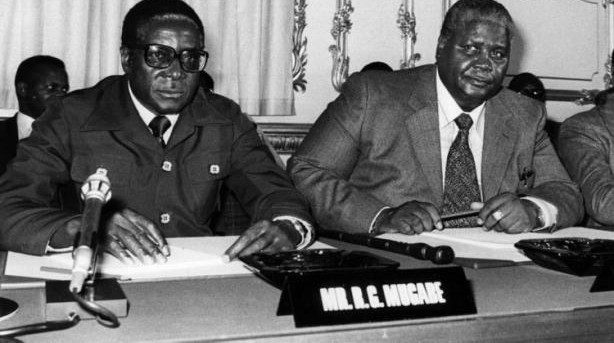
This is the same principle that was followed when the Patriotic Front of Zimbabwe was formed in 1976 in Mozambique. The emphasis was mainly on the co-leaders of the Patriotic Front, Dr. Joshua Nkomo and Robert Mugabe. That they were to rotate the Chairmanship of the Patriotic Front meetings. If there were delegations for other meetings, equal members from both ZAPU and ZANU should attend. It is partly due to this arrangement that the Constitution of Zimbabwe states very clearly that ZAPU and ZANU liberated Zimbabwe. Comrades Joshua Nkomo brought ZAPU and led his supporters into the Unity and Robert Mugabe respectively brought ZANU and led his supporters into the Unity. The prevailing situation, where ZANU is portrayed as having been the more dominant party is a misnomer.
There is no one at the moment in Cabinet or Politburo who was present at the formation of the Joint Military Command in Mbeya, as those Revolutionary Principles were laid down. There is no one in Cabinet or Politburo who was present when ZIPA, the second Military Unity between ZPRA and ZANLA, was formed in 1975. And there is no one in Cabinet or Politburo who was present at the formation of the Patriotic Front in 1976.
It is a fact that ZANU did not unite with itself but with ZAPU. The 22 December 1987 Unity Accord between ZAPU and ZANU was signed for a different purpose related to post Independence killings. The Unity Between ZAPU and ZANU was achieved long back when the Patriotic Front was formed in 1976. All negotiations were done collectively as a United Patriotic Front of Zimbabwe. Since its formation the Patriotic Front of Zimbabwe, united the people of Zimbabwe. However, that Unity was destroyed when the co-leader Robert Mugabe, pulled out of the Unity sighting after he has been accused by people like Muzorewa, Matimba and others for giving the leadership of the people of Zimbabwe to the Ndebele.
However, his statement and position was unfortunately welcomed by President Samora Machel and Julius Nyerere. The meeting was attended by Presidents: Samora Machel (the host) Julius Nyerere, Kenneth Kaunda, Edwardo Dos Santos, and Queti Masire in Beira Mozambique. Mugabe informed them that he was going to campaign as ZANU and not as the Patriotic Front of Zimbabwe.
This was the first and last meeting of the Frontline Heads of States on Zimbabwe, after the Lancaster House Peace Talks and just before elections leading to Independence. This was also the first meeting to be attended by President Edwardo dos Santos of Angola after the death of Agostino Neto.
The Patriotic Front was represented by the co-leader Robert Mugabe, his lieutenants Simon Muzenda and Edgar Tekere, and Phelekezela Mphoko for ZAPU.
Those, living today who are in the leadership of the United Party of the Patriotic Front, have a duty to up hold the Revolutionary Principles adopted by those who have departed. That is the only honour they could be accorded with. At least to respect their principles. The current position prevailing suggests that their approach to the armed struggle and the Unity of the People of Zimbabwe, was wrong.
The delegation at the formation of the Patriotic Front in Maputo, in 1976:
ZAPU Delegation:
Jason Moyo ( Leader)
Joseph Msika
George Silundika
Dumiso Dabengwa
Phelekezela Mphoko
ZANU Delegation:
Robert Mugabe (Leader)
Simon Muzenda
Herbert Ushewekunze
Edgar Tekere
Kumbirai Kangai
Mozambique
Julie Mateus
Matangambela
It is regrettable that certain people who lament about Zanupf trying to Zanufy Zimbabwean history for political reasons will do exactly the same in trying to “correct” the narrative. Clearly, the are not against the lying, they just hate competition in the agenda of spreading political propaganda as national history. The author of this item should have done themselves a favour and read a bit of readily available history documents about the country.
It is important to note that the national politics of Zimbabwe did not begin with Zapu but SRANC, followed by NDP before ZAPU. The person responsible to organise military training for ZAPU was James Chikerema who was a restrictee at that time which left the job to Molton Malianga who did not do a good job at all. In 1962 when ZAPU was banned Sithole requested both Nkomo and Chikerema to send at 500 boys for training but both refused. During the same year Nkomo and Chikerema were sent to Zambia and Tanzania to get guns and find routes to bring back trained soldiers and report back in 7 days, but the pair went to Cairo, and London. Nkomo then went to USA New York to address General Assembly. It was on their return that Nkomo came up with the brilliant idea that all African leaders wanted ZAPU to form a govt in exile and arm twisted the whole executive to go to Tanzania. Chikerema is the only one who remained behind with 3000 pounds but no successful recruitment took place. According to Dabengwa, he only went for military training in 1963 and after training these groups would assemble in Zambia around 1964 and 1965. They were then sent in the country as small group of 3 or so for further recruitment or minor sabotage acts like attacking telecom lines. Large number recruitment in ZAPU started in 1966which resulted in effective operations such as the famous Wankie Operation of August 1967 in which according to Ken Flower, Rhodesians were shocked by the prowess of ZAPU/ANC army because they suffered 20 casualties including 7 dead.
Reasons for ZAPU/ZANU Split: Nkomo was generally regarded as someone very much afraid of going to jail and this fear caused him to evade certain decisions a leader in his position ought to take – Smith knew it and capatilsed on it. When ZAPU was banned while Nkomo was in Zambia, much against the advice of Kaunda, he fled to Tanzania when his supporters needed him most. It is also alleged that he openly said he did not want to rot in jail, while hundreds of his supporters were in jail. Nkomo never served a jail sentence in all his political career, except his 1 month in whawha, the rest was in a 615km2 restriction camp. His fear for jail when Field and Britain talks failed caused him to force the party executive to escape to Tanzania. This forced Mugabe and Takawira to skip bail and when Nyerere and Kaunda told him to take his executive back to Zimbabwe the two were stuck. Another issue that made Nkomo less popular was his agreement to the 1961 constitution which gave blacks 15 seats against whites 50 seats. All this might be political maneuvering by his opponents but it is important to mention these let the people judge for themselves.
Unfortunately the author seems to contradict themselves, in one paragraph the recognise both ZAPU and ZANU as the mainstream military wings for liberation yet on the following paragraph attempts to discredit ZANU as not recognised by OAU. The author is encouraged to read Dabengwa in “Soldiers in Zimbabwe Liberation” were he laments about OAU trying to force ZAPU which was admittedly more organised militarily than ZANU as far back as 1967 at the Mbeya Accord. ZAPU made sure the deal would not be successful.
In my opinion, I would agree that Chikerema was a destructive force who might have caused the ZAPU/FROLIZI split. But there were also allegations of a tribal Kalanga group in ZAPU called Dengezi which could have amplified the split. That split had lasting effects not only on ZAPU but also on ZANU as the Zezuru members also left to go to FROLIZI. Zimbabwean politics could have been different without that split.
ZAPU/ANC collaboration is a myth according to Dabengwa…there was never such an arrangement. ZAPU was only escorting ANC through Zimbabwe with clear instructions that ANC would never fight in Zimbabwe. They only did fight back as self defence when attacked. For the author to make it sound like it was an intended joint force shows lack of understanding of the ZAPU policies on that time.
The misconception of the ZAPU/ANC relationship is what caused OAU to question why ZAPU was prepared to fight alongside ANC and not ZANU. This was the key factor that initiated the Mbeya accord, according to Dabengwa, not the FROLIZI Muzorewa issues – and this was in 1967, before 1970. “There were a number of reasons why the Mbeya agreement collapsed at its outset. One of the major reasons was that the main commanders of ZAPU deliberately chose not to be involved in the implementation of the agreement and decided to appoint junior command elements to work with the senior command elements from ZANU. Obviously, this made it impossible for the programme to be implemented. ZAPU’s decision amounted to a deliberate sabotage of the Mbeya agreement.
The rationale behind this decision was that ZAPU was being forced to join
hands with ZANU at a time when ZANU possessed a very small number of trained men and had little support inside Rhodesia. At that time, ZANU was not able to attract many recruits from inside the country nor from the community of exiles in Zambia. ZAPU was of the opinion that it would be imprudent to unite with an organization whose armed wing consisted only of the command element and a few soldiers who were continually being sent for training and re-training without doing any actual fighting. Thus, from ZAPU’s point of view, it was necessary to sabotage the JMC by ensuring that the party’s senior commanders did not participate in the implementation of the Mbeya agreement. This meant the collapse of the JMC. ZAPU did not want to have the bulk of the fighting army (consisting of ZAPU cadres) under the command of ZAPU/ZANU commanders.
The ZAPU political wing was particularly opposed to unity at this stage. Cde Chikerema refused to attend the Mbeya meeting to found the JMC and sent J. Z. Moyo instead, with instructions to find a way to ensure that the JMC proposal did not succeed. If the OAU insisted on a unity agreement, Chikerema’s instructions were to let ZAPU junior officers sit with Josiah Tongogara and see what they could do. He instructed his senior commanders Akim Ndlovu, myself and others to continue concentrating on the armed struggle as the armed wing of ZAPU and not as part of the JMC. Rightly or wrongly, this was the politics of the day. In retrospect, it was not correct for ZAPU to have taken such a decision.” extraced from SZLW Dumiso Dabengwa.
The author gave a list of participant of the JMC with Chitepo as the Chairman, although I cannot dismiss it because I have not seen the list myself, I find it very strange that Chitepo was now the Chair of a JMC when he was never a military person. Dabengwa also makes reference to Tongogara not Chitepo on this JMC.
Another glaring error is on ZIPA structure, it is very disturbing that the author makes Mangena a Political Commissar, unless they are not acquainted with liberation structures and roles: ” We finally agreed that ZIPRA and ZANLA would be brought together to form ZIPA (Zimbabwe People’s Army) which was to be led by ZANLA’s Rex Nhongo as Commander with Nikita Mangena as Deputy Commander and Jevan Maseko as Chief of Staff.” Dumiso Dabengwa rightfully places Mangena as Deputy Commander. It should also be noted that ZIPA was an 18 member High Command not 12 as portrayed in this article.
It is good to share what we research in good faith but never should we be tempted to play dirty political and tribal propaganda.
Ceausescu a sprijinit pregatirea revolutionarilor din Rhodezia de Sud. La 1 oct. 1979 am fost concentrat de MApN si trimis ca ofiter instructor la UM 01057 Z (unitate independenta in cadrul UM 01057 Mihai Bravu). Alte trupe au fost pregatite la Cincu.