
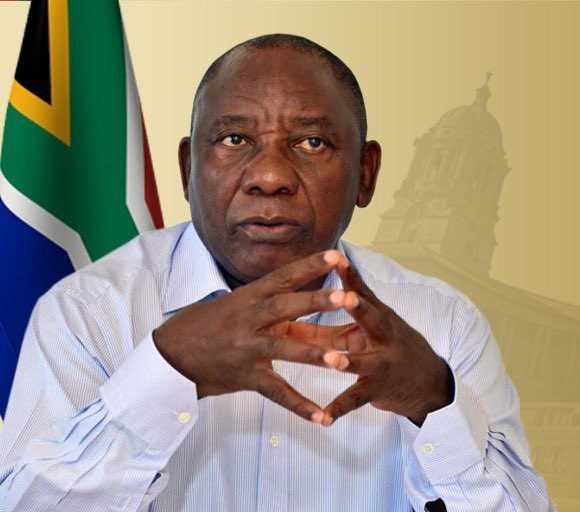
South African President Cyril Ramaphosa has appealed for calm ahead of planned nationwide anti-immigration protests on Tuesday, stressing that while citizens have a constitutional right to protest, they also have a responsibility to do so peacefully and within the confines of the law.
His remarks come as the June 30, 2026 deadline set by anti-immigrant groups, including March and March, fast approaches, with many African migrants living in South Africa gripped by uncertainty and anxiety.
March and March has vowed to proceed with a planned national shutdown, demanding that undocumented foreign nationals leave South Africa despite government appeals for restraint following high-level engagements over growing public concerns about illegal immigration.
While organisers insist the protests are aimed at undocumented immigrants, many documented foreign nationals have said they fear becoming targets amid heightened anti-foreigner rhetoric and uncertainty over how demonstrations will unfold.
On this topic
In a national message released on Monday, Ramaphosa acknowledged widespread frustrations over undocumented migration but warned against vigilantism, intimidation and violence.
“My fellow South Africans, tomorrow, 30 June, marks the date that several groupings have identified for protests against undocumented immigration in South Africa,” Ramaphosa said.
“South Africans have raised deep concerns about illegal immigration, border management, pressure on public services, criminal syndicates that exploit our immigration system and the impact these challenges have on communities. These concerns are real and they deserve to be heard.”
However, the president said that constitutional rights must be exercised responsibly.
“The right to protest is enshrined in our Constitution. It is a credit to our robust democratic order that people are able to express their grievances openly. But the right to protest and freedom of expression does not allow people to threaten or intimidate others, or to engage in acts of vandalism or violence,” Ramaphosa said.
The president said South Africa remained a constitutional democracy governed by the rule of law, adding that no citizen or organisation could determine public policy through threats or ultimatums.
“The exercise of rights by any citizen in a constitutional democracy cannot be determined by intimidation, threats or ultimatums. It must be determined through democratic institutions, evidence and the rule of law.”
The President said the government recognised shortcomings in the country’s immigration system and had already begun implementing reforms aimed at strengthening border security and improving immigration management.
“The government has accepted that our immigration system requires substantial reform. We are strengthening border management, increasing enforcement against undocumented immigration, improving the integrity of the asylum and visa systems, and taking action against corruption that has weakened immigration control,” he said.
He added that officials responsible for corruption or failures within the immigration system would be held accountable.
“Where corruption has enabled illegal immigration, those responsible must be held accountable. Where enforcement has been inadequate, it must improve.”
Ramaphosa said the government had spent recent weeks consulting a broad range of stakeholders, including traditional leaders, business organisations, labour unions, religious leaders and civil society groups, to address growing tensions over immigration.
He reiterated that although peaceful protest is protected by the Constitution, any criminal conduct would be dealt with decisively.
“Freedom comes with responsibility. The right to protest is one of the defining freedoms of our democracy, but every right carries corresponding responsibilities. Those who intend to protest should do so peacefully, lawfully and with respect for the rights, dignity and safety of others.”
“Where there is criminal conduct, those responsible will be held accountable and the law will take its course.”
The President also cautioned against targeting foreign nationals living legally in South Africa.
“Some foreign nationals who live in South Africa are here lawfully. They work, study, raise families, invest in our economy and contribute positively to our society. They too are entitled to the protection of our laws and our Constitution.”
His remarks follow assurances from some protest organisers that demonstrations would remain peaceful.
“We welcome the assurances by some of the organisers of the planned protests that they stand against violence on the part of their supporters. They will be held to this undertaking because no cause, no matter how legitimate, will be an excuse to shift responsibility for violent acts,” Ramaphosa said.
The President also drew parallels with South Africa’s apartheid-era pass laws, warning citizens against taking immigration enforcement into their own hands.
“The painful history of the passed laws reminds us why the authority to demand identification and enforce immigration laws belongs to government law-enforcement officers acting within the Constitution, not to private individuals.”
“Whatever the motivation, taking the law into one’s own hands is vigilantism and has no place in our constitutional democracy.”
He warned that stopping people in the streets to inspect identity documents amounted to a dangerous return to practices associated with apartheid.
“We must never allow ourselves to return to that painful chapter of our history where people were stopped on the street, had their physical identities scrutinised, and their right to move freely in the country hindered by suspicion and humiliation.”
Ramaphosa concluded by urging South Africans to reject division and violence while balancing border security with respect for constitutional rights.
“Throughout our history we have overcome difficult moments not through fear or division, but by choosing law over lawlessness, dialogue over confrontation and justice over vengeance,” he said.
“Let us once again choose that path. Let us protect both our borders and our Constitution, both our security and our humanity. We are capable of doing both, and we must.”





Leave a Reply