
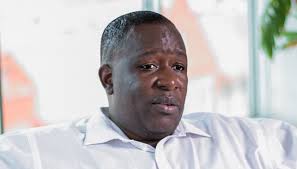
Bulawayo Senator and lawyer Kucaca Phulu has defended several provisions in Constitutional Amendment Bill No. 3 (CAB3), describing some of the proposed changes as progressive and potentially beneficial to Zimbabwe’s governance and electoral system.
Speaking in an interview with CITE, Phulu said that while parts of the Bill remain controversial, certain clauses merit support.
Constitutional Court powers
Phulu pointed to a provision that would expand the jurisdiction of the Constitutional Court.
Clause 14 of the proposed amendment would allow the court to hear any matter involving a point of law of public importance. At present, the Constitutional Court’s jurisdiction is limited to constitutional matters.
On this topic
“In my view, the clause that seeks to imbue the Constitutional Court with powers to deal with any other matter of national importance is progressive,” Phulu said. “It allows our highest court to make definitive determinations on important issues in the country.”
He acknowledged, however, that the proposal is being introduced alongside more contentious amendments.
“Certainly, I would support such a clause, but of course it is coming in the context of other more controversial amendments,” he said.
Voter registration reforms
Phulu also expressed support for proposals to transfer voter registration from the Zimbabwe Electoral Commission (ZEC) to the Registrar-General’s Office.
Clauses 2 and 17 of CAB3 propose moving responsibility for voter registration and management of the voters’ roll to the civil registry authority.
He said the intention was to create a system in which citizens are automatically added to the voters’ roll when they turn 18, rather than applying separately to register.
“The idea is that when children turn 18, they automatically become voters,” he said. “The Registrar’s office already records births and deaths, so it would create a seamless process where those who should be removed from the roll are removed efficiently, and those who qualify are included immediately.”
Phulu argued that linking voter registration to the civil registry system could improve efficiency and transparency, and reduce administrative barriers that have previously affected voter registration.
“These are not comprehensive electoral reforms,” he said, “but they are among the reforms that opposition parties and civic society groups have called for.”
Indirect presidential election
Phulu also strongly supported a proposal that would see the President elected indirectly by Parliament rather than by popular vote.
Clause 3 of CAB3 seeks to change the electoral system so that Members of Parliament and Senators would elect the President.
Phulu said he had long supported the idea of parliamentary election of the Head of State, arguing that it would allow for greater scrutiny of candidates.
“Parliament would scrutinise the candidate properly,” he said. “Political parties would be compelled to choose leaders who are qualified and capable of running the country.”
He said such a system could reduce what he described as the dominance of majoritarian politics, which he believes often sidelines minority groups and regions.
“This takes away the idea that democracy simply means majority rule,” Phulu said. “Majoritarian processes can exclude certain groups from ever attaining the presidency.”
He argued that appointment-based or indirect systems can create opportunities for competent individuals from minority communities to occupy senior offices.
Phulu maintained that, despite broader disagreements over the Bill, he firmly supports the clauses he considers progressive.
“I stand firmly by my position,” he said. “I have always rejected the idea that democracy equals majoritarianism, and for that reason I consider this clause progressive.”








Leave a Reply