

By Dr Lulu Brenda Harris
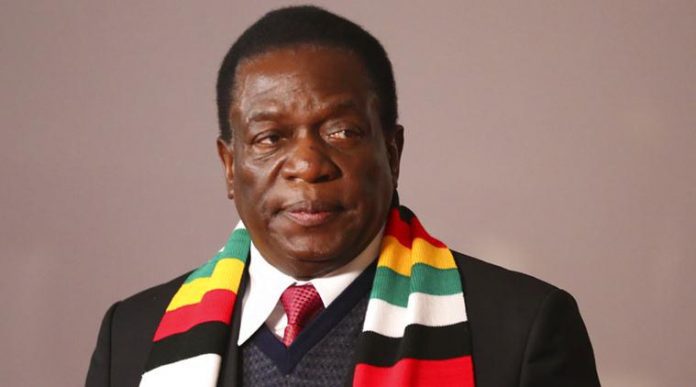
Zimbabwe stands at a constitutional crossroads, one that may define not only President Emmerson Mnangagwa’s political future, but the trajectory of the country’s fragile democracy.
This week, the Cabinet adopted the proposed Constitution of Zimbabwe Amendment Bill 2026, following its endorsement of draft legislation that would fundamentally alter the architecture of executive power.
The Bill seeks to strip citizens of the right to directly elect their president and extend presidential terms from five to seven years, a change that would allow Mnangagwa to remain in office until 2030.
The move comes barely 24 hours after the Constitutional Court granted Ibhetshu LikaZulu and its secretary general, Mbuso Fuzwayo, direct access to challenge Zanu PF’s plan to extend Mnangagwa’s tenure beyond 2028.
At the centre of the storm is Zanu PF’s Resolution Number 1 of 2024, adopted at its National People’s Conference in Bulawayo in October 2024, which explicitly calls for Mnangagwa’s term to be “extended beyond 2028 to 2030” and directs both the party and “Government” to initiate constitutional amendments to give effect to that resolution.
The Fuzwayo application names Zanu PF as the first respondent, alongside Justice Minister Ziyambi Ziyambi, Speaker of Parliament Jacob Mudenda, Attorney General Virginia Mabiza and President Mnangagwa himself, cited in his official capacity.
That citation is critical because for months, President Mnangagwa has maintained a posture of studied silence on whether he harbours ambitions beyond 2028. His public statements have leaned on constitutionalism, often declaring himself a “constitutionalist.”
Therefore Fuzwayo’s legal challenge may have forced the President out of his strategic silence on the so-called “2030 agenda” because through litigation, silence for Mnangagwa becomes untenable.
In Fuzwayo’s challenge, President Mnangagwa was cited as a respondent meaning he could not indefinitely remain in denial because the court process demands an affidavit and requires a position.
In other words, Fuzwayo’s legal challenge effectively nails the president’s colours to the mast, so to speak.
Since Fuzwayo has been given access to the Constitutional Court and whatever way the court rules, the mere act of forcing a response from the president could have altered the political terrain. How? Because if a lawsuit compels the President to step out of his shell, it may constitute a strategic victory, even if the application is defeated.
However, the debate regarding Fuzwayo’s application was reduced to emotion rather than legal substance since allegations circulated that the Constitutional Court application itself was sponsored by Zanu PF and that Fuzwayo had been bought.
The speculation around this application made by Fuzwayo overshadowed the core question: what exactly was being challenged?
Fuzwayo’s application centres on legality, whether Zanu PF’s resolution and subsequent legislative steps violate constitutional provisions, particularly those governing presidential term limits under Section 328(7), which requires a referendum for changes affecting term limits and prohibits such amendments from benefiting an incumbent unless subjected to an additional, person-specific referendum.
Then legality is only half the equation, the other half is legitimacy.
Even if Zanu PF prevails in the Constitutional Court and Fuzwayo’s application loses, the deeper question remains, does the process pass the test of legitimacy? Legitimacy is about public consent and moral authority. Although legitimacy in Zimbabwe has historically been constructed and contested, it is built through electoral processes and outcomes, where elections are not postponed.
Dr Vusumuzi Sibanda, a legal expert, cautioned against the rush to denounce Fuzwayo’s application.
“People were being too judgmental, not seeing what was said in that application because they needed to know what Fuzwayo was challenging,” Sibanda said.
“In a proper country, once someone makes an utterance wanting to extend office, they have to be accountable.”
Douglas Mwonzora, who participated in the 2009 constitution-making process under the Government of National Unity, offered a measured view on the Fuzwayo’s litigation.
“Contrary to people denigrating somebody who made an initiative, it looks like Fuzwayo was a contentious citizen trying to enforce a right,” Mwonzora said.
“He is allowed to do that. It could have been a question of timing. Now that there is a Constitution of Zimbabwe Amendment Bill, it is an opportune time to bring matters like this. I agree that Fuzwayo’s application was not ill-conceived but quite proper.”
Since the Constitutional Court granted Fuzwayo direct access on February 9, 2026, this may mean the judiciary will now engage directly with the constitutional implications of the 2030 agenda, of which some believe that is tall order considering allegations that the judiciary is captured.
Nevertheless, whatever happens with the Constitutional Court proceedings, the process itself forces institutional clarity.
The president now faces an invidious position. If he supports the extension, history will record that support and judge him. If he distances himself from the extension, he must do so formally. Whatever the judgment from the Constitutional Court, the president’s silence is no longer a neutral posture.
Politically, the issue is complex. Should the legal challenge fail, President Mnangagwa may claim vindication and proceed toward a term extension.
Should the legal challenge succeed, the president could retreat behind the language of constitutional obedience – “I always said I am a constitutionalist,” which serves him because a clever politician always checks where the exit door is upon entering the room.
It is also clear that inside Zanu PF as well, there is no consensus on the extension proposal. The president himself told party structures during a Central Committee meeting in September last year to “prepare for 2028.”
He knows campaign machinery cannot simply be demobilised overnight in favour of 2030 without consequences.
What happens if the Court rules against extension? What message does that send to structures already recalibrating timelines? These scenarios are not merely legal puzzles, they are political dilemmas.
Beyond these courtroom plays, however, lies a more volatile terrain, which is public perception.
You see, the third term issue has become one the most unenlightened conversation on the matter of key importance to the lives of Zimbabweans. While people are acting emotionally, Zanu PF is not reacting emotionally.
Zanu PF is throwing a legal challenge to the country, moving legally in form and bringing a legislative challenge to constitutional limits. Its Resolution Number 1 of 2024, now seen by Cabinet’s adoption of the Constitution of Zimbabwe Amendment Bill 2026, has moved beyond rhetoric into concrete legislative action.
The proposed Constitution of Zimbabwe Amendment Bill 2026, does more than extend terms. It restructures how Executive authority is derived. By removing direct presidential elections and placing the choice in the hands of Parliament, the State redefines the source of Executive power.
This is no minor technical adjustment because a president elected by popular vote derives authority directly from millions while this latest amendment is saying the president will be elected by a parliamentary majority. Does this mean the president will also derive authority from legislators?
In Zimbabwe’s case, there is a ‘winner-takes-all’ electoral system that does not operate under proportional representation. That distinction matters and critics argue that without a proportional representation framework, parliamentary election of a president risks worsening representation gaps. The majority party, even if elected on slim margins, could effectively determine Executive power without reflecting the full diversity of voter sentiment.
The response, therefore, to such machinations or political moves must also be legal and strategic.
“You have to go to court and win. It’s as simple as that,” one analyst remarked.
The proposed amendments require a referendum, as many constitutional lawyers argue they must, then this campaign itself could become a site of political mobilisation.
Referendums create civic space, strengthen oppositions and of course, test the regime’s limits.
If a referendum is denied, agitation and international scrutiny may intensify.
This shows how history is repeating itself – Zimbabwe’s 2000 constitutional referendum serves as a historical reminder that reform moments can unleash forces beyond a ruling party’s control.
That 2000 referendum symbolised a major national defeat for Zanu PF, the ruling party was sliding and that opened sustained political contestation.
Nevertheless, as Fuzwayo’s case heads to the Constitutional Court and against the backdrop of the proposed Constitution of Zimbabwe Amendment Bill, 2026, Zimbabwe now confronts twin tests, that of legality and legitimacy.
The judiciary will rule on legality, while legitimacy will ultimately be determined by citizens and by history.
What is clear though is that the President can no longer remain in the shadows of ambiguity.
Sooner rather than later, the tyre will meet the asphalt.
Support CITE’s fearless, independent journalism. Your donation helps us amplify community voices, fight misinformation, and hold power to account. Help keep the truth alive. Donate today
Now we know who the political fox behind Mugabe was, zanu was always obsessed with its grip on power for itself and not for the people. Like they always claim the struggle was for their own benefit
ZanuPF seeks to alienate the people from exercising their sovereign right to choice…..