
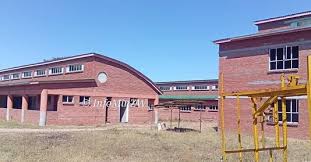
The government says the long-delayed Lupane Hospital will finally begin offering limited services, marking a significant step in a project that has stretched over more than two decades in Matabeleland North Province.
The announcement comes as residents continue to wait for a fully functional provincial referral hospital, with some communities saying they have endured years without access to specialist care.
Deputy Minister of Health and Child Care Sleiman Timios Kwidini told the National Assembly that the facility is now a priority under government efforts to modernise health infrastructure.
“Government is also accelerating the completion and operationalisation of new health facilities with priority projects such as Lupane Hospital, which is set to commence services beginning with outpatient and maternity care,” he said.
On this topic
He said the phased opening is intended to improve access to healthcare in underserved areas.
However, the announcement has been met with scepticism in a province where construction of the hospital has reportedly taken about 25 years without full completion.
Local reports say Matabeleland North Province remains the only province in Zimbabwe without a fully functional provincial hospital, forcing residents to rely on overstretched mission facilities or expensive private care.
Ward 19 councillor in Nkayi, Thubelihle Mabuza Ncube, described the impact of the delays on patients seeking specialist treatment.
“For the specialised machines, I can’t say much about it because most of the times the doctors refer to Mpilo Central Hospital or private doctors, and these are the issues that make our communities have more deaths or many ailments left undiagnosed or untreated,” he said.
He said many families are unable to afford private consultations or travel to urban hospitals.
“They don’t check or treat diabetes, cancer, they just immediately refer you to Bulawayo for a scan,” he said.
He added that even basic infrastructure challenges were worsening service delivery, citing non-functional solar systems at local facilities due to faulty inverters that are difficult to replace.
Residents in Lupane echoed similar concerns about access to healthcare.
“We have lost too many people because we simply cannot afford the bus fare to Mpilo in Bulawayo just for a scan,” said Dandanda villager Sihle Moyo. “We hope this new hospital will finally bring machines like those for cancer treatment so we don’t have to die at home because of distance.”
Another resident, Dumani Sibanda of Fatima, said the community expected more than basic services when the hospital opens.
“Opening maternity is good, but our biggest fear is the big diseases. We want to see those specialist machines and doctors stationed here in Lupane, not just in the big cities,” he said.
Community leader Vusumuzi Ndlovu said the prolonged delay had deepened frustration.
“We have seen the walls of this hospital rise and fall with the seasons for two decades,” he said. “To offer only maternity and outpatient services after a generation of waiting feels like a drop in the ocean when our people are dying from cancer and kidney failure because we have no specialist machines here.”
Deputy Minister Kwidini also told lawmakers that funds from the sugar tax, amounting to US$30.8m, were being channelled towards cancer equipment procurement.
He said the aim was to strengthen diagnosis and treatment capacity, although he noted that current radiotherapy machines were earmarked for major central hospitals such as Parirenyatwa Group of Hospitals and Mpilo Central Hospital.
Support CITE’s fearless, independent journalism. Your donation helps us amplify community voices, fight misinformation, and hold power to account. Help keep the truth alive. Donate today




Leave a Reply