
By Prosper Ncube
Politics is not a game of emotions; it is a science of numbers, demographics, voter behaviour, political psychology and strategic mobilisation. Elections are not won simply because a political party has momentum on social media, rallies are full, or there is widespread dissatisfaction with a government.
They are won through a sophisticated understanding of the electoral battlefield: who votes, where they vote, why they vote and how effectively a party converts public sentiment into ballots.
The Zambian elections provide important lessons for political actors across Africa, especially opposition movements seeking to challenge long-established ruling parties. One of the most important indicators political scientists examine when analysing elections is voter turnout. Historically, elections that produce a dramatic change of government are often characterised by exceptionally high voter participation. Low turnout usually reflects limited political mobilisation, voter apathy or a failure by opposition forces to energise undecided citizens.
On this topic
Zambia’s voter turnout has consistently remained below the levels normally associated with a transformational “change election”. This is a critical lesson because low turnout generally benefits incumbents. A governing party already has established structures, loyal supporters and institutional advantages. When participation is low, it becomes easier for an incumbent to retain power because its core voters remain organised and disciplined.
An opposition movement cannot simply assume that public frustration will automatically translate into votes. Anger against a government is not the same as electoral victory. The bridge between dissatisfaction and regime change is voter mobilisation.
The Zambian opposition experience also presents a familiar pattern seen elsewhere on the continent, including Zimbabwe. Opposition movements often repeat mistakes made by previous opposition parties instead of studying them strategically.
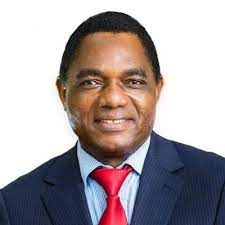
In 2016, Zambia provided a clear mathematical lesson. Edgar Lungu received approximately 1,860,877 presidential votes, defeating Hakainde Hichilema, who received approximately 1,760,347 votes. Out of approximately 6,698,372 registered voters, only about 3,781,505 participated in the presidential election. The difference between victory and defeat was not because one side had no support. It was a question of electoral conversion, turnout and strategic targeting.
By 2021, the political landscape had changed dramatically. Hakainde Hichilema won with approximately 2,852,348 votes, while Edgar Lungu received around 1,870,780 votes. Registered voters had increased to approximately 7,023,449, while presidential votes cast rose to about 4,959,332.
The important analytical point is this: Lungu’s support base did not collapse. His numbers remained almost identical to those of 2016. The decisive factor was that the opposition succeeded in expanding participation and attracting new voters who had previously stayed away from the polls. This is where political strategy matters.
An opposition movement seeking to defeat an incumbent must understand the incumbent’s electoral architecture. The objective is not merely to campaign where the opposition already enjoys overwhelming support. It is to identify where the incumbent draws strength, reduce those margins and create new electoral pathways.
A common mistake made by opposition parties is concentrating heavily in their own strongholds while neglecting competitive regions. Elections are not won by increasing an already existing majority in safe areas. They are won by changing the arithmetic in battleground areas. Political parties must stop celebrating numbers that belong to their opponents. If an opposition leader sees large crowds in regions historically dominated by the ruling party and assumes victory is guaranteed, they risk confusing visibility with votes.
The premature declaration of victory before official results are finalised is another recurring mistake in African politics. We have witnessed similar situations where opposition figures announce victory based on unofficial projections, only to face the reality of an electoral process that is still unfolding. Political maturity requires patience, discipline and respect for the counting process. Leadership is not measured by confidence alone; it is measured by strategic judgement.
Another important lesson from Zambia concerns identity politics and tribal narratives. Both Zambia’s ruling party and opposition have been led by figures from minority ethnic communities, demonstrating that a nation can accept leadership beyond the largest ethnic group when political institutions and national identity are strong enough.
This presents a sharp contrast with Zimbabwe, where politics has often been trapped within a historical Shona-Ndebele framework. Zimbabwe has unfortunately allowed ethnic narratives to become deeply embedded in political thinking, despite having many communities, including Tonga, Kalanga, Xhosa, Venda and others, that also form part of the national fabric.
The tragedy is that political actors have often inherited and reproduced the very frameworks created by their opponents. ZANU-PF historically built a political narrative in which certain regions, particularly Matabeleland, were viewed through the lens of suspicion and opposition. Instead of dismantling that framework, some opposition actors have unintentionally operated within the same boundaries, accepting the political map designed by the ruling establishment.
This is a fundamental strategic error. You cannot defeat a political machine by simply playing according to the rules and narratives it created. A successful opposition movement must create a new political imagination. It must build a national coalition that transcends historical divisions, identity politics and regional calculations. The future belongs to movements that understand political science rather than political emotion.
Successful electoral challenges require expanding voter participation, building structures beyond traditional strongholds, understanding demographic trends, attracting undecided citizens, reducing the opponent’s margins in their areas of strength and creating a national message that unites rather than divides.
The Zambian experience reminds us that elections are won long before election day. They are won through organisation, strategy, voter registration campaigns, persuasion and the ability to understand the behaviour of ordinary citizens. A political movement that only complains about the ruling party’s weaknesses but fails to understand its own strategic weaknesses is not preparing for victory.
The greatest lesson from Zambia is simple: change does not happen because people are tired of a government; change happens when an opposition movement has the organisation, strategy and numbers to replace it. Politics rewards preparation, not wishful thinking.
The lessons from Zambia extend beyond its borders. They provide a mirror through which Zimbabwe and other African democracies can examine their own political strategies, electoral realities and the future direction of opposition politics. The question is not only who wins an election, but who understands the science behind winning one.
The future belongs to political movements that study voter behaviour, build inclusive national coalitions and develop strategies that go beyond reacting to the ruling establishment.
As we reflect on the Zambian elections, we must ask ourselves a deeper question: What lessons can Zimbabwe learn in preparing for the battles ahead?
President Yaa Straata
igcokamalematopo9@gmail.com
Contact: 0788444066








Leave a Reply