
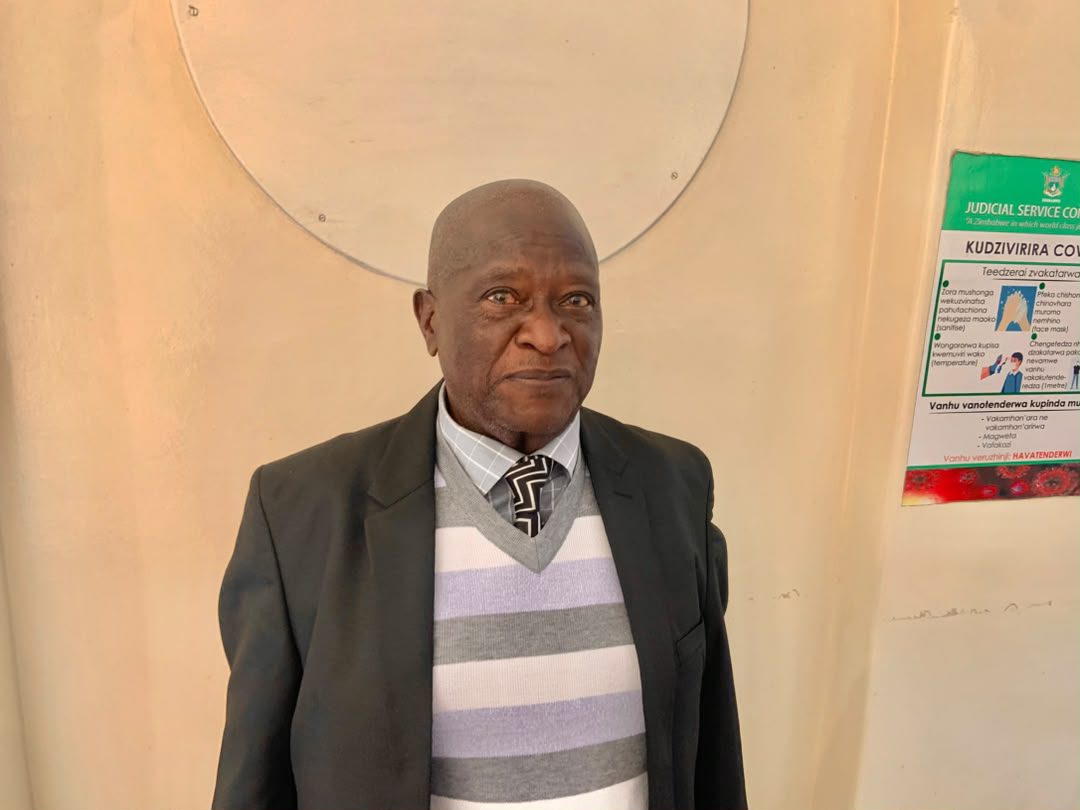
The long-running legal challenge over the Ndebele kingship came to an end on Monday after Prince (Dr) Peter Zwide Kalanga Khumalo withdrew his High Court case contesting the coronation of Bulelani Collen Lobengula Khumalo, bringing an end to an eight-year legal battle and returning the succession dispute to the Khumalo royal clan.
The withdrawal removes the legal obstacle that had remained before the courts, although it does not itself determine who should occupy the Ndebele throne.
That responsibility now returns to the Khumalo clan and traditional leadership structures, who are expected to deliberate on the succession outside the courtroom.
The withdrawal was made before Justice Evangelista Kabasa at the Bulawayo High Court in case HC657/18.
On this topic
The dispute dates back to 2018 when Zwide Khumalo filed an urgent application against Chief Mathema, in his capacity as chairperson of the Crown Council, the Royal Crown Trust and Bulelani Lobengula Khumalo, seeking to stop the latter’s installation as Ndebele king.
Zwide Khumalo argued he, not Bulelani, was the rightful heir to the throne, claiming descent through the Nyamande royal house.
He sought a declaratory order recognising him as the lawful heir to the Ndebele monarchy.
However, following a brief hearing on Monday, the matter was withdrawn after the Khumalo clan resolved the dispute should be handled within the family rather than through the courts.
Matshobana Ncube, the lawyer representing Zwide Khumalo, said the withdrawal followed a family resolution.
“In this matter, there has been a resolution that the matter be withdrawn. That is a clan decision. So the plaintiff is obliged to comply with the clan decision. The clan will sit and decide what they want to decide,” Ncube said after the hearing.

Kholwani Ngwenya, lawyer for Bulelani Lobengula Khumalo, welcomed the development, saying it allows the succession dispute to be resolved through traditional processes rather than litigation.
“It’s a positive development in view of the fact that this should ordinarily be a cultural and traditional process that should be resolved in that manner. It allows the parties to have that resolution at a family level as opposed to it being determined by a third party,” he said.
Speaking to CITE after the hearing, Zwide Khumalo stressed the decision should not be interpreted as abandoning the broader objective of restoring the Ndebele monarchy but rather as an effort to preserve family unity and protect the institution for future generations.
He said he remained a direct descendant of Nyamande, a son of King Lobengula, whom he believed succeeded his father in 1896.
“I am a direct descendant of Nyamande, who was the son of King Lobengula, who actually succeeded King Lobengula on 25 June 1896. I’m therefore a descendant of Nyamande,” he said.
Zwide Khumalo said the royal family had decided to withdraw the case primarily to safeguard what he described as “the sovereign framework” of the monarchy and to uphold “intergenerational equity.”
“It has been important for us as a clan in the Khumalo family, and particularly King Lobengula’s family, to withdraw the case in respect of the sovereign framework of the monarch institution. Secondly, in recognition of intergenerational equity. Those are the two main reasons.”

He said the decision was intended to make sure future generations inherit a united institution rather than one fractured by prolonged court battles.
“The Ndebele nation has been passionate about having a king since 4 December 1893. We are merely continuing with the system or an activity that was started by our grandparents or our ancestors. No individual is more important than the interests of the Ndebele nation or the nation of Zimbabwe as a whole.”
Zwide Khumalo said members of the House of Lobengula believed they had a responsibility to demonstrate leadership by placing the interests of the monarchy above personal claims.
“We are not going to make a mistake. We are not going to allow those that are busy grandstanding and doing things for their own selfish purposes. We are not going to do that as King Lobengula’s house because we are a house of leadership and we need to show leadership,” he said.
He added that traditional leaders would continue to play a role in determining the future of the monarchy.
“We have traditional leaders that are involved in the case. We have traditional leaders that have a role where the monarch institution is concerned. So that sovereign framework has to take all those issues into account.”
According to court documents, the dispute centred on competing interpretations of Ndebele royal succession.
Zwide Khumalo maintained he had been lawfully identified by the Nyamande Royal House as the rightful successor to the throne.
He argued he was unveiled as King Nyamande Lobengula II on 17 February 2018 following a customary identification process conducted within King Lobengula’s royal family.
He further argued the process leading to the identification of Bulelani Lobengula Khumalo had been conducted outside the royal family and therefore did not comply with Ndebele custom.
Zwide Khumalo also challenged Bulelani’s eligibility on cultural grounds, arguing that because he was born to both a Khumalo father and a Khumalo mother, he could not qualify under Ndebele tradition.
The respondents rejected those claims.
In their defence, they argued Nyamande was “never” king of the Ndebele people and therefore could not pass on a legitimate royal line.
They further contended that, under Ndebele custom, “a king begets a king,” arguing Nyamande was born before Lobengula himself became king and therefore could not establish a royal succession.
When Bulelani Lobengula Khumalo was due to be crowned in March 2018, the Bulawayo High Court temporarily halted the ceremony after Zwide Khumalo successfully obtained an interdict stopping the installation.
The then Minister of Local Government, July Moyo, also argued Zimbabwe’s Constitution did not recognise a monarchy and that there was no law providing for the establishment of a king.
However, in September 2018, traditional leaders in Matabeleland and members of the Khumalo family proceeded to crown Bulelani as King of the Ndebele nation during a private ceremony following seven days of traditional rites.
Throughout the litigation, the defendants maintained the process through which Bulelani was identified complied with Ndebele customs and asked the court to dismiss Zwide Khumalo’s claim with costs on a higher scale.
Following Monday’s withdrawal, Justice Kabasa ordered the plaintiff, Zwide Khumalo, bear the costs of the suit.








Leave a Reply