

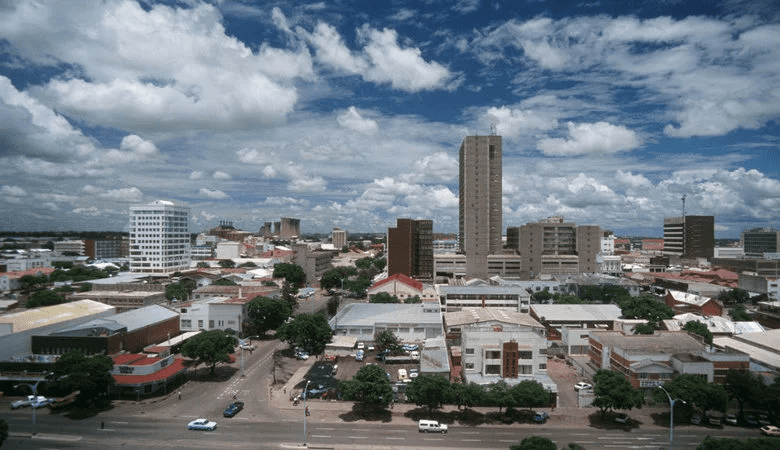
Informal traders in Bulawayo say soaring rents for newly partitioned shops are pushing them out of formal trading spaces and back onto the streets, undermining efforts to decongest the city.
The concerns were raised on Wednesday during a city-wide decongestion consultative meeting organised by the Bulawayo Vendors and Traders Association (BVTA) and the Bulawayo Progressive Residents Association (BPRA).
The meeting brought together residents, informal traders, micro, small and medium enterprises (MSMEs) and transport operators to discuss challenges facing the informal economy and urban order.
MSMEs Apex Board chairperson Vincent Donga said most traders cannot afford the rentals being charged for partitioned shops.
“The partitioned shops are not bringing anything to us as informal traders. They are there to kill small businesses because they are very expensive,” he said.
“You can rent a partitioned shop today, but after two months you are forced to go back to the street.”
Donga said traders are being quoted rentals ranging between US$800 and US$1,000 per month, figures he described as unrealistic for small-scale operators.
“Even if they were meant to decongest the city, look at how expensive they are. At the end of the day they will become white elephants,” he said.
He added that poor infrastructure in many trading areas continues to expose traders to harsh weather conditions.
“When it’s raining we don’t sell. When it’s hot, it’s usually very hot,” he said, urging traders to support efforts to improve sheds and infrastructure, including plans linked to the reopening of Fifth Avenue.
Responding to the concerns, MSMEs adviser Dumisani Ncube said government was aware of challenges around rental charges and would soon move to review the rent board.
“There has been an introduction of a valuation-in-time (VIT) system on rentals, which will give us information on how people are being charged,” he said.
“Very soon the Minister of Industry and Commerce is going to revise the rent board. We cannot leave people to exploit others while government is there.”
However, Ncube said one of the obstacles is that some traders do not disclose the actual rents they pay, making it difficult for authorities to act.
“When people come to collect information, you hide it, yet you are complaining about the same problem,” he said.
Ncube alleged that some large shops are making huge profits by subdividing and subletting their premises.
“There are shops that used to pay about US$3,000 in rent but are now making as much as US$75,000 after partitioning and subletting,” he said.
He also warned that government is planning tighter regulation of public transport and vending as part of efforts to restore order in the city.
“The President has said we cannot allow more lawlessness to continue,” Ncube said, adding that councils are expected to be granted arresting powers in future.
Bulawayo has in recent years struggled with congestion in the central business district, driven largely by the rapid growth of informal trading as unemployment remains high.
City authorities and trader organisations say finding affordable, serviced trading spaces is key to balancing livelihoods with urban management.
Support CITE’s fearless, independent journalism. Your donation helps us amplify community voices, fight misinformation, and hold power to account. Help keep the truth alive. Donate today
Leave a comment