
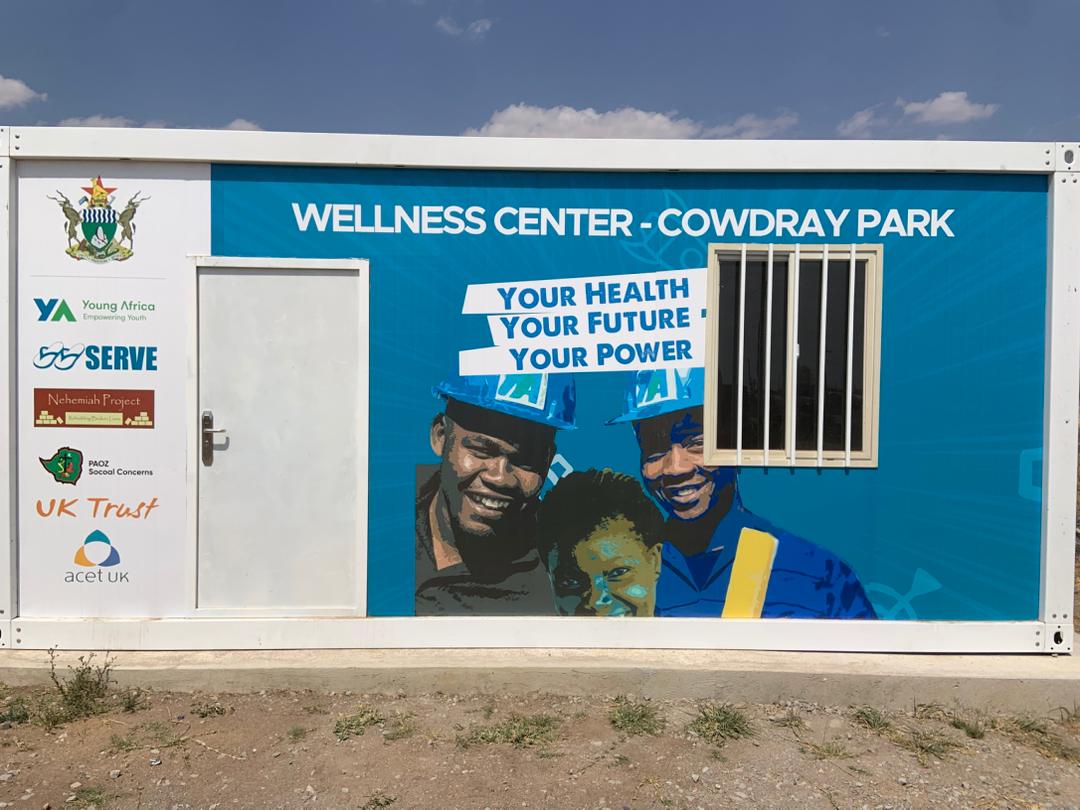
A local faith-based organisation, the Nehemiah Project, is tackling Zimbabwe’s HIV epidemic by targeting communities particularly vulnerable to infection, including sex workers, teenage mothers and men who buy sex, while addressing poverty and stigma that can fuel transmission.
Based in Cowdray Park, Bulawayo, the Nehemiah Project was established in 2002 under the Pentecostal Assemblies of Zimbabwe (PAOZ), at a time when HIV was heavily stigmatised, including within faith communities.
Today, the Nehemiah Project combines HIV prevention, sexual and reproductive health and rights (SRHR), skills training, livelihood support and peer education for different groups in society in an approach that seeks to address not only the medical aspects of HIV, but also the social and economic circumstances that can expose people to infection.
The organisation’s work was highlighted during a recent media tour organised by the National AIDS Council (NAC) as part of efforts to strengthen public awareness and media engagement on HIV and AIDS prevention, treatment, care and support in Bulawayo Metropolitan Province.
On this topic
Nehemiah Project director, Pamela Nyathi, said the organisation was established after church leaders recognised that HIV was difficult to discuss openly among Christians.
“The reason why it started in the church was because we realised that the people in the church were sort of shy to come out and talk about HIV,” Nyathi said.
At the time, she said, HIV was often viewed as a disease affecting people who were considered insufficiently Christian.
“They thought it was a disease that affected people who were not Christian enough,” she said.
The organisation took its name from the biblical figure Nehemiah, who rebuilt the walls of Jerusalem.
Nyathi said the organisation adopted the symbolism because it wanted to “rebuild lives” affected by HIV.
What began as a ministry within the church subsequently expanded into surrounding communities, providing HIV information, prevention education and support for people living with or affected by the virus.
Its vision is to see “a compassionate Zimbabwe free from HIV-related stigma and new infections”, while its mission is to empower communities through prevention, care and support while promoting dignity, hope and resilience.
However, the organisation says HIV cannot be addressed in isolation from poverty.
Nyathi said the project’s approach is based on the understanding that HIV vulnerability and socioeconomic circumstances are often interconnected.
“We therefore address not only HIV prevention and access to health services, but also the social and economic circumstances that increase vulnerability to HIV and make it difficult for affected families to achieve sustainable livelihoods,” she said.
One of the project’s programmes at Ithemba Centre in Cowdray Park works directly with women in sex work through a peer education model.
The organisation currently has 40 peer educators who reach out to sex workers in Bulawayo and beyond.
Rather than expecting vulnerable populations to come to formal health or church settings, the programme uses peer educators to meet people where they are, creating opportunities for conversations about HIV, sexual health and stigma.
Nyathi said sex workers were frequently judged and excluded by society yet they were an important population in the HIV response.
“We realise women in sex work are usually stigmatised and judged. People don’t really want to be associated with them,” she said.
The peer education programme starts with basic HIV prevention information, referrals to health and social services, condom use and knowledge of HIV status.
It also creates space for participants to discuss their experiences and challenge misconceptions about HIV.
“There are a lot of myths that are going around that we are able to dispel when we do the peer education,” Nyathi said.
The organisation’s approach is deliberately non-judgmental, whose objective is not simply to tell sex workers how to avoid HIV, but to create an environment in which they can discuss the circumstances that brought them into sex work and the risks they encounter.

Mthabisi Sibalwa, the Nehemiah Project’s youth officer, said this was particularly important given the stigma attached to sex work, including within the church.
Initially, he said, the organisation struggled to persuade members of the church to accept the programme and those it served.
“There was still that issue of stigma. So, people would actually disassociate with the members of the women in sex work,” Sibalwa said.
The organisation also worked to make the church environment more welcoming to sex workers who participated in its programmes.
Sibalwa said biblical teachings were incorporated into the programme to reinforce the message that people should not be excluded because of their circumstances.
“We provided a conducive environment and one of the main scriptures we use is John 3:16: ‘For God so loved the world that He gave His only begotten Son.’ The verse emphasises that God loves us and no one is different from someone else,” he said.
The approach, he added, has helped sex workers feel accepted rather than judged.
One of the more significant aspects of the programme is its willingness to discuss condoms and sexual health within a faith-based setting.
Sibalwa said the organisation openly addresses condom use through its SRHR package.
“With SRHR, you cannot turn away. You have to teach someone the basics,” he said.
The project also works with other organisations to obtain condoms, which are distributed alongside education and peer-to-peer information.
The model recognises that reaching every person directly is difficult.
Instead, the organisation trains peer educators who can take information back into their own communities.
Nyathi said the 40 peer educators are trained to provide HIV and SRHR information and reach others through peer networks.
“The programme is not limited to Cowdray Park, peer educators and participants come from different parts of Bulawayo, including North End, Sauerstown and Cowdray Park,” she said.
The organisation also has participants in Hwange and Gwanda, areas it considers vulnerable because of factors including mobility and proximity to borders.
The director added the organisation also looks beyond the women selling sex and engages clients of the sex workers.
The organisation conducts “moonlighting” activities, which entails going into places such as pubs and other venues where men congregate.
Nyathi said the approach is deliberately discreet as they do not ask men to identify themselves as clients of sex workers.
Instead, they establish an information point, provide condoms and HIV information and engage anyone who approaches.
“We cannot tell whether this one is a client,” Nyathi said.
“We are just saying the likelihood because when you go there in the evenings, you find that the sex workers are there and they are looking for clients.”
The strategy allows the organisation to reach men without forcing them to publicly disclose their behaviour.
The conversations with men extend beyond HIV to mental health and non-communicable diseases.
According to Nyathi, some men have told programme workers they seek out sex workers because they feel they can talk to them without being judged over financial responsibilities such as rent, school fees and groceries.
“Men say they want somebody who is going to listen,” she said.
The director said for them at the Nehemiah Project, understanding these motivations is part of understanding HIV vulnerability because prevention cannot simply focus on the person selling sex while ignoring the people purchasing it.
Nyathi said the Nehemiah Project also works with teenage mothers, trying to address their economic vulnerability
“We have a Teen Moms Programme targeting teenage mothers who may face economic and social vulnerabilities after giving birth,” the director said.
Nyathi said some teenage mothers are rejected by their families or lack the means to support themselves.
A teenage mother who has no income, she said, can become vulnerable to transactional sex, sex work or relationships with older men who provide financial support.
“You find some of them end up in sex work, some of them end up getting sugar daddies who are going to give them money, and that fuels HIV,” she said.
The programme therefore combines parenting education with vocational training.
Where funding allows, some participants are supported to return to school since the underlying objective is to expand their economic choices.
The Nehemiah Project believes that providing skills and livelihood opportunities can reduce the circumstances that push vulnerable women and girls towards risky economic survival strategies.
For some women in sex work, the project’s support extends beyond HIV education.
Sibalwa said some participants receive entrepreneurship training and small amounts of financial assistance to start businesses.
The organisation does not claim that everyone who receives support leaves sex work.
Instead, it recognises that people’s circumstances and choices differ.
“Not everyone that is into sex work, they went because they desired. But situationally, they end up venturing into sex work,” Sibalwa said.
Some participants have told the organisation that they entered sex work as young as 16.
Such experiences, he said, challenge simplistic assumptions about women in sex work.
“When you start to share, you start to have this picture that to stigmatise someone without knowing the story behind it is not a good thing,” he said.
For those who want to leave sex work, the organisation continues with mentorship, business support and what it calls discipleship, an approach that combines social support with the church’s faith-based teachings.
Sibalwa said some participants had subsequently become active members of the church.
While the programme is expanding its reach, NAC programmes officer Douglas Moyo advised against treating sex workers as a homogenous group.
He said there were different categories of sex workers, with varying levels of economic vulnerability and ability to negotiate safer sex.
Some women, Moyo said, may operate from hotels and lodges while maintaining other businesses or employment, while others may work at night in ways that are more visible and expose them to different risks.
There are also women who may not identify themselves as sex workers even though they exchange sex for money or other benefits.
Moyo said these differences matter when designing HIV interventions.
“The most economically vulnerable women may have less bargaining power with clients, particularly where refusing unsafe sex could mean losing urgently needed income. The clients might demand and at times they don’t have that space to negotiate for safer sex,” he said.
Moyo called for more profiling of different groups within sex work so that HIV programmes can be tailored to their specific circumstances.
The Nehemiah Project’s evolution illustrates how faith-based organisations can move beyond traditional church-based HIV messaging and engage populations that may historically have been excluded from religious spaces.
Its work has not been without difficulties.
Initially, the stigma attached to HIV and sex work existed both within the church and the wider community.
However Sibalwa said education had helped shift attitudes.
“Pastors now participate in programmes, including through discipleship activities, while sex workers are able to participate in church programmes without them singled out,” he said.
The organisation’s work also extends beyond prevention and conducts home visits to its 40 peer educators to monitor their progress and maintain contact with them.
The programme aims to visit households several times a year and also provides assistance to peer educators requiring healthcare, including support for five peer educators for cervical cancer screening and treatment-related needs under its current plan.








Leave a Reply