
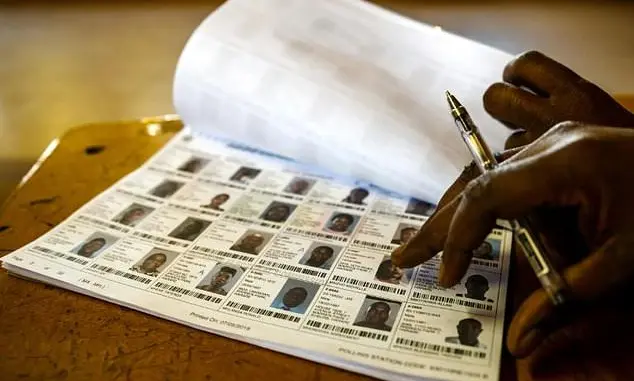
A proposal to transfer control of Zimbabwe’s voters’ roll back to the Registrar General’s Office has triggered renewed debate over transparency, efficiency and the integrity of the country’s electoral system.
Under Section 239 of Zimbabwe’s 2013 Constitution, responsibility for compiling and maintaining the voters roll was assigned to the Zimbabwe Electoral Commission (ZEC). The move was part of broader reforms aimed at insulating the electoral process from executive influence, as the Registrar General is an executive appointee.
The transfer was implemented ahead of the 2013 general election. However, Constitutional Amendment No. 3 of 2026 proposes reversing that arrangement, arguing that the Registrar General, as custodian of birth, death and citizenship records, is better placed to ensure an accurate and up-to-date voters roll.
The voters roll is the official register of eligible voters and is widely regarded as central to the credibility of any election.
On this topic
Political analyst Takura Zhangazha said the proposed changes would significantly alter the constitutional framework governing elections. Speaking on This Morning on Asakhe, a current affairs programme hosted by CITEZW, he said the amendment bill seeks to modify Section 43 of the Constitution to explicitly include the Registrar General’s Office in matters relating to the voters roll.
“What is being added is significant,” Zhangazha said. “Previously, the Registrar’s office and its role were not in the Constitution. It is now being made explicit that there will be a voters roll done by the Registrar General.”
He said the bill also proposes changes to Section 160 of the Constitution, renaming the Zimbabwe Electoral Commission as the Zimbabwe Delimitation Commission, and amending Section 161 to redefine its functions.
According to Zhangazha, the proposal would create a new body responsible for constituency delimitation, while the Registrar General would oversee the voters roll.
“The argument is that because the Registrar General already manages birth certificates, death certificates and passports, it would be more efficient for that office to maintain the voters roll,” he said.
Supporters of the amendment say consolidating civil registration and voter registration functions could improve administrative efficiency and reduce duplication.
But critics argue that the change raises political concerns, given Zimbabwe’s contested electoral history.
Zhangazha said the Registrar General’s Office had previously faced allegations of partisanship before the voters roll was moved to ZEC in 2013.
“Politically, this is not necessarily viewed as efficient and progressive,” he said. “The previous Registrar General was widely suspected of being partisan. This proposition takes away broader-based control by a commission and returns it to an individual office.”
He added that the Registrar General’s Office, by its nature, operates as an executive department rather than an independent commission.
Members of the public have also expressed concern about the broader implications of the proposal.
One participant in the discussion, identified as Sinyoro Unclek, questioned the rationale behind the move.
“What is the purpose of this movement of the voters roll?” he asked, adding that public trust in electoral processes remains fragile.
Another participant, Milayo, raised concerns about representation and internal party processes, arguing that citizens often have limited influence over candidate selection and parliamentary representation.
“When have the people had that power at all?” she said, referring to the ability of voters to determine who represents them in Parliament.
She added that party recall mechanisms and internal decision-making processes can undermine voter choice.
The proposed constitutional amendment comes amid broader discussions about electoral reforms, governance and public confidence in democratic institutions.
Parliament is expected to debate the bill in the coming months.








Leave a Reply