

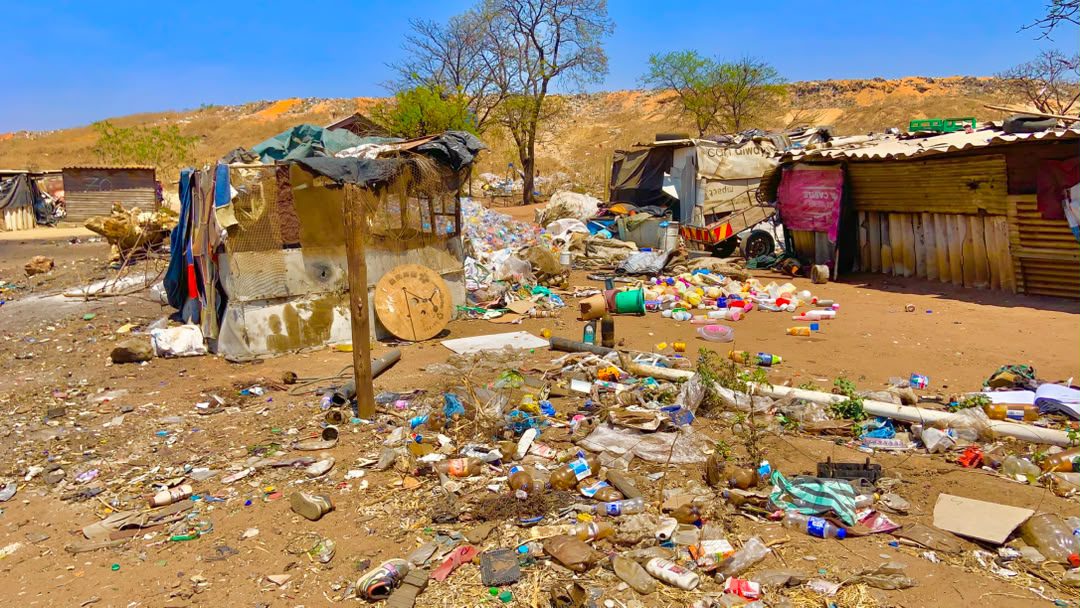
Residents in Cowdray Park’s Ward 6, Segment 8B, have agreed to partner with the government-backed Kwangu/Ngakwami Presidential Title Deeds Programme in a major infrastructure development project valued at about US$38 million.
The agreement was reached on Sunday during a community meeting where residents were issued with offer letters, marking a key step towards the regularisation of the settlement and the rollout of basic services, including roads, water systems, sewer networks, drainage and bridges.
The Kwangu/Ngakwami Presidential Title Deeds Programme, launched by President Emmerson Mnangagwa in April 2023, aims to formalise informal settlements while supporting infrastructure development through partnerships with private developers.
A not-for-profit trust, Kwangu/Ngakwami, has been set up to implement the programme and coordinate infrastructure projects in selected settlements across the country.
On this topic
Speaking during the meeting, Cowdray Park Ward 6 Councillor Nkosinathi Hove said long-standing attempts to secure funding from the City of Bulawayo had failed, prompting engagement with central government and private developers.
“When I was voted in together with Councillor Mhlanga, we raised issues of roads, sewer and bridges, but we discovered that council has no budget to service this whole area,” said Hove.
“We initially thought it was a lie until we noticed for sure that the City of Bulawayo has no budget to service this whole area.”
He said subsequent discussions with government led to approval for private developers to step in.
“The government then said if we come together, they can approve developers with the capacity to help us. That is how Kwangu was approved to service sewer, roads, water, bridges and tarred roads in front of our houses,” he said.
Ward 15 Councillor Ashton Mhlanga described the planned works as extensive, covering both wards.
“This area is very big. They will put tarred roads in Ward 15 and Ward 6, as well as bridges and drainage systems. It’s not a small project,” he said.
Kwangu Chief Finance Officer Marceline Chikasha said engineers, working with the City of Bulawayo, had completed assessments and determined the total cost of infrastructure works at US$38 million.
“When we first came here, we had consultation meetings, but residents had concerns about the bond value,” she said.
“Engineers were dispatched on the ground, working with some from the City of Bulawayo, and concluded that the infrastructural works in Cowdray Park will cost US$38 million.”
She said the cost would be shared among beneficiaries, with each household expected to contribute about US$3 500, payable over up to 10 years.
“For those who pay upfront, there will be no interest. The money we are taking is being charged 10 percent interest and we are passing it on at 12 percent because we went to a development bank,” she said.
Chikasha also said the scheme includes a life insurance component costing US$2 per month for residents.
“No children or relatives will be followed up in the event of death,” she said.
She added that construction work is expected to begin within two months once residents sign acceptance forms and begin payments.
“As soon as you accept the offer and start making payments, you will start seeing development happening in Cowdray Park. Yellow machines will be dispatched by month end,” she said.
Under the programme, residents are also required to register for title deeds, which authorities say are necessary for infrastructure delivery.
“The title deed is the initial document you need to be able to access the infrastructure,” said Chikasha.
Cowdray Park legislator Arthur Mujeyi urged residents to support the initiative and regularise property ownership.
“We are going to be assisting each other. We know you have lost so much money but for now we also want to rest from receiving numerous complaint calls,” he said.
“Let us not leave this burden for future generations. If you die leaving this area like this, who will develop it?”
He said the project aligns with government plans to regularise informal settlements by 2030.
However, some residents raised concerns over the project’s timeline and the handling of existing sanitation systems. Others called for local employment opportunities during implementation, saying communities should benefit directly from the works.
“When you say machines will be here in two months, do not bring workers from Harare only,” said one resident. “We have unemployed men and women here who can contribute.”





Leave a Reply