
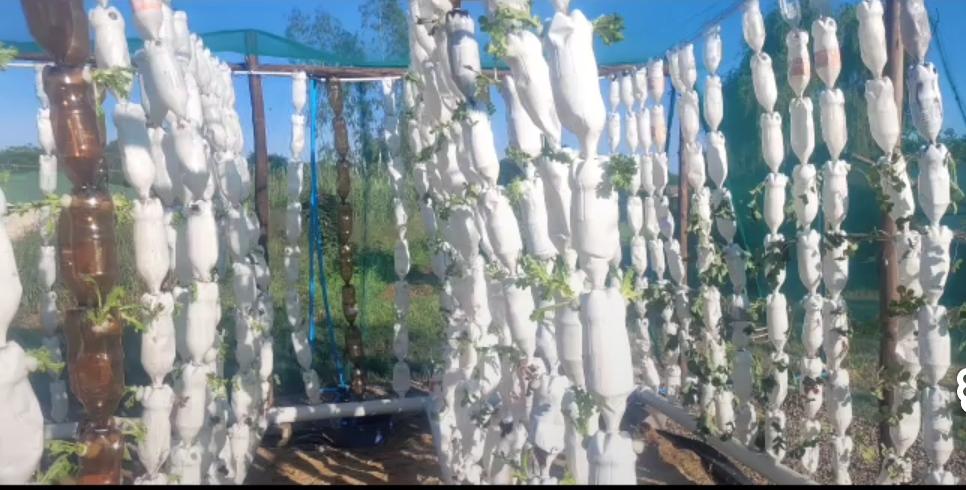
A 27-year-old woman in Bulawayo is championing a waste-based hydroponic farming model as a response to climate change and urban food insecurity.
Bongiwe Mlotshwa has begun converting discarded containers, including plastic bottles and old buckets, into small-scale hydroponic systems, creating what she describes as a practical solution to erratic rainfall, water shortages and growing environmental degradation.
“Climate change is already affecting how and where we can grow food,” she said. “Rainfall patterns are unpredictable, and water is becoming scarce. Hydroponics allows us to produce food using less water, and by using recycled materials, we also reduce environmental pressure.”
Hydroponic farming, which does not require soil, is increasingly viewed as a climate-resilient agricultural method. It typically uses less water than conventional farming and can be operated in controlled environments, making it less vulnerable to droughts and extreme weather.
On this topic
In Bulawayo, where water shortages have become common and space for traditional farming is limited, Mlotshwa says the model is designed for urban adaptation.
“In cities like Bulawayo, space is limited and waste is everywhere. By turning that waste into farming systems, we are building resilience at household and community level,” she said.
Her initiative involves collecting recyclable waste and repurposing it into vertical and container-based growing units for vegetables. The approach reduces urban waste while enabling households to produce food locally.
Residents in her community say the project is beginning to change perceptions about food production in urban areas.
“This is not just about farming,” said one local resident. “It’s about preparing for the future. We are seeing how we can grow our own food even when conditions are difficult.”
Zimbabwe, like many southern African countries, has faced increasing climate variability in recent years, with droughts and shifting rainfall patterns affecting agricultural output.
Mlotshwa’s project also targets youth and women, offering informal training sessions and demonstrations on how to build and maintain low-cost hydroponic systems.
She says the long-term goal is to expand the initiative into a broader community programme focusing on climate adaptation, waste management and food security.
“We cannot rely only on traditional systems anymore,” she said. “We have to innovate with what we have.”





Leave a Reply