

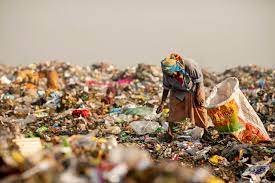
Residents in Bulawayo have raised alarm over the city’s deteriorating waste management systems, the unregulated activities of informal waste pickers, and the lack of coherent recycling policies, amid growing frustration with municipal services.
The concerns were aired on Thursday during a policy dialogue hosted by the Public Policy and Research Institute of Zimbabwe (PPRIZ) under the theme: “Towards Clean and Resilient Urban Areas: Building Inclusive and Sustainable Solid Waste Management in Zimbabwe.”
Participants accused the city council and government of poor planning and governance, which they said has led to increasing litter in urban spaces despite past efforts that once saw Bulawayo ranked among Africa’s cleanest cities.
Khulekani Dube, a participant in the discussion, dismissed claims that population growth is responsible for the city’s waste problems.
“The council says more people means more waste, but that’s no excuse for the mess we see. If we had grown our systems properly, we wouldn’t have this situation,” Dube said.
“Even the garbage trucks are a problem, litter falls from them as they drive. The vehicles themselves are a hazard.”
Other participants challenged how the country frames issues of waste. Khumbulani Maphosa said Zimbabwe does not face a waste crisis but rather a “crisis of leadership and clarity.”
“We need to stop calling everything a crisis,” he said. “The only crisis is us. Waste is an opportunity, something we can turn into value. But we’re confused. We talk of reducing waste and then of building a circular economy. You can’t have both unless you know what you want.”
Maphosa called for a more consistent and opportunity-driven national waste strategy.
Ashley Sibanda, another speaker, highlighted how many informal waste pickers rely on recycling for income.
“These people are putting their children through school by picking waste. We need to educate the public on recycling and not stigmatise those who are part of that ecosystem,” she said.
But not all voices were supportive of unregulated waste picking.
Ambrose Sibindi said while waste pickers play a role, their operations need to be formalised, especially in affluent suburbs where illegal dumping has become an issue.
“In areas like Matshamhlophe, they take bins into the bush, remove what they want, and leave the rest behind,” Sibindi said.
“By law, any waste placed outside for collection becomes council property. If someone is found with a council bin, they are in possession of what does not belong to them.”
Support CITE’s fearless, independent journalism. Your donation helps us amplify community voices, fight misinformation, and hold power to account. Help keep the truth alive. Donate today
There is not enough Enviornmental Awareness Campaigns on going for the public from the local authority and more recycling for the residents to reduce landfill waste
The online interviews with the Local Authorities with Brighton and Fix My City with Lesely should be brought back to keep pushing for change in the City ? Is there a reason why it has stopped it should be brought back
Each and every resident needs to be taught how to recycle