
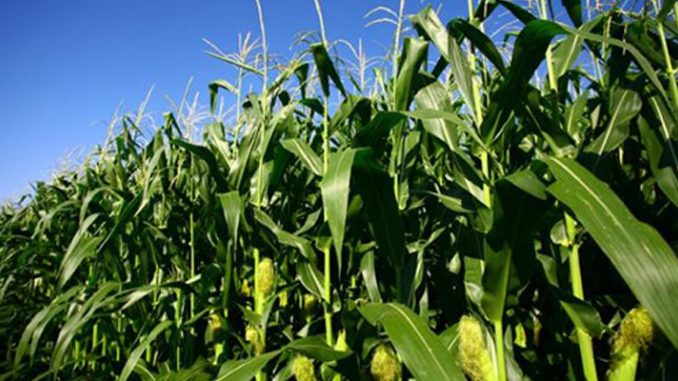
Agriculture must sit at the heart of efforts to transform Zimbabwe’s rural economy, with higher productivity forming the foundation for meaningful industrialisation, a senior United Nations official has said.
Speaking at the Zimbabwe International Trade Fair (ZITF) Rural Industrialisation Indaba, held under the theme “From Policy to Production: Leveraging Economic Empowerment for Accelerated Rural Industrialisation,” the United Nations Development Programme (UNDP) Resident Representative in Zimbabwe, Ayodele Odusola, said rural transformation depends on what communities produce and how they participate in production systems.
“There can never be rural industrialisation without enhanced agricultural productivity,” Dr Odusola said. “Rural transformation is not about what we design on paper, but what we produce, how it is produced, where it is produced and who benefits from the production process.”
He said rural areas must shift from largely informal economies to productive hubs driven by climate-smart agricultural development.
On this topic
“The first key message is that Zimbabwe must turn its villages from centres of informality into engine rooms of production through climate-smart development,” he said.
Dr Odusola warned that countries which continue to export raw materials risk losing jobs, wealth and opportunities for economic growth.
“Any country that specialises in exporting raw materials is directly and indirectly exporting its jobs, its wealth creation and its fiscal space,” he said.
Citing research from his 2021 book on Africa’s agricultural renaissance, he noted that a 1% increase in agricultural productivity can lead to a 1.3% rise in non-agricultural rural activities and a 1.5% increase in services within rural areas.
“That evidence shows how central agriculture is to shaping rural economies,” he said.
He added that strengthening value chains is critical, but depends heavily on infrastructure development, policy coherence and an improved ease of doing business.
“Value chain development is important, but it cannot succeed without improved infrastructure in rural areas,” he said. “Nor can we achieve rural industrialisation without policy coherence and an improved ease of doing business to address risks associated with rural economies.”
Dr Odusola said rural economies across Africa are often marginalised in favour of urban industrialisation, resulting in low incomes, limited job creation and persistent vulnerability.
“Too much focus on urban industrialisation, while the rural economy is marginalised, leads to low incomes, limited jobs and persistent vulnerability,” he said.
He added that rural industrialisation requires serious attention to investment risk.
“Rural economies are often characterised by fragmented production systems, weak infrastructure and limited access to finance,” he said. “We need to organise around anchor industries, aggregators and integrated value chains. We must move from fragmentation to coordination, from informality to structured markets, and from risk to opportunity.”
Dr Odusola said value addition alone is not sufficient.
“It is necessary, but not enough to drive rural industrialisation,” he said. “We must move decisively towards beneficiation in many forms. That means processing our agricultural produce and minerals locally, building industries around our outputs, and ensuring that more value generated from our resources remains within our borders.”
He said exporting raw materials amounts to exporting jobs and fiscal capacity, while local industrialisation creates employment.
Dr Odusola also highlighted the growing role of technology and innovation in shaping rural industrialisation, saying young people must be positioned as entrepreneurs and producers rather than passive beneficiaries.
“Our youth must serve as innovators, entrepreneurs and producers,” he said. “We do not want them to be mere beneficiaries.”
Outlining UNDP’s support to Zimbabwe, he pointed to decentralised renewable energy projects, including solar mini-grids powering rural enterprises, as well as technology-driven programmes in the mining sector.
He urged stakeholders to prioritise key industries and align policy, infrastructure and financing.
“We must identify and invest in priority industries, sector by sector, province by province and community by community,” he said. “We must move beyond isolated interventions and establish integrated value chain ecosystems linking production, finance and markets.
“And we must ensure alignment between policy, infrastructure and financing so that we are not working in silos, but as a coordinated system.”
Dr Odusola said that in today’s global economy, climate considerations increasingly define competitiveness. For rural economies, he said, opportunities lie not in extraction, but in building integrated, resilient ecosystems around agriculture, forestry and minerals.







Leave a Reply