

Nearly two centuries after their ancestors fought King Mzilikazi in battles that helped drive the Ndebele kingdom northwards from present-day South Africa, descendants of Afrikaner families have returned to Matabeleland seeking reconciliation with the Ndebele royal family.
The South African delegation, led by Jaco Bekker and accompanied by Pieter Vlok and David Saaiman, attended the annual King Mzilikazi commemorations at Mhlahlandlela held Saturday, bringing a gift that Bekker described as a “gift of peace.”
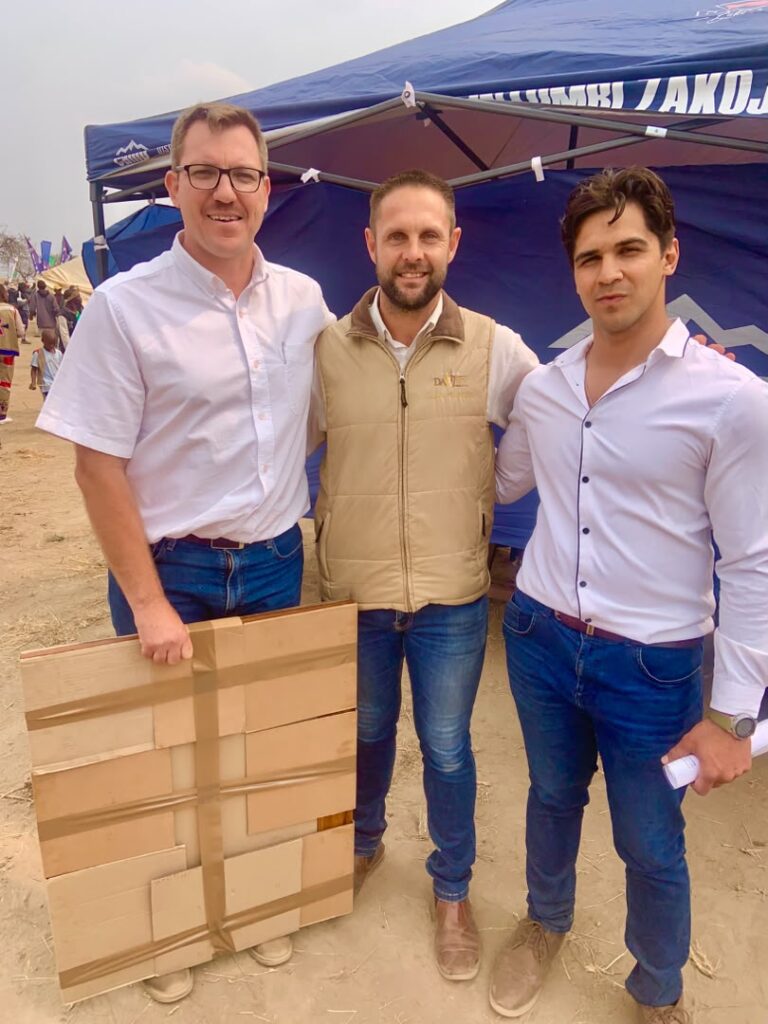
Their visit brought together two sides of a deeply intertwined 19th-century history, the Afrikaner Voortrekkers led by Andries Hendrik Potgieter, who fought King Mzilikazi’s forces and the Ndebele kingdom he eventually established in present-day Zimbabwe.
“We’ve come through to Zimbabwe to celebrate the celebration day of King Mzilikazi. A little bit of history, Mzilikazi and the Matabeles had their first encounter with the Africans in South Africa, close to Potchefstroom , a town where we live, with the Libenberg family. We just came to the conclusion that if you look at history, it’s only through reconciliation that we can build a better future, especially for the next generation,” Bekker said in an interview with CITE.
On this topic
The delegation’s visit follows an earlier meeting in Potchefstroom, South Africa, between Afrikaner communities and descendants of Mzilikazi, including Prince Hlabezulu Khumalo, in April.
Bekker said the groups visited sites associated with the 19th-century battles, planted a cross and prayed together before holding discussions on peace and reconciliation.
He said these meetings had prompted the delegation to travel to Zimbabwe for the King Mzilikazi commemorations.
“We are looking to bring the Afrikaners and the Matabeles together in forgiveness, reconciliation, so that we can have unity, not forgetting who we are, where we came from, but that we can build a better unity and a better future for the next generation,” he said.
The history they are attempting to reconcile dates to the 1830s, when King Mzilikazi’s Ndebele kingdom came into conflict with Voortrekkers moving north from the Cape Colony.
The clashes included the 1836 Battle of Vegkop and subsequent Voortrekker attacks on Ndebele settlements at Mosega and eGabheni, which was referred to as Kapain by White settlers who struggled to pronounce its Ndebele name, intensified pressure on King Mzilikazi, who eventually moved his people north across the Limpopo and established the Ndebele kingdom in present-day Zimbabwe.
Among the most enduring stories from that period is that of the Liebenberg children, who were captured during an attack on their family in 1836 and brought before Mzilikazi.
According to historical accounts, King Mzilikazi was angered that children had been taken captive and ordered their return.
When that proved impossible, three children, Sara, Anna Mariah and Christiaan Liebenberg, were placed under the care of Chief Gundwane Ndiweni, given Ndebele names and incorporated into Ndebele society.
Christiaan, who became known as Velapi, grew into a Ndebele warrior and was eventually appointed commander of the Nungu regiment before he was executed after falling out with Mzilikazi, according to historical accounts.
Anna Mariah became Mswanyana and is said to have died in the journey across the Limpopo.
Sara, who was known as Toloyi or Tololo, became part of the royal household and cared for the young Lobengula during the Ndebele migration north.
Historical narratives say she effectively became the future King Lobengula’s mamo’mncane (aunt-like maternal figure), where she cared for Lobengula and carried him on her back (ukubhabhula) when he became tired during the long migration north.
Bekker said such stories underscore why reconciliation cannot simply mean forgetting the past.
“It’s a difficult road ahead, but if we can at least discuss what should be the next steps and just work through the past, many times the past hinders us from going forward in unity,” he said.
“If we can work through the past things and just discuss how in Jesus Christ we can build a unity, build one nation maybe, even, although we are different people, groups, we can build one nation for the better of everybody.”

Bekker also spoke about the gift they brought for Bulelani Lobengula Khumalo, saying it carried significance beyond the object itself, acknowledging the gesture symbolised that history of the two communities cannot be separated from the violence, displacement and human encounters that shaped southern Africa in the 19th century.
The reconciliation effort unfolded against the backdrop of a gathering that itself demonstrated the enduring regional reach of King Mzilikazi’s legacy, with royals and traditional leaders from South Africa, Eswatini and Zambia joining the commemorations, including a delegation from Zulu King Misuzulu kaZwelithini’s royal house.


Historian, Witness Bhebhe, said the gathering demonstrated that King Mzilikazi’s history extended far beyond modern-day Zimbabwe.
“We have seen many visitors from South Africa, from Eswatini, from Zambia, coming for this occasion because these are the roots where Mzilikazi came from,” he said.
Bhebhe noted the wider movement of Nguni-speaking communities across southern and central Africa, including communities in Zambia and Malawi, saying these historical connections continued to shape relationships between royal houses in the region.
“We cannot repeat the history of Mzilikazi originating from Zululand, which is well known. But we also know that there were other Nguni groups that travelled as far as Malawi, Tanzania and Zambia. We have some of these people in the region today,” he said.
“There is a kingship in the eastern part of Zambia, on the border with Malawi, under King Mpezeni, a direct descendant of Zwangendaba, Mpezeni Jele. So all these people have a connection with Mzilikazi.
The historian also pointed to the presence of descendants of Voortrekker leader – Hendrik Potgieter, whose forces fought King Mzilikazi during his migration north.
He said the visit by Potgieter’s descendants was significant because their ancestor had pursued King Mzilikazi, yet ultimately failed to prevent the establishment of the Ndebele kingdom in present-day Zimbabwe.
“The last encounter between Hendrik Potgieter and the Ndebele was fought in the present-day Figtree area, along the road towards Bhaza School in the Matobo region. The regiment that fought Potgieter was the Zwangendaba Regiment under Mbiko Masuku. They managed to defeat the Boers under Potgieter, who went back empty-handed. That was quite an impressive victory for the Zwangendaba Regiment under Mzilikazi,” Bhebhe narrated.
“I heard the descendants were particularly curious to see the nation that Mzilikazi built, knowing very well that their great-grandfather was the one who tried to pursue Mzilikazi but did not succeed. Actually, King Mzilikazi was quite a great leader. He was well known regionally, and that is why people from across the region have been invited to celebrate the King Mzilikazi commemorations.”
Meanwhile, the event, however, also highlighted concerns about the preservation of King Mzilikazi’s legacy within Zimbabwe.
Some have spoken out against the poor state of roads and infrastructure leading to King Mzilikazi’s shrine and Mhlahlandlela undermined the potential of the sites to become major heritage and tourism destinations.
Bhebhe said the late historian Pathisa Nyathi had previously argued that descendants of Mzilikazi, particularly the Khumalo clan, had a responsibility to do more to preserve the king’s graves and other historical sites.
“The mayor (of Bulawayo) was saying we can be a great historical tourist site if we revive these shrines and make them worthy among foreign visitors,” Bhebhe said.
Read: https://cite.org.zw/coltart-









Leave a Reply